

 Travel Essentials
 Travel Essentials

Explore Fes Medina, the Guinness-certified largest car-free urban area housing 156,000 people amid narrow alleys, vibrant souks, and timeless culture in Morocco's historic heart.
 Travel Essentials
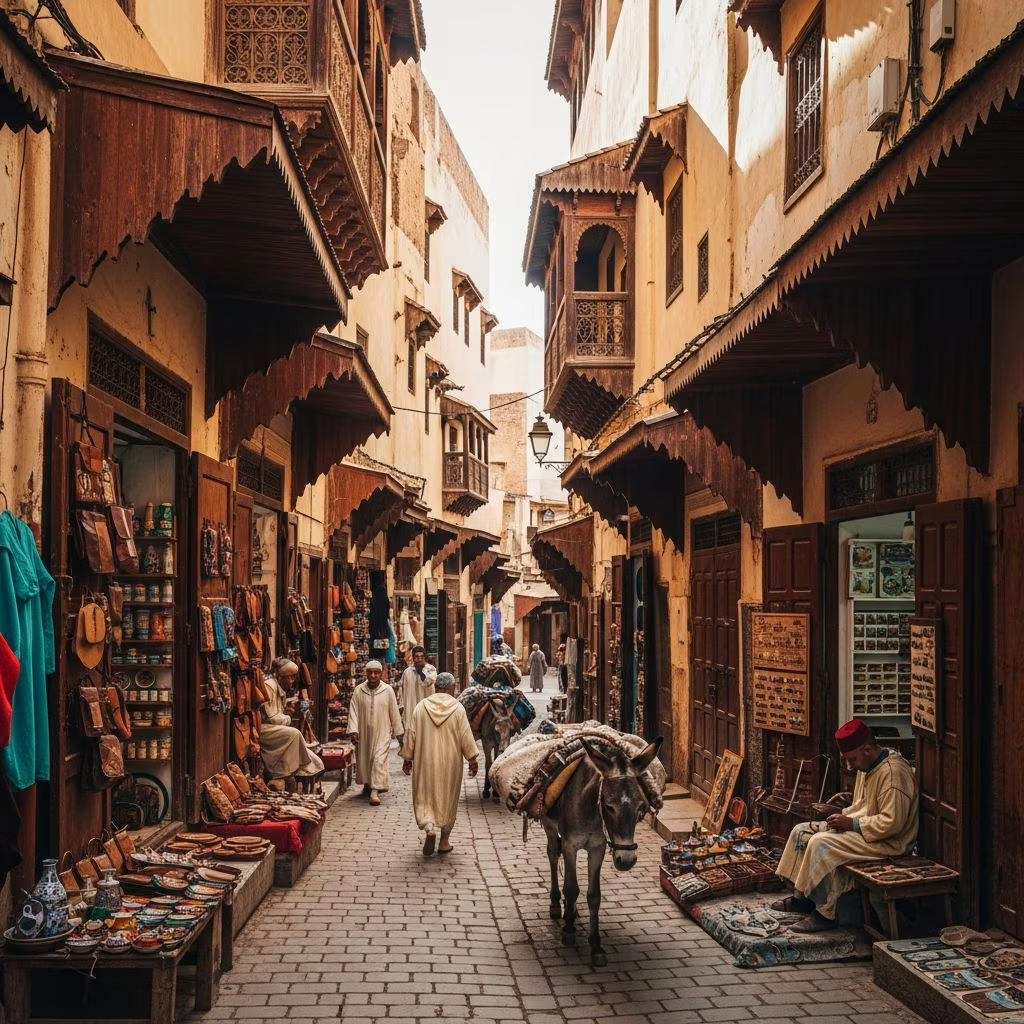
The Medina of Fes el-Bali in Morocco holds the distinguished title of the largest car-free urban area by population, as certified by Guinness World Records on October 16, 2009. This ancient district houses over 156,000 residents across a labyrinth of narrow streets too tight for modern vehicles, fostering a uniquely walkable environment that blends daily life with centuries-old traditions.
Fes Medina’s car-free status stems from its medieval origins, dating back to the 9th century when it was founded as one of the world’s first planned Islamic cities. Narrow alleys, often just two feet wide, were intentionally designed to deter invaders on horseback while facilitating foot and pack-animal traffic. Today, this layout preserves the medina’s integrity as a UNESCO World Heritage Site since 1981, where motorized vehicles remain strictly prohibited to protect the architecture and community.
Divided into Fes el-Bali (the oldest core) and adjacent areas like Fez Jedid, the medina spans roughly one square kilometer packed with riads, mosques, and fondouks (inn-like structures). Its pedestrian-only design has sustained generations, proving that urban living without cars is not only feasible but thriving.
Over 156,000 people call this medina home, navigating life entirely on foot, with donkeys and handcarts handling goods transport. Mornings buzz with children playing soccer in open plazas, artisans hammering in tanneries, and vendors hawking spices in bustling souks. The absence of engines means cleaner air, reduced noise pollution, and safer streets for all ages.
This setup promotes physical activity and social bonds, contrasting sharply with car-dominated cities worldwide.
With approximately 9,000 tapered passageways forming a sandstone labyrinth, Fes Medina rewards explorers who embrace getting lost. Key landmarks like the iconic Blue Gate (Bab Boujeloud) mark the transition from vehicle-accessible outer roads to the pure pedestrian zone, where donkey hooves and vendor calls create a symphony of sounds.
Comfortable shoes are essential on uneven cobblestones, and light packing advised—porters with carts or donkeys assist with luggage at entry points. Guided tours help first-timers, but solo wandering reveals hidden gems like carved wooden doors leading to private riads.
| Navigation Tip | Why It Helps |
|---|---|
| Follow main souk arteries | These wider paths lead to major sites like tanneries. |
| Use apps with offline maps | GPS works variably in dense areas; landmarks aid orientation. |
| Ask locals politely | Hospitality (diyafa) ensures friendly directions. |
| Visit early morning | Fewer crowds for easier movement. |
As Morocco’s cultural capital, Fes thrives on pedestrian energy. Souks overflow with leather goods from Chouara Tannery, where ancient dyeing methods persist, and metalworkers craft intricate lamps. The car-free policy bolsters this economy by keeping streets alive with footfall, resisting modernization pressures that could erode traditions.
Tourists contribute significantly, drawn to authentic experiences: bargaining for rugs, sampling street tagine, or watching weavers at work. Locals maintain workshops in alleys, ensuring crafts passed down for centuries remain viable without vehicle disruption.
The medina exemplifies sustainable urbanism. Without cars, air quality soars, encouraging walking that boosts cardiovascular health—residents average far more daily steps than global norms. Noise levels stay low, aiding mental well-being, while reduced emissions align with global green goals.
This model inspires cities worldwide pursuing pedestrianization, proving large-scale car-free living enhances quality of life. Children play freely, reducing obesity risks, and communal spaces foster neighborly ties.
These activities immerse visitors in the medina’s rhythm, best savored slowly on foot.
Access Fes via train or bus to the new city, then taxi to Bab Boujeloud. Entry is free, but respect mosque dress codes and photography rules in workshops. Peak season (spring/fall) brings crowds; Ramadan adds spiritual depth with evening iftars.
Despite charms, the medina faces issues like waste management in tight spaces and tourism pressures. UNESCO and local authorities fund restorations, installing discreet lighting and sanitation. Community cooperatives train youth in crafts, ensuring cultural continuity.
Visitors aid preservation by supporting ethical shops and avoiding single-use plastics.
Yes, Guinness confirms it’s the largest by population (156,000), with alleys too narrow for vehicles since 2009.
Donkeys, handcarts, and porters handle transport efficiently.
Absolutely, but guides prevent disorientation in the 9,000 alleys.
Extremely high yet livable, promoting community over sprawl.
Yes, safe streets allow kids to play freely.
In an era of traffic-choked metropolises, Fes demonstrates pedestrian primacy’s viability. Its success—vibrant economy, healthy populace, preserved heritage—urges cities to reclaim streets for people. Plan your walk through history today.
