

 Travel Essentials
 Travel Essentials

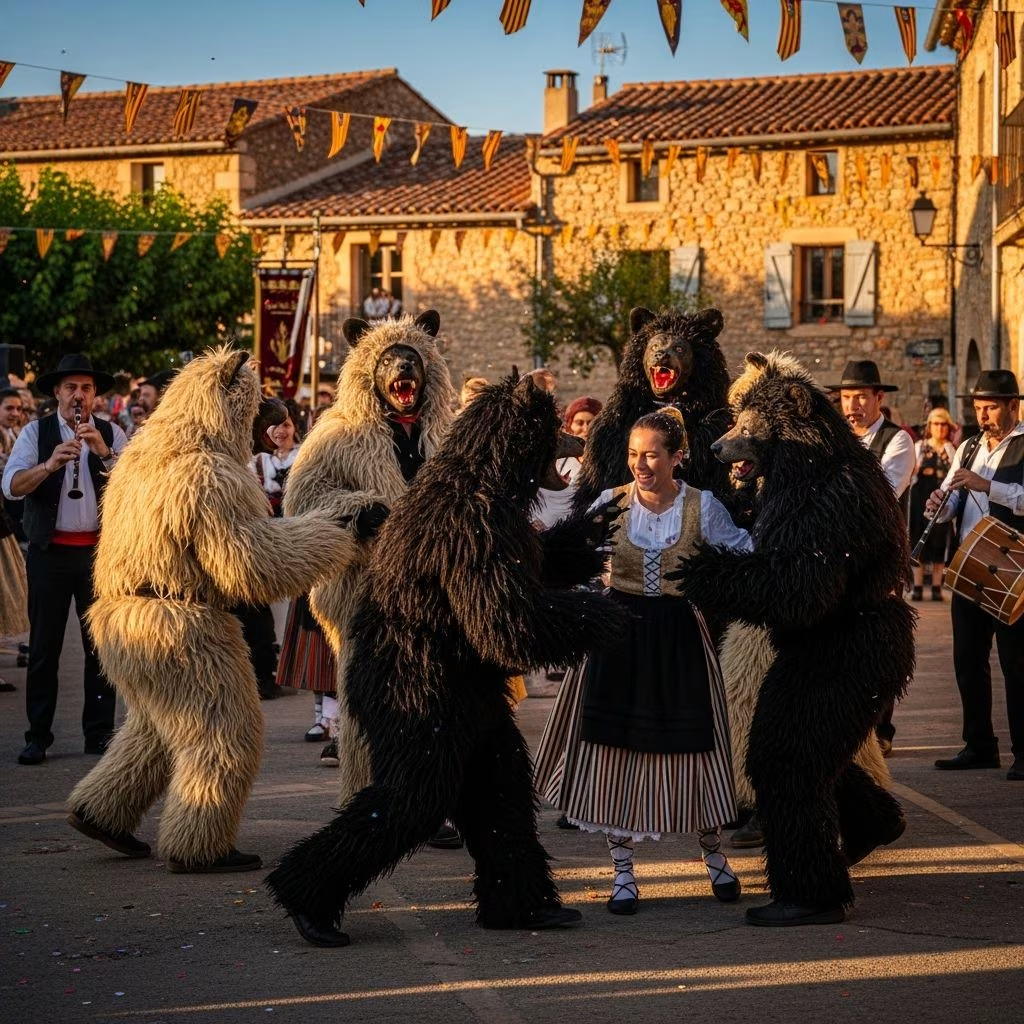
Explore the thrilling Bear Festivals in Arles-sur-Tech, Prats-de-Mollo-la-Preste, and Saint-Laurent-de-Cerdans, celebrating Catalan heritage through dramatic reenactments, dances, and communal joy.
 Travel Essentials
The **Fêtes de l’Ours**, or Bear Festivals, represent a cornerstone of cultural identity in the French Pyrenees’ Catalan communities. Held annually in February across three villages—Arles-sur-Tech, Prats-de-Mollo-la-Preste, and Saint-Laurent-de-Cerdans—these events transform quiet mountain towns into lively theaters of myth and revelry. Rooted in ancient legends of human-animal encounters, the festivals symbolize the triumph of civilization over wilderness, the end of winter, and the renewal of spring. Recognized by UNESCO as Intangible Cultural Heritage in 2022, they draw locals and visitors alike to partake in parades, hunts, dances, and symbolic rituals.
At the heart of these celebrations lies the legend of **Jean l’Ours** (John the Bear), a half-human, half-bear figure prevalent in Pyrenean mythology. Variations of the tale describe a bear abducting a young woman, prompting villagers to hunt it down. The creature is captured, shaved of its fur, and transformed back into human form, signifying a rite of passage from savagery to society. This narrative, passed down through oral traditions, reflects prehistoric fears and respects for bears in agrarian societies where the animal embodied both threat and fertility.
Historically, such festivals marked the carnival season’s start, blending pagan rites with Christian influences. In French Catalonia, near the Spanish border, they persisted despite Franco-era suppressions of Catalan culture, including bans on dances like the sardana. Today, they preserve linguistic and musical elements unique to this borderland.
The festivities kick off in **Arles-sur-Tech**, typically the first weekend of February (e.g., February 2, 2025). This village in the Vallespir Valley hosts a theatrical reenactment emphasizing community involvement. The day opens with a communal meal in the main square, fueling participants for the bear hunt.
A hunter leads a procession with Roseta, the symbolic maiden, rallying townsfolk. The bear—costumed as a medieval, toothy clown—emerges in the afternoon, chased through streets amid sketches and tests of its agility. Spectators taunt and prod the bear, heightening the drama until it reaches the central square for the ritual shaving, reverting to human. Saturdays cater to families with tamer antics, while Sundays ramp up with muscat wine refills from porrós—curved Catalan drinking vessels—making the bear increasingly boisterous.
Two weeks later, **Prats-de-Mollo-la-Preste** (around mid-February, e.g., February 19 in past years) stages a more intense version. Perched in a fortified medieval town, the festival unfolds in three acts: the bear’s rampage, capture, and transformation.
Local coblas—traditional Catalan bands with flabiol flutes, tenor drums, and sackbuts—provide rhythmic accompaniment throughout. The climax is the Bal de Corre, a frenzied dance where bears, hunters, and barbers whirl until a gunshot fells the bears, enacting their ‘death’ and rebirth. This rite underscores the bear as a metaphor for the wild man tamed by society. UNESCO listing has boosted attendance, yet the event remains anchored in village life.
| Act | Description |
|---|---|
| 1. Awakening | Bear emerges from ‘hibernation,’ disrupts streets. |
| 2. Hunt & Capture | Hunters pursue; bear paraded and tested. |
| 3. Shaving & Dance | Fur removal; Bal de Corre finale. |
Closing the trio, **Saint-Laurent-de-Cerdans** (late February, e.g., February 23, 2025) merges bear rites with full carnival parade[10]. A leader captures the bear after a chaotic street chase, displaying it in squares for public trials. Post-shaving, the now-human bear selects a dance partner from the crowd, blending rite with revelry.
Emblematic figures like hunters and barbers guide the delirious procession, turning narrow lanes into a whirlwind of costumes and music. This version highlights communal catharsis, expelling winter’s gloom[10].
Located in Pyrénées-Orientales between Perpignan and Spain, these villages are accessible yet remote. Fly to Perpignan (direct from UK airports like London Stansted) or Barcelona (190km drive). High-speed trains link Paris to Perpignan in five hours.
Buses from Perpignan to Arles-sur-Tech cost €1; transfers serve other sites. Renting a car offers flexibility for the circuit. Accommodations range from guesthouses to mountain inns; book early for February peaks. Expect cold weather—pack layers for outdoor events.
Beyond spectacle, the festivals safeguard **Catalan identity** in France. They feature bilingual elements (French/Catalan), reviving suppressed traditions like sardana circles—slow, hand-joined dances symbolizing unity. Songs of resistance echo historical struggles.
Bears in Pyrenean lore tie to real ecology; while brown bears were hunted to near-extinction, reintroduction efforts parallel festival themes of coexistence. UNESCO status ensures transmission to youth via schools and associations. Attendance has surged post-2022, blending tourism with authenticity.
Attendees describe immersive chaos: “A bear chased me down the street—pure thrill!” notes one reviewer. Others praise communal meals and music. Challenges include crowds and weather, but the energy compensates.
Arles-sur-Tech: Early February; Prats-de-Mollo: Mid-February; Saint-Laurent-de-Cerdans: Late February. Check official sites for exact 2026 dates[10].
Yes—Saturdays for kids; Sundays more raucous with wine.
No; events are visual, bilingual announcements common.
Free public events; some meals/parades may have small fees.
Cool (5-10°C); possible snow—dress warmly.
These festivals endure as living history, fostering pride in French Catalonia. Amid globalization, they remind us of nature’s power and cultural resilience. Plan your trip to witness bears dance into spring.
