

 Travel Essentials
 Travel Essentials

Learn how digital flight compensation apps speed up payouts, automate claims, and simplify passenger rights for delays and cancellations.
 Travel Essentials
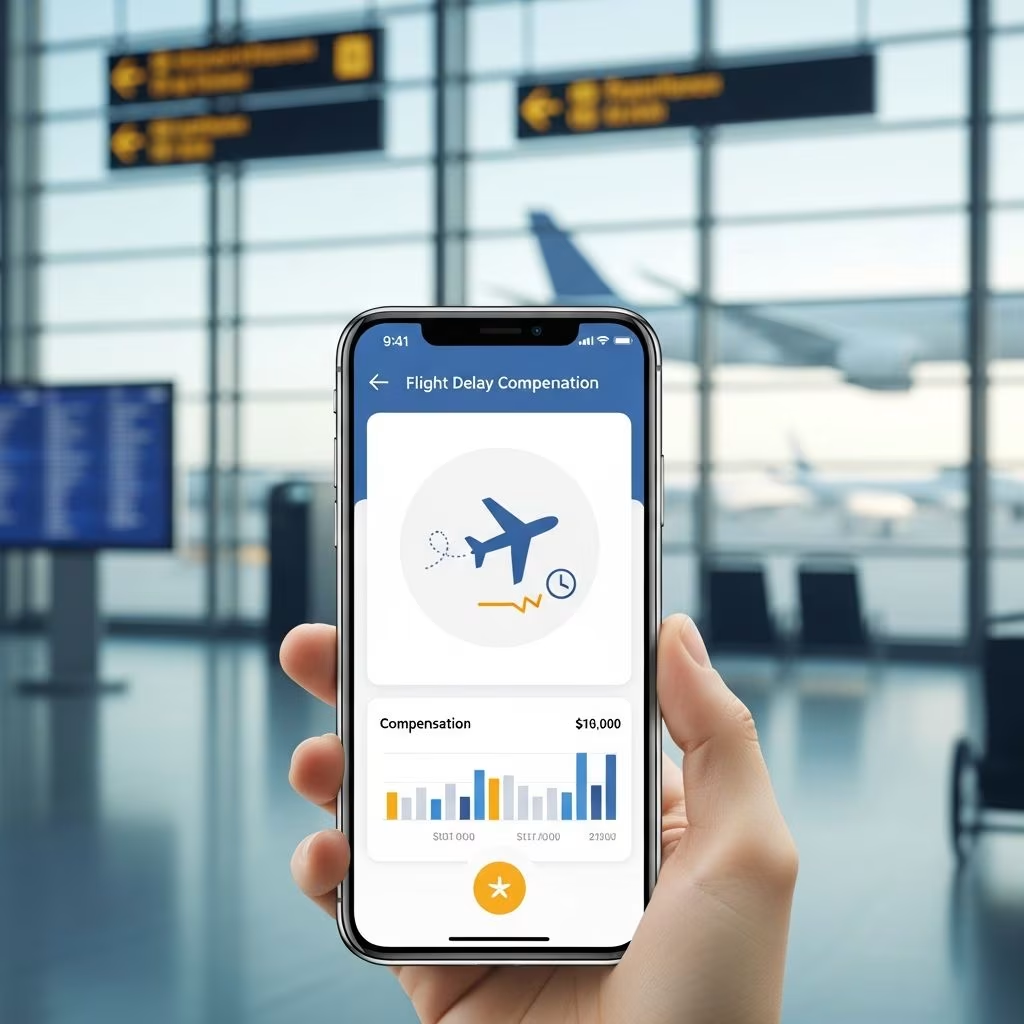
Flight delays remain one of the most frustrating aspects of modern travel, affecting millions of passengers annually. While travelers have legal rights to compensation under regulations like the European Union’s EC 261/2004 legislation, claiming these benefits traditionally required navigating complex bureaucratic processes, hiring claim specialists, or pursuing lengthy legal disputes. Today’s digital solutions have fundamentally transformed this landscape, introducing applications that automate compensation claims and deliver payouts directly to passengers’ accounts within hours rather than months.
Regulatory frameworks governing airline passenger rights have existed for decades, but accessing the compensation these laws guarantee has historically been challenging. Under EU Regulation 261/2004, passengers on flights departing from European Union airports—or arriving at EU airports on EU-registered carriers—are entitled to financial compensation for delays exceeding three hours, cancellations, or missed connections, with compensation amounts ranging from €250 to €600 depending on flight distance. However, the process of claiming these benefits involved collecting documentation, submitting paperwork to airlines or third-party claim management services, and waiting weeks or months for resolution.
This friction in the compensation process created a market opportunity for innovative technology companies to bridge the gap between passenger rights and practical claim fulfillment. Modern applications now leverage digital boarding pass technology, real-time flight data tracking, and automated claim processing to eliminate traditional barriers.
Contemporary flight delay compensation applications operate on a fundamentally different principle than traditional claim management services. Rather than requiring passengers to gather evidence after a disruption occurs, these platforms integrate with booking systems and digital travel documents to create a seamless claims infrastructure. Users simply register their flight information within the application before departure—typically up to 20 minutes before takeoff—providing essential details through boarding pass scanning, flight number entry, or manual input.
The technological infrastructure supporting these applications includes real-time flight data integration, which automatically monitors scheduled versus actual arrival times. When disruptions occur, the system immediately identifies eligible passengers and processes compensation without requiring additional action from travelers. Payouts typically arrive within 24 hours, transforming what was previously a multi-month process into an overnight transaction.
Unlike traditional compensation frameworks that operate on fixed thresholds, modern applications introduce customizable compensation structures. These platforms employ slider mechanisms allowing passengers to select their preferred delay threshold before flight departure. This approach creates different compensation scenarios:
This customizable framework operates on actuarial principles recognizing that shorter delays occur more frequently than extended disruptions. By allowing passengers to select their preferred risk-compensation balance, applications enable individuals to optimize based on their travel patterns and financial priorities.
Modern flight delay applications typically offer compensation ranges between €20 and €110 for various delay scenarios, with specific amounts varying based on selected thresholds and flight characteristics. These payouts differ substantially from traditional EU261 compensation, which operates on distance-based formulas providing €250 to €600 for three-hour delays. The trade-off reflects the higher probability of payout through shorter delay thresholds versus the potentially larger single recovery available through regulatory claims for extended disruptions.
Certain applications introduce additional features enabling coverage for delay scenarios outside traditional regulatory frameworks. While EU261 legislation excludes compensation for “severe weather events” or other circumstances beyond airline control, some modern platforms provide compensation regardless of delay causation, expanding coverage beyond strictly regulated scenarios.
An innovative development in flight compensation technology introduces the principle of advance booking with conditional payment. This model allows passengers to book flight tickets through the application with zero upfront cost, deferring payment until after flight completion. The payment structure operates as follows:
This model fundamentally restructures the passenger-airline relationship, placing financial risk on the service provider rather than the traveler. By enabling zero-cost flight booking with conditional payment based on service delivery, this approach encourages airlines to prioritize on-time performance while protecting passengers from the financial consequences of disruptions.
Beyond compensation functionality, contemporary flight delay applications incorporate comprehensive travel management capabilities. Digital boarding pass wallets eliminate paper documentation while enabling convenient airport security passage through QR code scanning. Real-time flight tracking provides gate change notifications, delay alerts, and cancellation updates, transforming applications into centralized travel command centers where users monitor all flight information through single interfaces.
These integrated features create value beyond compensation claims, establishing applications as essential travel companions even when delays don’t occur. The convenience of consolidated travel documentation, real-time notifications, and organized flight history enhances the overall travel experience while simplifying compensation processes when disruptions arise.
While flight delay compensation apps offer substantial advantages in claim accessibility and payout speed, they involve important trade-offs passengers must understand. By using these platforms and selecting specific delay thresholds, passengers typically waive rights to pursue larger regulatory compensation if delays exceed their chosen threshold. This creates a strategic decision where selecting lower thresholds increases payout probability but sacrifices potential recovery from more severe disruptions.
For example, a passenger selecting a one-hour threshold receives compensation for that delay level but potentially forfeits EU261 rights if the flight ultimately experiences a three-hour delay. This gamification element requires passengers to make informed decisions about their acceptable risk profiles before travel, understanding that their choices directly impact potential compensation outcomes.
Most flight delay compensation applications operate on management fee models, typically retaining 30% of compensation amounts as service fees. This arrangement reflects the value provided through automated processing, real-time monitoring, and rapid payout facilitation. While management fees reduce net passenger recovery compared to direct regulatory claims, the immediate payment, eliminated paperwork, and guaranteed processing often justify the cost structure for travelers prioritizing convenience and certainty over maximum recovery amounts.
Modern compensation applications increasingly support diverse payment methods beyond traditional banking transfers. Some platforms offer cryptocurrency payment options, including Bitcoin settlements with capabilities to lock current Bitcoin rates at claim time. This innovation accommodates crypto-native travelers while introducing payment method flexibility previously unavailable in traditional compensation processes.
Flight delay compensation applications predominantly focus on European routes where regulatory frameworks provide enforceable passenger rights. EU Regulation 261/2004 establishes the compensation foundation enabling app-based processing, and applications typically limit coverage to flights departing from or arriving at European airports on EU-registered carriers. Passengers should verify geographic eligibility before registering flights, as coverage restrictions reflect the regulatory landscape supporting compensation guarantees.
Contemporary compensation applications maintain presence across iOS and Android ecosystems, ensuring accessibility across device preferences. Application stores provide free downloads, eliminating installation barriers while enabling rapid user adoption. Clean, intuitive interfaces minimize learning curves, allowing passengers to register flights and understand compensation structures within minutes of first app interaction.
Passengers incorporating flight delay compensation applications into travel routines typically register flights immediately after booking, ensuring enrollment before the 20-minute pre-departure deadline. The registration process involves providing confirmation numbers or boarding pass documents, which the application processes to establish monitoring parameters. Real-time notifications then alert passengers to significant developments, from gate changes to delays exceeding chosen compensation thresholds.
Upon delay occurrence, application systems automatically calculate applicable compensation and initiate payment processing. Passengers receive confirmation within hours, with funds typically arriving in linked accounts within 24 hours. This streamlined process eliminates follow-up requirements or status checking, allowing passengers to address travel disruptions while compensation processing occurs automatically in the background.
| Characteristic | Traditional Claims | App-Based Compensation |
|---|---|---|
| Claim Processing Time | Weeks to Months | Within 24 Hours |
| Documentation Required | Extensive Evidence Collection | Digital Boarding Pass |
| Compensation Threshold | Fixed 3-Hour Minimum | Customizable 1-3 Hours |
| Compensation Amount | €250-€600 | €20-€110 |
| User Effort | High—Multiple Steps Required | Low—Automatic Processing |
| Coverage for Non-Regulatory Causes | Limited to EU261 Criteria | Often Extended Coverage |
Flight delay compensation applications typically require flight confirmation numbers, boarding pass data, passenger names, and contact information. Most platforms allow boarding pass scanning through device cameras, minimizing manual data entry. Applications then monitor flights in real-time through integrated airline data feeds.
Yes, but with important distinctions. These platforms legitimately facilitate compensation claims within existing regulatory frameworks, particularly EU261 in Europe. However, they offer different compensation structures than direct regulatory claims, typically providing faster payouts in exchange for potentially smaller amounts and reduced rights in severe delay scenarios.
By selecting the one-hour threshold, you typically waive rights to pursue larger regulatory compensation. If your flight is three hours late, the app pays the one-hour compensation amount, and you forfeit the opportunity to claim €250-€600 through direct regulatory channels. This trade-off represents the core risk element of these services.
Most applications process payments within 24 hours of delay confirmation. Some platforms offer expedited processing, with notifications arriving within hours of disruption occurrence. Actual bank transfer timing depends on financial institution processing speeds, typically completing within one business day.
Most compensation applications focus primarily on European routes where EU261 provides regulatory foundations. Coverage typically extends to flights departing from EU airports or arriving at EU airports on EU-registered carriers. Geographic limitations vary by platform, and passengers should verify eligibility before enrollment.
Yes, most modern applications cover both delays and cancellations within their service scope. For cancellations where offered alternatives are unacceptable, some platforms waive payment obligations entirely, while others provide standardized compensation amounts for the disruption.
