

 Travel Essentials
 Travel Essentials

Explore why flight tracking apps are booming, from tech explanations to practical guides for travelers, enthusiasts, and curious minds.
 Travel Essentials
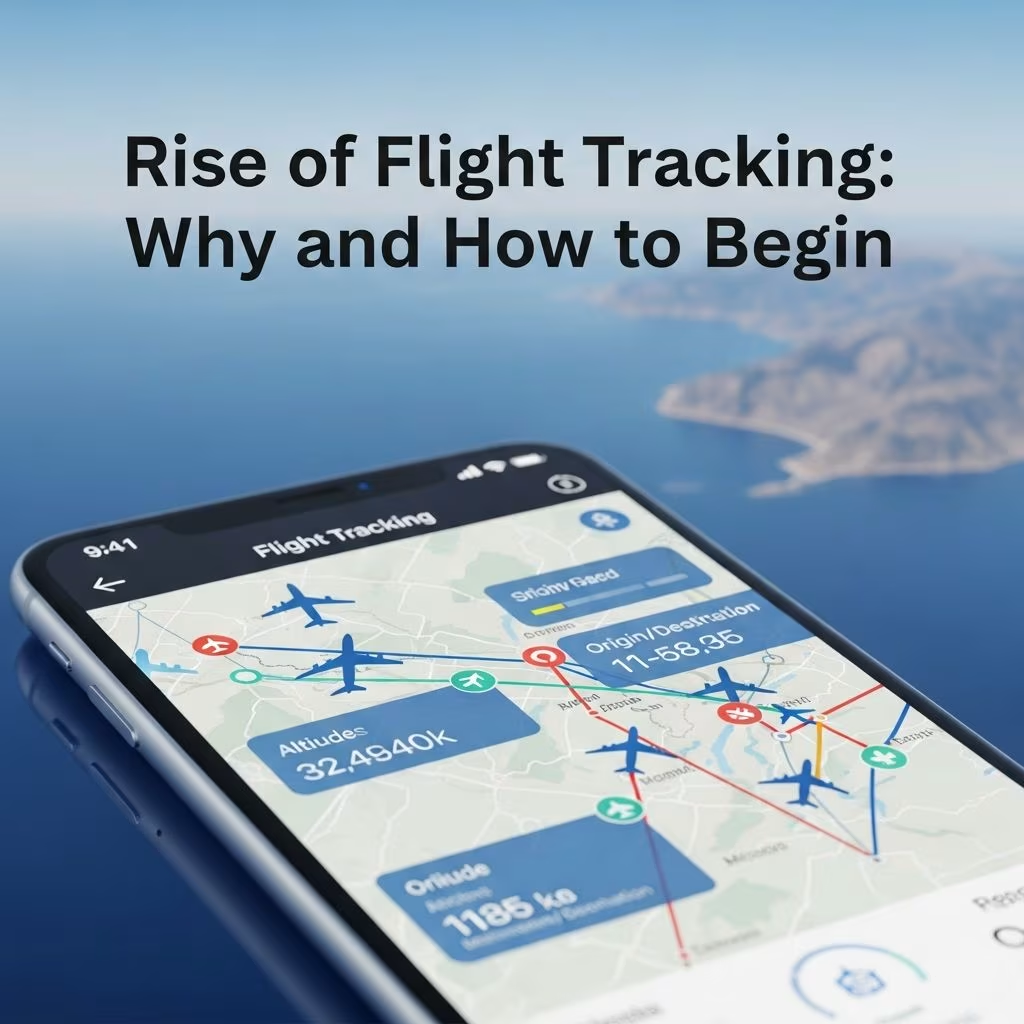
Real-time flight tracking has transformed from a niche hobby into a mainstream tool used by millions daily, driven by accessible technology and global events that heighten public interest in aviation movements.
Flight tracking platforms have seen explosive growth as everyday people, not just aviation buffs, turn to them for peace of mind and curiosity. Parents monitor returning college students, journalists verify news on aerial incidents, and travelers check delays without relying solely on airline apps. Spikes occur during geopolitical tensions, like conflicts involving airstrikes, where tracking reveals military and commercial flight patterns in real time.
With international travel rebounding post-pandemic, more individuals have personal stakes in flight statuses. Platforms now handle massive concurrent users; one report noted 140,000 people following a single Dubai-to-Mumbai flight amid regional hostilities. Sports fans even track celebrity jets, such as those carrying athletes across continents, blending entertainment with technology.
At the heart of this trend lies **ADS-B (Automatic Dependent Surveillance-Broadcast)**, a satellite-based system where aircraft use GPS to determine their position and broadcast it automatically via transponders on 1090 MHz frequency. The US Federal Aviation Administration describes ADS-B as a technology enabling planes to share ID, altitude, speed, and location with ground stations, other aircraft, and satellites, replacing older radar limitations.
These unencrypted signals are captured by a global network of volunteer-hosted receivers. Enthusiasts place ADS-B receivers every 250-450 km for optimal coverage, feeding data to aggregators like Flightradar24, which boasts near-100% global reach after two decades. About 70% of commercial flights now equip ADS-B transponders, ensuring broad visibility.
Complementing ADS-B is **MLAT (Multilateration)**, which triangulates aircraft positions by measuring time differences in signals received by multiple ground stations. This method extends tracking to non-ADS-B equipped planes, enhancing accuracy over remote areas.
Satellites further amplify coverage, pulling data from oceanic routes and polar regions where ground receivers falter. Aggregators merge this with airline schedules, weather, and airport feeds for comprehensive maps showing live positions, altitudes up to 35,000 feet, and gate changes.
| Technology | Description | Coverage Strength |
|---|---|---|
| ADS-B | GPS-based auto-broadcast of position data | 70% commercial flights; global via satellites |
| MLAT | Signal timing triangulation | Non-ADS-B aircraft; dense receiver areas |
| Radar/Satellite | Traditional scans + orbital receivers | Backup for gaps; oceanic/polar routes |
Flightradar24 leads as the premier global tracker, displaying live air traffic by fusing ADS-B, MLAT, radar, and satellite inputs with flight schedules. Its app offers real-time maps, arrival predictions, and notifications for delays or gate shifts, surpassing basic airline tools by covering every worldwide flight.
Other apps like Flight Tracker provide similar features: instant alerts for tarmac holds or time changes, helping users time airport arrivals precisely. These tools reduce stress by visualizing a plane’s exact spot, expected landing, and disruptions early.
Getting started takes minutes, requiring no special gear beyond a smartphone or browser.
For enthusiasts, contribute by hosting a receiver: affordable kits connect to the network, improving local data quality.
Travelers benefit most, using trackers to plan pickups accurately—knowing if a flight sits on the tarmac means delaying your drive. Frequent flyers get gate alerts, avoiding fruitless terminal sprints.
Aviation fans analyze patterns: peak hours, popular routes, or rare aircraft types. During events like airshows or storms, trackers reveal diversions instantly.
Professionals, including reporters, leverage it for verification; spikes during crises confirm airspace closures or unusual activity. Even non-flyers enjoy spotting jets overhead via augmented reality modes.
While powerful, tracking raises questions. Public data from unencrypted transponders exposes routes, potentially aiding those with ill intent, though regulators monitor sensitive flights. Military aircraft often disable signals or use modes invisible to civilians.
Accuracy dips in coverage gaps, like remote oceans, relying on satellite delays. Apps can’t alter delays but empower informed decisions.
Platforms mitigate by blocking VIP tracking upon request, balancing openness with security.
ADS-B mandates expand; by 2025, most global fleets comply, pushing coverage to 90%+. Space-based receivers proliferate, closing gaps. AI integrations will predict delays from patterns, enhancing apps.
Integration with smartwatches and cars could automate travel logistics, signaling deeper embedding in daily life.
ADS-B is a GPS-driven system where planes broadcast position data automatically, enabling real-time global tracking via public receivers and satellites.
Yes, core features on apps like Flightradar24 are free; premium unlocks extras like history and alerts for $3-10/month.
Often yes, if equipped with ADS-B, though owners can opt for privacy blocks.
Highly precise within receiver range; satellites fill gaps but may lag slightly.
No, apps work worldwide via internet.
Flight tracking democratizes aviation data, turning skies into visible highways for all. Start today to enhance your travel savvy.
