

 Travel Essentials
 Travel Essentials

Explore Florence, Alabama's journey through textile history: from 19th-century mills and Civil War setbacks to T-shirt dominance and today's ethical brands like Alabama Chanin and Billy Reid.
 Travel Essentials
Florence, Alabama, nestled along the Tennessee River in the Muscle Shoals region, has long been synonymous with textile production. This unassuming city in northwest Alabama evolved from humble 19th-century cotton factories into a powerhouse of garment manufacturing, earning the moniker “T-shirt Capital of the World” before pivoting to innovative, sustainable fashion today.
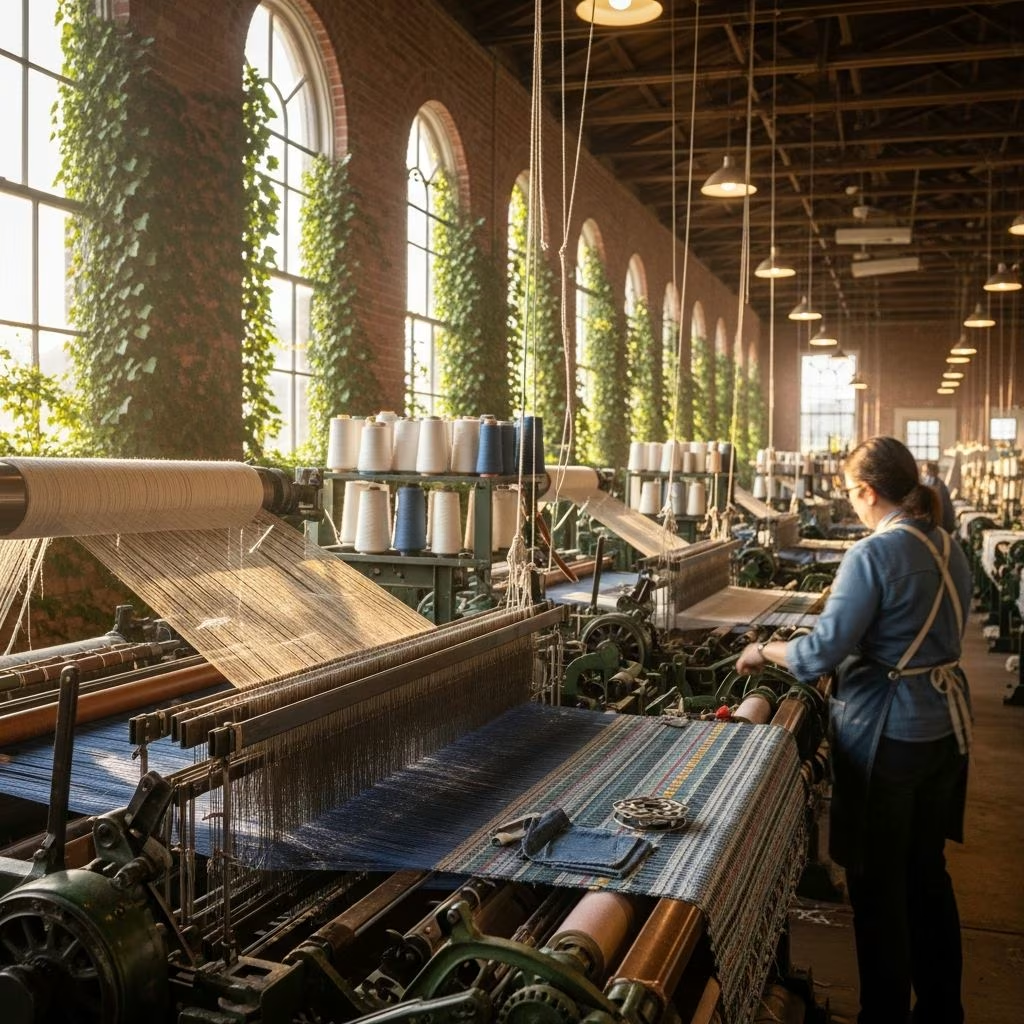
The story of Florence’s textile prominence begins in the mid-19th century, when local entrepreneurs harnessed the area’s abundant cotton crops and water-powered creeks to establish mills. By 1850, the Cypress Mill, constructed by Martin and Weakley, was churning out 80,000 yards of cloth each week, including coarse fabrics like “Negro Shirting.” Nearby, Miller and Kenney’s Woolen Factory and the Globe Cotton Factory contributed significantly to the local economy, producing goods for both domestic use and broader markets.
These operations diversified production to support community needs and business growth. The fertile lands of Lauderdale County also supported unexpected crops; a 1898 report highlighted the region’s substantial wheat yields, outpacing other Alabama areas and enabling ventures like the Florence Milling Company, which produced premium flours and meals alongside textile efforts.
By the 1870s, cotton output had rebounded to pre-war levels, signaling Florence’s resilience and laying the groundwork for industrial expansion in East Florence.
The Civil War brought devastation to Florence’s nascent industry. Between 1860 and 1863, factories ran at peak capacity to aid the Confederate effort, but Union forces under General G.M. Dodge razed key facilities in 1863, destroying vast stores of corn, cotton, and livestock while capturing prisoners. The Cypress Mill, torched by Colonel Florence M. Cornyn, lay in ruins for years before James Martin rebuilt it.
Reconstruction proved challenging amid economic ruin and societal shifts following emancipation. Yet, textiles remained central to recovery. Mills like Ashcraft and Cherry sprang up in East Florence, forming vibrant mill villages. Workers, including children as young as 12, toiled long hours in tough conditions but enjoyed perks like river excursions and baseball teams.
| Key Historical Mills | Location | Era | Notable Production |
|---|---|---|---|
| Cypress Mill | Cypress Creek | 1850s-Post War | Cotton cloth, 80k yards/week |
| Cherry Cotton Mills | East Florence | 1870s | Cotton fabrics |
| Ashcraft Mill | East Florence | Late 1800s | Textiles for local economy |
These facilities not only rebuilt the economy but fostered community ties, with families migrating from rural areas to mill villages.
Entering the 20th century, Florence’s textiles adapted to new demands. During World War II, the Gardiner Waring Knitting Mill supplied underwear to the U.S. Army and Navy, underscoring the industry’s strategic role. By 1950, 72 mills employed 54,000 workers, cementing East Florence as an industrial hub.
The 1970s marked a golden era with Lexington Fabrics and Tee Jays Manufacturing opening shop. Tee Jays, operating from 1976 to 2005, became one of Florence’s largest employers and a global name in T-shirts, propelling the city to its celebrated nickname. This period saw underwear evolve into fashionable outerwear, boosting exports and local pride.
However, prosperity waned with globalization. The 1994 NAFTA agreement accelerated outsourcing, shuttering factories and costing the U.S. over five million manufacturing jobs. Florence felt the pinch as mills closed, leaving vacant buildings and displaced workers.
Amid decline, visionary designers reimagined Florence’s textile future. Billy Reid, with headquarters in Florence, emphasizes U.S. manufacturing, proprietary fabrics, and quality craftsmanship. His New York and Florence studios, plus nationwide stores, highlight the city’s ongoing influence.
Natalie Chanin launched Alabama Chanin in the early 2000s, transforming discarded cotton jersey T-shirts into hand-sewn, sustainable garments. Using 100% organic cotton from seed to fabric, plus reclaimed materials, the brand prioritizes ethical, local production. It has grown into a multifaceted enterprise: The School of Making for workshops, Bldg. 14 for design and manufacturing, and The Factory Store + Café as a community hub.
These efforts fill voids left by shuttered giants like Tee Jays, promoting “slow design” and community careers. The Muscle Shoals National Heritage Area celebrates this heritage, from Native American cotton cultivation by Chickasaw and Cherokee to contemporary resurgence.
Tourists flock to Florence for its blend of history and modernity. Explore mill villages, tour Alabama Chanin’s Factory, or shop Billy Reid’s flagship. The Shoals offer riverfront vibes, music heritage, and textile museums showcasing artifacts from the 1840s onward.
Florence exemplifies adaptation, turning industrial legacy into cultural tourism and ethical production.
In the 1970s-1990s, factories like Tee Jays produced millions of T-shirts, leveraging local cotton and skilled labor for global markets.
Union raids destroyed factories and stockpiles in 1863, but post-war rebuilding restored production by the 1870s.
They use organic cotton, hand-sewing techniques, and local sourcing to create durable, eco-friendly apparel.
Yes, through brands like Alabama Chanin and Billy Reid, focusing on quality over mass production.
Yes, the Muscle Shoals National Heritage Area offers trails, museums, and designer experiences.
