

 Travel Essentials
 Travel Essentials

Florence faces severe overtourism with 10+ million visitors yearly overwhelming its UNESCO core, spiking rents, and displacing residents. Explore causes, impacts, and practical solutions for balanced tourism.
 Travel Essentials
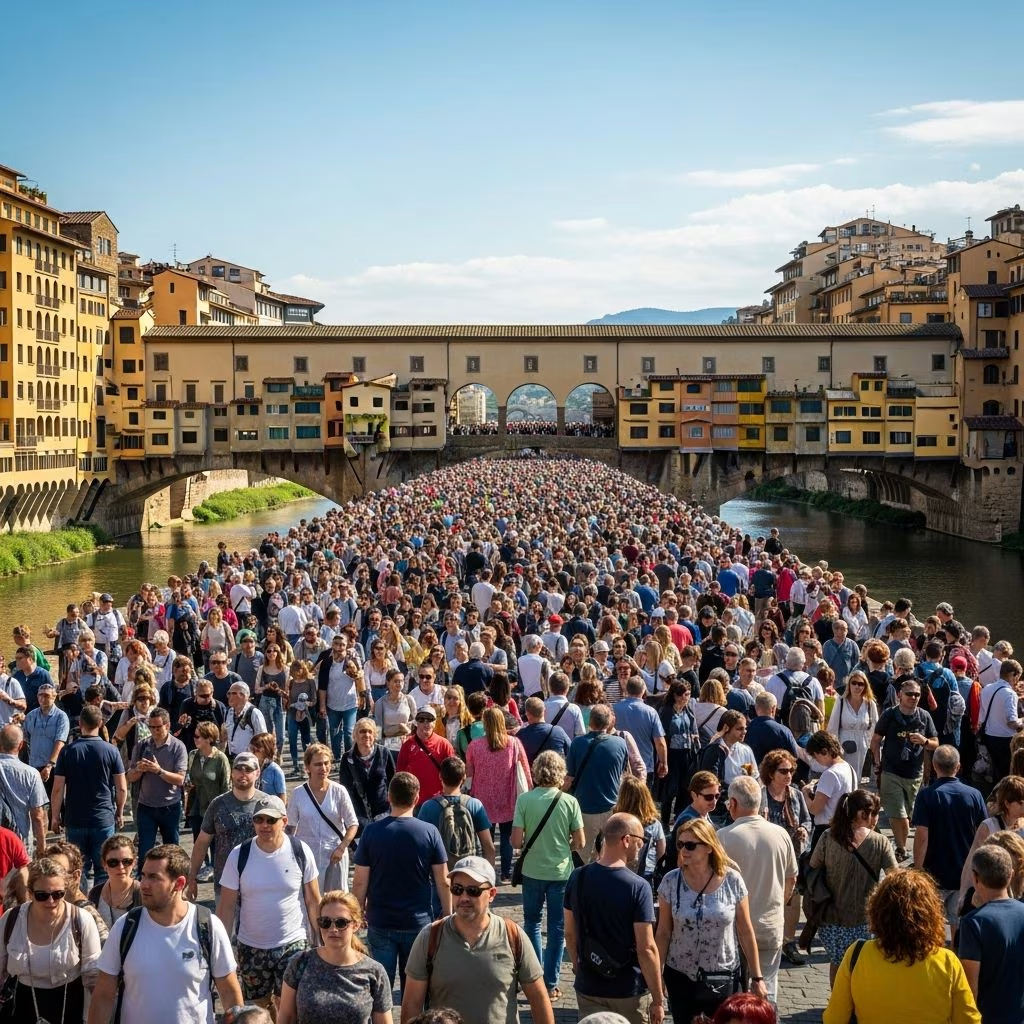
Florence, the cradle of the Renaissance, attracts millions drawn to its unparalleled art, architecture, and history. Yet, with visitor numbers surging to 10 million annually against a metro population of just 360,000, the city grapples with overtourism—a phenomenon where tourism volume exceeds sustainable limits, harming residents, infrastructure, and even the visitor experience itself.
Post-pandemic recovery has intensified Florence’s tourism boom. Estimates place annual arrivals at 7.5 to 8.9 million, projected to hit 10 million in 2025 due to events like Rome’s Jubilee drawing more travelers northward. The UNESCO-designated historic center, spanning only 5 square kilometers, absorbs the brunt, with crowds choking landmarks like the Uffizi Gallery and Ponte Vecchio.
Low-cost flights from Pisa since the late 1990s and high-speed rail expansions have democratized access, transforming Florence from an elite destination into a mass-tourism hub. While tourism fuels the economy, its uneven benefits exacerbate local strains.
The explosion of platforms like Airbnb lies at overtourism’s core. Florence lists over 12,000 active short-term rentals, many managed by a few large operators charging €200+ per night—far outpacing long-term resident rates. This shift has converted residential apartments into de facto hotels, slashing housing stock.
Residential rents have jumped 42% since 2016, with a 15% hike in the past year alone, making Florence Italy’s third priciest city for housing relative to income. Only 40,000 residents remain in the historic center, down sharply as locals are priced out. Shops and botteghe face similar pressures, replaced by generic tourist outlets.
| Impact Area | Pre-2016 Stats | Current Stats (2024) | Source |
|---|---|---|---|
| Airbnb Listings | ~6,000 | 12,703–14,378 | |
| Rent Increase | Baseline | +42% overall; +15% YoY | |
| Historic Center Residents | Higher | <40,000 |
Narrow medieval streets buckle under tour groups exceeding 50 people, often from unregulated operators dodging taxes and safety rules. Public spaces turn chaotic, with buses idling and emitting smog. Over 200 food venues per square kilometer in the UNESCO zone have birthed a ‘tourist feeding mill,’ diluting authentic cuisine with chains.
UNESCO status, granted in 1982, now risks revocation without action, threatening cultural prestige and economic draw.
Tourism generates vital revenue, but profits concentrate among rental managers and chains, bypassing many locals. Day-trippers from cruises or buses—’hit and run’ visitors—flood in briefly, leaving litter and congestion without meaningful spend. Meanwhile, rising commercial rents shutter independent shops, homogenizing neighborhoods.
Florence’s mayor has decried the ‘Airbnb-ifying’ of the city, implementing a 2023 ban on new short-term rentals in the center—though legally contested. Calls grow for registering all tourist properties, enforcing zoning, and taxing fairly to fund housing.
Florence’s UNESCO area risks becoming an ‘apartment-hotel’ zone, eroding its living soul. — Local reports on resident displacement.
Uffizi director Cecilie Hollberg advocates ‘slower tours, smaller groups, better signage, de-seasonalization, and visitor distribution,’ crediting these for easing gallery pressures.
Responsible tourism can mitigate harm. Opt for slow travel: linger beyond day trips, explore peripheries, and choose agriturismi or family hotels over platforms fueling shortages.
Farm stays outside the center offer authentic immersion, bikes for eco-mobility, and direct economic boosts.
Beyond bans, experts urge:
These mirror successful models in Barcelona and Amsterdam, blending tourism vitality with livability.
Florence’s allure stems from its lived-in authenticity—Michelangelo’s David amid vibrant neighborhoods. Overtourism risks commodifying this into a theme park. By prioritizing sustainability, the city can safeguard its UNESCO jewel for future generations, ensuring tourism enhances rather than erodes its magic.
Key drivers include cheap flights, high-speed rail, short-term rentals (12,000+ Airbnbs), and events like the 2025 Jubilee projecting 10 million visitors.
Yes, unchecked pressures could lead to delisting, as warned by local advocates, due to infrastructure strain and heritage degradation.
Rents up 42% since 2016; historic center population halved to under 40,000 amid rental conversions.
Choose small groups, off-peak travel, local stays like agriturismi, and avoid peak-hour sites.
A 2023 center ban on new short-term rentals aims to protect housing, plus pushes for tour oversight.
