

 Travel Essentials
 Travel Essentials

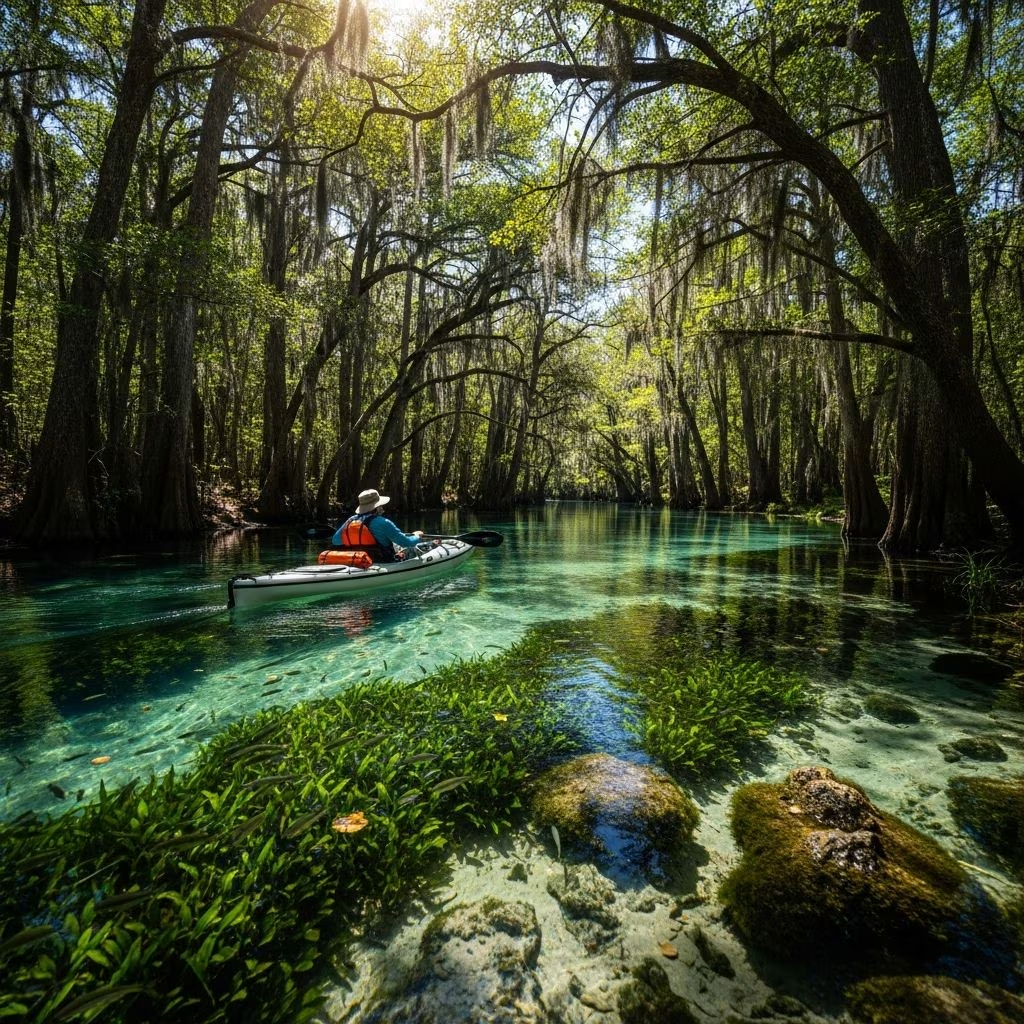
Discover Florida's top freshwater pursuits: world-class fishing in vast lakes and rivers, serene kayaking on crystal springs, and thrilling tubing adventures amid stunning natural beauty.
 Travel Essentials
Florida boasts over 3 million acres of lakes, ponds, and reservoirs, plus 12,000 miles of rivers, streams, and canals open year-round for recreation. These freshwater systems support diverse activities from angling for trophy bass to paddling through turquoise springs, drawing over 1.2 million anglers annually who log 25.7 million fishing days.
Florida’s freshwater fishing scene rivals global hotspots, featuring largemouth bass as the star alongside bluegill, crappie, peacock bass, catfish, and even sturgeon in select rivers. No closed seasons mean constant access, with prime spots concentrated in central and northern regions.
Spanning 730 square miles as the U.S.’s second-largest freshwater lake, Lake Okeechobee holds over a trillion gallons and teems with bass lurking near hyacinths, hydrillas, and shorelines. Target the south, west, and north rims within a mile of shore using plastic worms, shiners, or frogs. This massive shallow basin delivers consistent action for big catches.
The St. Johns River, flowing 300+ miles northward, offers bass, crappie, catfish, bluegill, and bream amid backwaters, creeks, and oxbows. Lake Monroe in Seminole County, part of this system, covers 8,771 acres with coves, vegetation, and drop-offs ideal for multiple species; boat ramps and piers enhance accessibility.
Tamiami Canal along US 41 from Miami to Naples yields peacock bass and more via cane poles or spin gear, though watch for gators. Even Disney World’s lakes host guided catch-and-release bass trips on pontoons, blending theme park vibes with angling.
Florida’s 1,000+ springs pump 8 billion gallons daily at a steady 72°F, creating vivid blue pools perfect for swimming, snorkeling, and diving. These oases host manatees, fish, and turtles in ultra-clear waters.
Ichetucknee Springs State Park features nine blue-green springs over six miles for tubing, kayaking, paddling, and scuba. Blue Hole Spring boasts a 600+ foot cave system for certified divers and snorkelers. Nearby, Rum Island Spring offers a 200-meter swim hole in a natural, untamed setting with easy bank access.
Blue Spring State Park near Orlando guarantees manatee views in 72°F waters, ideal for kayaking. De Leon Springs provides clear depths teeming with fish, plus kid-friendly splash zones. Weeki Wachee River suits calm kayaking and paddleboarding with picnic stops. Silver Glen Springs combines a spring run with archaeological sites, while Salt Springs’ mineral-tinged waters support swimming, fishing, boating, and hiking.
| Spring Name | Location | Key Activities | Unique Feature |
|---|---|---|---|
| Ichetucknee Springs | North Florida | Tubing, kayaking, diving | Nine springs, 6-mile river |
| Blue Spring | Orange City | Swimming, kayaking | Manatee refuge |
| Salt Springs | Near Ocala | Fishing, boating, hiking | Mineral salinity |
| Rum Island | North Florida | Swimming, snorkeling | Natural cavern pool |
Kayaking and tubing thrive on Florida’s gentle rivers and springs, offering relaxed floats past wildlife and forests. Ichetucknee’s lazy river is family-friendly, with rentals available. Weeki Wachee provides clear, calm paddling amid cypress stands.
Rainbow Springs and similar sites feature glassy runs for stand-up paddleboarding or canoeing, often with boardwalks for hikers. These non-motorized pursuits minimize environmental impact while maximizing immersion in subtropical ecosystems.
Success demands preparation: Obtain a Florida freshwater fishing license via the FWC website or vendors; regulations cover bag limits and gear.[10] Use live bait like shiners or artificial lures mimicking local forage. Early mornings or evenings boost bites, especially in summer heat.
For springs, check park rules on tubing launches and dive certifications. Pack sunscreen, water, and insect repellent; life jackets are mandatory for rentals. Respect no-trace principles to preserve these fragile sites.
Winter brings crappie runs and manatees to warm springs; summer favors bass in shaded shallows. Spring spawning peaks action on beds. Spot otters, herons, and alligators routinely—maintain distance.
State parks like those along the St. Johns enhance experiences with facilities and conservation efforts.
Yes, residents and visitors require one except in designated fee areas; buy online or at retailers. Free for under 16 or over 65 in some cases.[10]
Year-round, but peak in cooler months; target vegetation edges dawn/dusk.
Generally yes, with steady 72°F temps; avoid caves without training and heed manatee zones.
Absolutely—Disney, state parks, and outfitters offer pontoon, kayak, or rod/reel guides.
Largemouth bass lead, followed by panfish (bluegill, crappie), catfish, peacock bass.
Most sites feature public ramps, piers, and rentals. Check FWC for Fish Management Areas with special rules. Weather can shift rapidly—monitor forecasts. Conservation matters: Practice catch-and-release for sustainability.
Florida’s inland waters blend adrenaline and tranquility, from rod-bending fights to buoyant floats. Whether chasing records or chilling in azure pools, these pursuits define Sunshine State escapes.
