

 Travel Essentials
 Travel Essentials

Explore Florida's national parks from vast wetlands to pristine beaches and historic forts. This guide covers activities, wildlife, access tips, and conservation efforts.
 Travel Essentials
Florida hosts 11 National Park Service units, encompassing national parks, preserves, monuments, memorials, and seashores that protect diverse ecosystems from subtropical wetlands to coral reefs and historic fortifications. These areas offer unparalleled opportunities for outdoor recreation, wildlife observation, and cultural exploration.
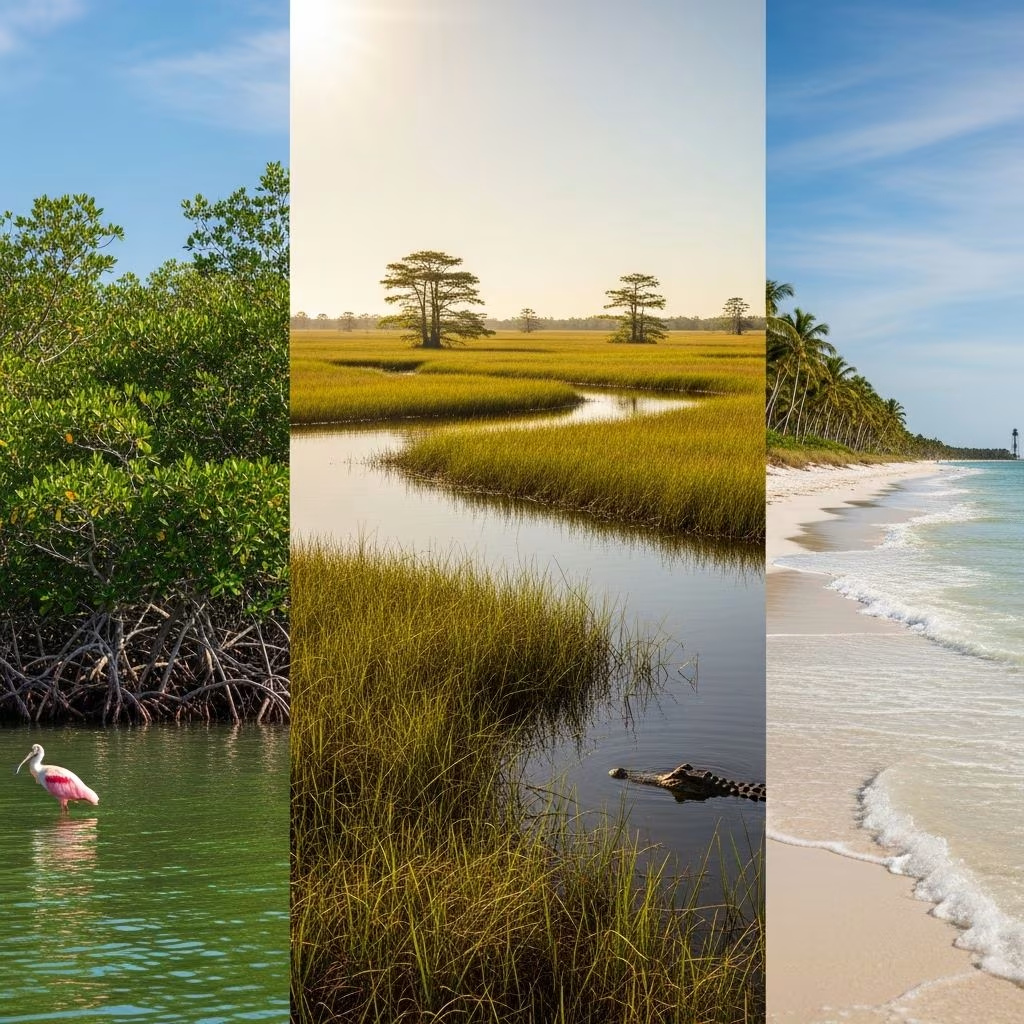
The Sunshine State’s national parks span over 2.5 million acres, safeguarding unique habitats like mangrove forests, sawgrass prairies, barrier islands, and coastal dunes. Everglades National Park stands out as the largest at 1.5 million acres and holds World Heritage status for its biodiversity, including rare species such as the Florida panther and American crocodile.
These sites blend natural beauty with human history, from ancient Indigenous shell mounds to Spanish colonial forts. Visitors can engage in boating, hiking, camping, and water sports while contributing to conservation efforts amid challenges like sea-level rise and invasive species.
Established in 1947, Everglades National Park protects the largest subtropical wilderness in the U.S., featuring slow-moving ‘River of Grass’ with sawgrass marshes, cypress swamps, and mangrove estuaries. It’s vital for South Florida’s water supply and hosts alligators, manatees, wading birds, and elusive panthers.
Access the park via three main entrances: Homestead (Ernest F. Coe Visitor Center), Shark Valley, and Everglades City (Gulf Coast Visitor Center). Airboat tours from nearby operators reveal wildlife in the sloughs, while boardwalk trails like Anhinga offer easy viewing platforms.
Ninety-five percent water, Biscayne National Park immerses visitors in coral reefs, seagrass beds, and mangrove islands just minutes from Miami. It’s a haven for snorkelers and divers spotting sea turtles, colorful fish, and dolphins amid shipwrecks.
Boat access is essential; the Dante Fascell Visitor Center provides exhibits and tour bookings. Paddle kayaks through Biscayne Bay or join guided snorkel trips to explore living reefs.
| Activity | Duration | Highlights |
|---|---|---|
| Snorkeling Tours | 4-6 hours | Reefs, marine life, mangroves |
| Kayaking/Paddleboarding | 2-4 hours | Island hopping, birdwatching |
| SCUBA Diving | Full day | Shipwrecks, deeper reefs |
Seventy miles west of Key West, Dry Tortugas National Park comprises seven coral keys, including Garden Key with historic Fort Jefferson. This remote gem features pristine beaches, vibrant reefs, and legends of pirates and treasure.
Reach it by ferry (2.5 hours) or seaplane (40 minutes) from Key West. Spend the day snorkeling crystal waters or touring the massive 19th-century fort, which once held Dr. Samuel Mudd.
America’s first national preserve, Big Cypress spans 729,000 acres of cypress swamps and pine flatwoods, crucial for Everglades recharge and home to Florida panthers, black bears, and orchids. Off-road vehicle trails and scenic drives attract adventurers.
Activities include ranger-guided hikes, biking, canoeing, and stargazing at this International Dark Sky Site. The Oasis Visitor Center offers exhibits on Seminole culture.
Stretching 24 miles along central Florida’s coast, Canaveral National Seashore preserves dunes, lagoons, and shell middens from Timucua people. It’s a sea turtle nesting hotspot and offers crowd-free beaches for swimming, surfing, and kayaking.
Highlights include Apollo Beach for views of the Kennedy Space Center and Turtle Mound for climbing ancient oyster stacks. Mosquito Lagoon excels for manatee and bird sightings.
Near St. Augustine, this 1742 coquina watchtower guarded against British incursions. Ferry across the Matanzas River to explore the fort, then hike shaded trails through dunes and maritime forest.
St. Augustine’s forts represent Spanish colonial defense. Castillo, the oldest masonry fort in the U.S., offers cannon firings and history talks.
Overlooking the St. Johns River, it commemorates French Huguenot settlers with a replica fort and Timucua exhibits.
Spanning Florida and Mississippi, this seashore features white-sand beaches, emerald waters, and Civil War-era forts like Fort Pickens. Camp, snorkel, or hike trails amid dunes and pines.
Best Seasons: Winter-spring for mild weather; summers bring heat, humidity, and bugs.
Passes: $80 America the Beautiful annual pass covers all sites.
Accessibility: Many offer boardwalks and shuttles; check NPS apps for details.
Safety Tips: Hydrate, use bug spray, watch for wildlife, book ferries early for remote parks.
| Park | Location | Size (acres) | Key Feature |
|---|---|---|---|
| Everglades | Homestead/Naples | 1,500,000 | Wetlands biodiversity |
| Biscayne | Miami | 172,000 | Coral reefs |
| Dry Tortugas | Key West | 64,000 | Remote fort |
| Big Cypress | Ochopee | 729,000 | Swamp preserve |
| Canaveral | Titusville | 57,662 | Barrier islands |
These parks face Burmese pythons, rising seas, and development pressures. Support by following Leave No Trace, reporting invasives, and joining volunteer programs via Florida National Parks Association.
There are 11 NPS units, including three full national parks: Everglades, Biscayne, and Dry Tortugas.
Yes, both are primarily water-based; ferries and rentals available.
Limited; usually only in campgrounds or beaches on leash, not trails.
Everglades sees over 1 million visitors annually.
Options vary; Everglades has backcountry, Big Cypress dispersed, Dry Tortugas limited.
