

 Travel Essentials
 Travel Essentials

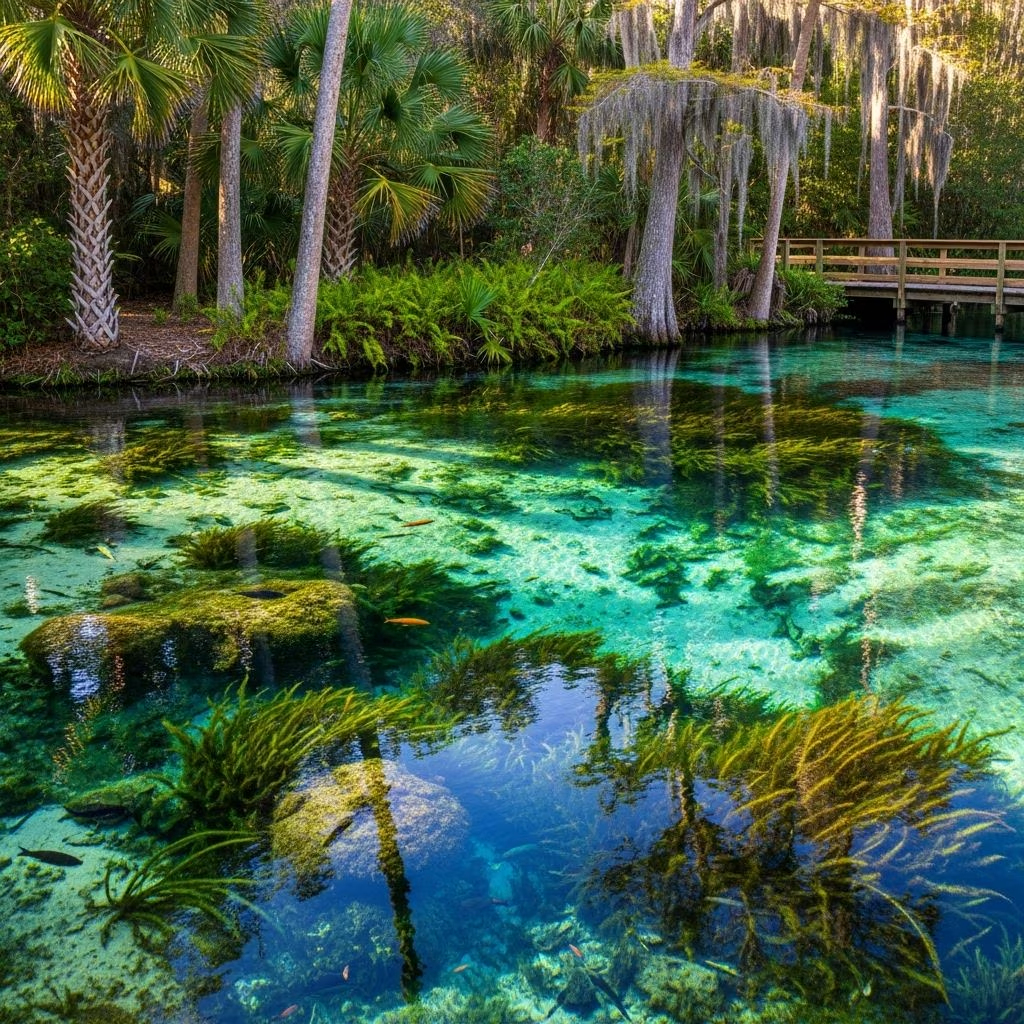
Explore Florida's most beautiful natural springs with activities like swimming, diving, kayaking, and wildlife viewing in year-round 72-degree waters.
 Travel Essentials
Florida stands as one of the world’s most remarkable destinations for freshwater spring exploration, hosting an extraordinary collection of natural fountains that attract visitors from across the globe. The state’s geology creates ideal conditions for these natural wonders, with the Floridan Aquifer—the largest self-replenishing freshwater aquifer on Earth—supplying water to hundreds of pristine spring systems. What makes Florida’s springs particularly special is not just their abundance, but their accessibility, consistent temperature, and the variety of recreational and educational opportunities they offer throughout the year.
The sheer number of natural springs in Florida is staggering. The state contains over 700 natural springs, with 33 classified as first-magnitude springs—the largest and most powerful. This concentration surpasses any other U.S. state and any single nation on Earth. North Florida alone boasts over 300 documented springs, with 19 of the state’s most significant first-magnitude springs located in this region. The consistency of water temperature across all Florida springs—maintaining approximately 72 degrees Fahrenheit year-round—creates an environment where aquatic life thrives and recreational activities remain enjoyable in every season.
These springs vary dramatically in character and scale. Some are tiny trickles known only to experienced backwoods explorers, while others are massive gushers of water that create rivers capable of supporting diverse ecosystems and recreational activities. This diversity means that whether you seek solitude in untouched natural settings or prefer established facilities with amenities, Florida’s springs offer suitable options.
Florida’s springs naturally cluster into distinct regions, each offering unique characteristics and experiences:
Rainbow Springs near Dunnellon consistently ranks as Florida’s most visually stunning spring, offering 1,400 acres of recreational space. The spring produces approximately 500 million gallons of crystal-clear water daily, creating the Rainbow River that flows toward the Gulf. The transparent waters allow visitors to observe native fish, turtles, and aquatic plants in their natural habitat. The facility provides multiple access points for swimming, snorkeling, tubing, kayaking, and photography. Well-maintained nature trails wind through the property, offering opportunities for hiking and wildlife observation beyond the water itself.
Located in High Springs, Ginnie Springs comprises seven distinct springs creating a unique multi-spring complex. The water clarity here exceeds most other Florida springs, with visibility extending to remarkable depths, making it the premier destination for scuba diving. The spring water maintains its constant 72-degree temperature year-round, and diving is permitted through three distinct areas: Ginnie Springs itself, Devil’s Eye, and Devil’s Ear. The depth exceeds 50 feet in certain areas, offering advanced diving opportunities. Beyond diving, the facility accommodates swimmers, snorkelers, and those simply wishing to experience the springs’ beauty without underwater activities.
Silver Springs earned its nickname “Florida’s First Tourist Attraction” by pioneering the concept of spring-based tourism in the state. This sprawling complex encompasses over 4,000 acres and offers glass-bottom boat tours that allow visitors to observe underwater ecosystems without getting wet. The facility serves families with varied interests and physical abilities, making it particularly accessible to visitors unable to engage in active water sports. The transparent waters and abundant wildlife make photography particularly rewarding here.
Edward Ball Wakulla Springs State Park, located south of Tallahassee, ranks among Florida’s largest, deepest, and most famous springs. Recent National Geographic expeditions have explored the spring’s remarkable depth and complex cave systems, garnering international scientific attention. The park features swimming platforms and a dive tower for those wishing to experience the depths. Glass-bottom boat tours provide another perspective on the underwater world without requiring diving certification.
Three Sisters Springs, part of the Crystal River National Wildlife Refuge, transforms during winter months into the premier manatee viewing destination in Florida. From December through March, hundreds of manatees congregate in these warm waters, creating unforgettable wildlife viewing opportunities. During manatee season, kayaking within the main spring is prohibited to minimize disturbance to the animals, but paddling in the river outside the spring entrance provides excellent viewing opportunities. A shuttle service and boardwalk system allow those preferring dry exploration to observe manatees from designated viewing areas. From April 1 through November 14, kayakers gain access to the spring itself, offering different recreational possibilities during the off-season.
This Northern Florida destination provides consistent opportunities to observe manatees in their natural environment, with winter months offering particularly concentrated populations. The spring-fed area supports diverse ecosystems and attracts multiple wildlife species beyond manatees, including various bird species and native fish populations.
For kayakers seeking relatively untouched natural environments, Econfina Creek offers an expedition through springs that rank among Florida’s least disturbed. A paddling journey through this system passes multiple springs including Clifford Pitt, Emerald, McCormick, and Jim’s Hole. These springs retain their wild character, with minimal commercial development, making them ideal for visitors seeking authentic natural experiences and photography opportunities capturing unspoiled ecosystems.
Located in Vernon, Cypress Springs offers an unusual sensation—swimming and paddling in water that circulates in whirlpool patterns. The privately-owned area requires a half-mile paddle down Holmes Creek to access the spring itself, adding an element of adventure to the experience. The relatively isolated location and unique water dynamics make this a destination for visitors seeking distinctive spring experiences beyond typical swimming and diving.
This 202-acre spring-fed body of water contains six distinct springs accessible for exploration, located approximately one hour east of Tallahassee. Jackson Blue Springs feeds into the pond and is accessible by vehicle for those preferring not to paddle. The Twin Caves and Hole in the Wall springs within the complex offer distinctive paddling and exploration opportunities, while Shangri-La spring adds to the diverse ecosystem.
The consistent 72-degree water temperature enables water-based recreation throughout the year:
Beyond water activities, spring destinations offer:
| Spring Destination | Primary Activities | Best Season | Accessibility Features | Notable Characteristics |
|---|---|---|---|---|
| Rainbow Springs | Swimming, tubing, kayaking, photography | Year-round | Full facilities, multiple access points | Largest spring, most developed |
| Ginnie Springs | Diving, snorkeling, swimming | Year-round | Dive instruction available | Clearest water, advanced diving |
| Three Sisters Springs | Kayaking, manatee viewing | December-March (manatee season) | Boardwalk, shuttle service | Winter manatee concentration |
| Silver Springs | Glass-bottom boats, swimming, hiking | Year-round | Highly accessible, family-oriented | Historic attraction, 4,000 acres |
| Econfina Creek | Kayaking, nature observation | Year-round | Guided tour recommended | Pristine, minimally developed |
All Florida springs maintain approximately 72 degrees Fahrenheit year-round due to the consistent underground aquifer temperature, making them suitable for swimming and water activities throughout the year.
No. While diving is available at certain springs for certified divers, all springs offer snorkeling, swimming, kayaking, and glass-bottom boat tours for non-divers. Many facilities provide diving instruction for those wishing to obtain certification.
Florida springs remain accessible and enjoyable year-round. Winter (December-March) is ideal for manatee viewing at Three Sisters Springs and other Northern Florida springs. Summer and spring offer excellent conditions for all water activities with fewer crowds during weekdays.
Yes. Spring water maintains excellent clarity and purity. Most commercial spring facilities have lifeguard supervision during peak hours. The consistent water temperature eliminates cold-water shock concerns present in many other swimming destinations.
Policies vary by facility. Many springs allow personal watercraft but require registration or fees. Others offer only rental options. Check specific facility regulations before planning your visit with personal equipment.
Florida’s natural springs offer something for every visitor type—from serious scuba divers seeking challenging underwater exploration to families seeking accessible swimming and nature experiences. The geographic distribution of springs across the state enables visitors to combine spring visits with other Florida attractions, or to focus exclusively on spring exploration during multi-day trips.
The relatively low cost compared to other nature-based tourism destinations—many springs charge nominal entry fees or offer completely free access—makes spring exploration accessible to visitors with varied budgets. Combine this affordability with year-round accessibility and diverse activity options, and Florida’s springs represent one of the most valuable natural tourism resources in North America.
Whether you’re seeking adventure through pristine paddling experiences, scientific exploration of unique aquatic ecosystems, family-friendly recreational swimming, or peaceful communion with untouched nature, Florida’s springs deliver experiences that connect visitors directly with one of Earth’s most remarkable freshwater environments.
