

 Travel Essentials
 Travel Essentials

Discover Fontainebleau's bouldering paradise: top areas, essential gear, grading systems, circuits, and tips for first-time climbers just 60km from Paris.
 Travel Essentials
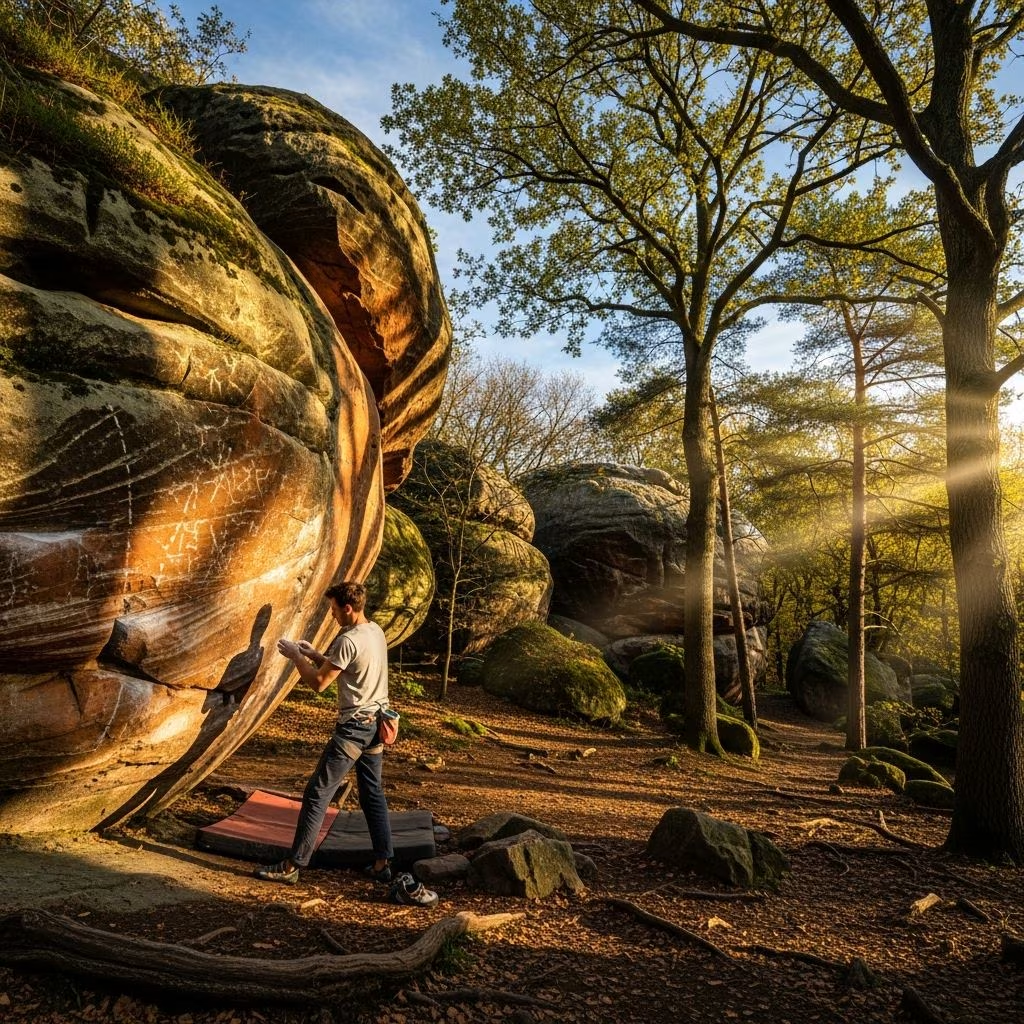
Just an hour’s drive southeast of Paris lies Fontainebleau, a sprawling forest renowned globally as a bouldering mecca. With thousands of sandstone boulders scattered across its trails, it offers over 20,000 documented problems, drawing climbers from every corner of the world. This guide equips newcomers with everything needed to dive into this unique climbing haven, from preparation strategies to must-try circuits and hidden gems.
Fontainebleau’s allure stems from its diverse terrain and historical significance. The area’s millstone grit boulders, shaped by millennia of erosion, present everything from steep overhangs to delicate slabs and technical aretes. Unlike gym bouldering, here climbers tackle outdoor challenges on rough rock that builds skin toughness and technique. Circuits—color-coded collections of 20 to 70 problems—define the experience, blending navigation, endurance, and skill across varied styles.
Proximity to Paris makes it ideal for weekend warriors, yet its vastness ensures quiet sectors for solitude. Popular zones see heavy traffic and polished holds, while lesser-known areas remain pristine and vegetated. Whether you’re flashing V5s or piecing together 7th-grade sends, Fontainebleau rewards creativity and hip movement over brute strength.
Reaching Fontainebleau is straightforward. From Paris, hop on a Transilien train from Gare de Lyon to Fontainebleau-Avon station (about 40 minutes), then bus or taxi to the forest edges. Drivers enjoy flexibility via the A6 motorway, with parking at key areas like Bas Cuvier or Rocher Canon. Rent a car for multi-sector exploration, as public transport limits access to remote boulders.
Bike rentals in town provide eco-friendly transport between sectors. Walking trails connect popular zones, but circuits often span kilometers—pack light and orient with apps or maps. Stay in nearby hostels, campsites, or chateaux for immersion in this royal forest, once hunted by French kings.
Success in Fontainebleau demands targeted prep. Build skin resilience on rough outdoor rock, prioritizing slabs, topouts, and press-ups over pull-ups. Train for multi-day sessions: climb consistently but moderately to adapt to the forest’s relentless volume. Seek technical walls and aretes to mimic local styles.
Pack layers for unpredictable weather—cool mornings yield to sunny afternoons. A chalk bag, crash pad (if solo), brush, and water bladder are musts. Download offline maps, as signal fades deep in the woods.
Fontainebleau uses a unique font scale, diverging from V-grades. Problems are letter-graded: from 4 (easy slabs) to 8C (world-class testpieces), with + for harder variants. New standards like 5+6 and 7+8 refine nuances. Visual appeal guides selection—climb what beckons, as aesthetics predict quality.
| Font Grade | Approx. V-Grade | Style Examples |
|---|---|---|
| 5 | V0-V1 | Basic traverses, juggy faces |
| 6A-6B | V3-V4 | Slabs, short overhangs |
| 7A-7B | V6-V8 | Technical aretes, crimps |
| 7C+ | V10+ | Powerful roofs, dynos |
Cross-reference with old purple guides for classics, but modern topos prevail.
No Fontainebleau trip skips a guidebook. They detail topos, circuits, and access for nearly 40 areas and 3,000+ problems.
Digital apps supplement, but paper withstands weather. Old purple Fontainebleau Climbs aids history buffs.
Yellow circuits suit novices, offering warm-ups on gentle terrain. Start at 91.1 or Gorges du Houx for slabs and short problems. These build confidence amid stunning forest views.
Bas Cuvier dazzles with blue circuits: powerful roofs and highballs. Cul de Chien delivers slabs and traverses; expect polish from crowds. Diplodocus hides gems in quieter nooks.
Rocher Fin or Corde a Linge test limits with 7s and 8s. Venture to less-trafficked sectors for clean holds and solitude.
Sample Itinerary (3 Days):
Circuits elevate bouldering to an art form—color-coded paths hopping boulders, blending grades and styles. Easy yellows mix fun traverses with sneaky slabs; blues demand power and precision. Complete one for historical immersion and skill growth; they tour the forest beautifully. Popular ones polish quickly, so scout vegetated alternatives for friction.
Spotters are vital for tall boulders; pads cushion falls. Brush holds pre-send to remove moss, but avoid over-cleaning. Respect closures for raptor nesting or erosion. No tick-marking—keep the forest pristine. Bury waste; pack out trash. Climb left-to-right on circuits to match flow.
Camp at designated sites or book Auberge de Fontainebleau hostels. Luxury seekers find chateau hotels nearby. Fuel up on crepes and baguettes from town bakeries; post-climb beers at climber bars foster community.
Avoid overpacking—mobility trumps gear hauls. Don’t chase numbers; savor the environment. Rest days prevent burnout amid high volume. Pair with Paris visits for urban contrast.
Yes, yellow circuits provide gentle intros, though some slabs challenge footwork.
Fall and spring offer mild temps; avoid summer heat and winter mud.
Recommended for solos; groups share. Locals rent them.
4-7 days to sample sectors without fatigue.
Essential for navigation and topos.
Link circuits for mega-sessions. Flash-hunt in low-traffic zones. Train specifically for font styles: drop-knees, heel hooks, thumb catches. Join local comps for vibe.
Fontainebleau isn’t just climbing—it’s a forest odyssey blending athleticism, nature, and tradition. Heed its lessons, respect its rules, and it yields sends and serenity in equal measure.
