

 Travel Essentials
 Travel Essentials

Discover the history, architecture, and visitor tips for the Forbidden City, the UNESCO-listed palace that housed emperors for centuries.
 Travel Essentials
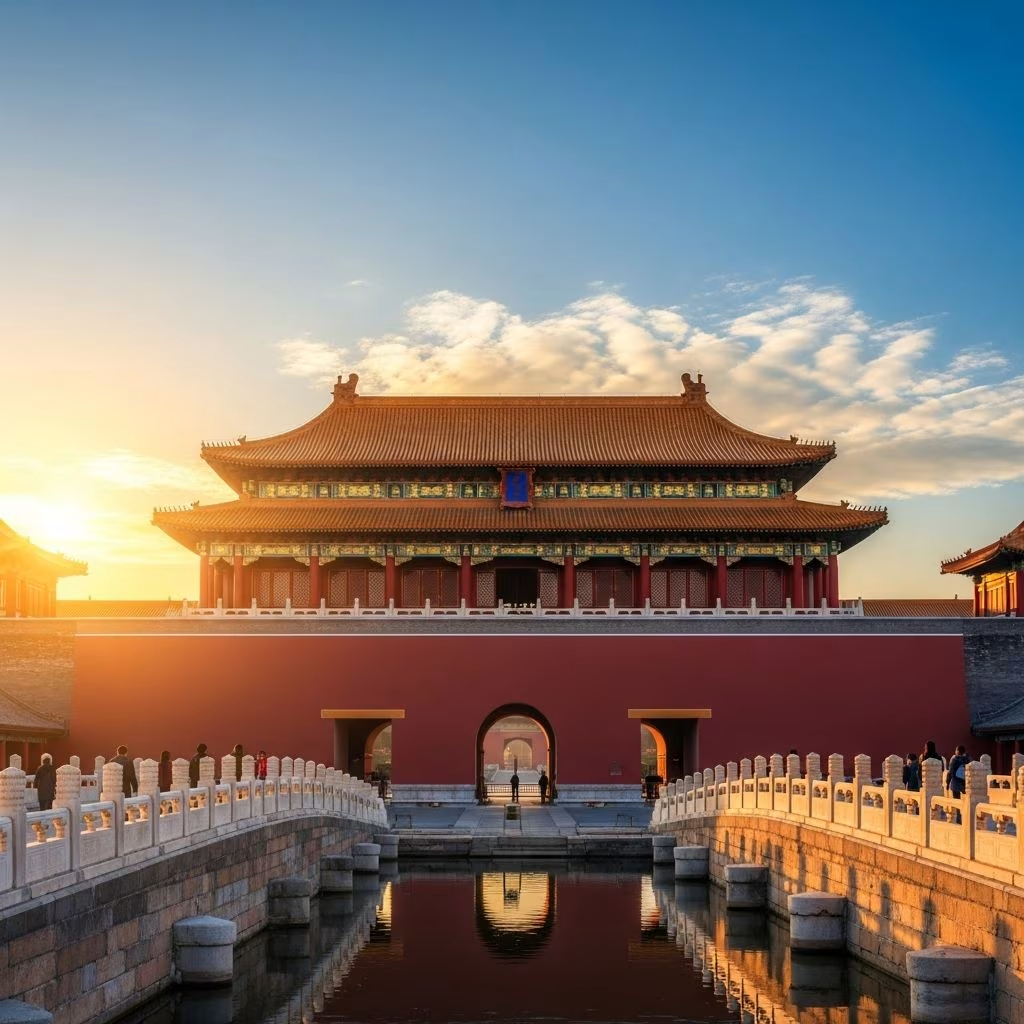
The Forbidden City stands as one of the world’s most iconic historical sites, a sprawling imperial complex in central Beijing that served as the political and ceremonial heart of China for nearly 500 years. Built during the early 15th century, this vast palace enclave embodies the grandeur of imperial China, with its red walls, golden roofs, and intricate designs reflecting ancient cosmology and power.
Construction of the Forbidden City began in 1406 under the orders of the Yongle Emperor (Zhu Di) of the Ming Dynasty, following his controversial rise to power through a coup against his nephew. Completed in 1420, the palace was designed as the new capital’s core after relocating from Nanjing, solidifying Beijing’s status as the empire’s center. Over a million laborers, including 100,000 skilled artisans, toiled to create this monumental structure, which spans 72 hectares (178 acres), enclosed by towering 10-meter walls and a 52-meter-wide moat.
For 24 emperors from the Ming (1368–1644) and Qing (1644–1912) dynasties, the Forbidden City was both residence and seat of government. Access was strictly forbidden to commoners—hence its name—punishable by death, with even court officials limited in entry. It remained the empire’s nerve center until the Qing collapse in 1912, when the last emperor, Puyi, abdicated. In 1925, it transformed into the Palace Museum, safeguarding imperial artifacts, and earned UNESCO World Heritage status in 1987 for its architectural supremacy and historical significance.
The Forbidden City’s design adheres to Confucian ideals of cosmic harmony, aligned on a precise north-south axis that mirrors the universe’s order. This central pathway, the Imperial Way, stretches from the Meridian Gate in the south to Jingshan Park in the north, emphasizing the emperor’s role as the ‘Son of Heaven.’ Measuring 961 meters long and 753 meters wide, it comprises over 90 palace compounds, 98 main buildings, and nearly 10,000 rooms in total.
Classic Chinese palatial style dominates: bilateral symmetry, wooden frameworks, and vibrant imperial colors—red for joy and protection, yellow for the emperor’s exclusivity. Dragon motifs abound, symbolizing imperial authority, while phoenixes represent the empress. Roof tiles glisten with yellow glaze, reserved solely for the emperor, underscoring hierarchical symbolism. The layout divides into an outer court for ceremonies and an inner court for private life, with major halls elevated on marble platforms connected by verandas.
| Key Architectural Feature | Symbolism | Location |
|---|---|---|
| Meridian Gate (Wu Men) | Entry to outer court; five pavilions for ceremonies | Southern entrance |
| Hall of Supreme Harmony | Throne hall; largest structure (35m high) | Outer court center |
| Imperial Garden | Private retreat with pavilions and ancient trees | Northern end |
Further north, the Six Eastern and Western Palaces housed concubines, each with private gardens, while the Imperial Garden offered serene escapes amid 300-year-old cypresses and rockeries.
Beyond architecture, the Palace Museum boasts over 1.8 million artifacts from imperial collections, including porcelain, jade, paintings, and clocks gifted by European envoys. Treasures like the Yongle-era jade seals and Qing dynasty robes reveal artistic evolution. The site’s living history includes ongoing restorations, preserving its 600-year-old timbers through modern techniques.
Symbolism permeates every detail: nine—the highest yang number—appears in nails, steps, and roof ridges for auspiciousness. Colors and numbers reinforced feng shui principles, aligning the palace with heavenly mandates.
Today, over 19 million visitors annually explore this UNESCO gem. Entry requires advance tickets via the official app (daily limit: 40,000), priced at 60 RMB off-season, 120 RMB peak (April–October). Arrive early (8:30 AM opening) at Meridian Gate via subway (Line 1, Tiananmen East).
Plan 3–4 hours: Follow the axis counterclockwise for efficiency. Audio guides (40 RMB) or English tours enhance understanding. Photography is allowed outside halls; no drones. Accessibility includes ramps, but stairs challenge mobility-impaired visitors.
Venture beyond crowds to the Nine Dragon Screen, a 30m-long glazed wall with intricate dragons warding off evil. The Treasure Gallery (extra fee) displays rare gems, while the Clock Gallery showcases mechanical marvels from the 18th century. The Eastern Palaces, recently restored, offer glimpses into concubines’ lives with period furnishings.
For serenity, the Imperial Garden’s pavilions provide shaded benches amid pavilions like the Hall of Imperial Peace. Night visits (select dates) illuminate the complex magically.
Ongoing UNESCO-backed projects combat pollution and wear, with digital mapping aiding repairs. The Palace Museum expands via branches in Shanghai and plans for immersive VR exhibits, ensuring accessibility for future generations.
A massive imperial palace complex in Beijing, home to Ming and Qing emperors from 1420–1924, now a museum with 980 buildings.
14 years, from 1406 to 1420, involving a million workers.
No—open to ticketed public since 1925, though strict rules maintain order.
Book early tickets, visit midweek mornings, or explore rear palaces.
Yes: multilingual apps, audio guides, and signage.
| Aspect | Details |
|---|---|
| Tickets | Online only; 60–120 RMB; book 1–2 weeks ahead |
| Hours | 8:30 AM–5 PM (last entry 4 PM) |
| Banned Items | Food, large bags, tripods |
| Peak Season | April–Oct; expect queues |
