

 Travel Essentials
 Travel Essentials

Complete travel guide to Formentera featuring beaches, diving, lighthouses, and sustainable tourism in the Balearic Islands.
 Travel Essentials
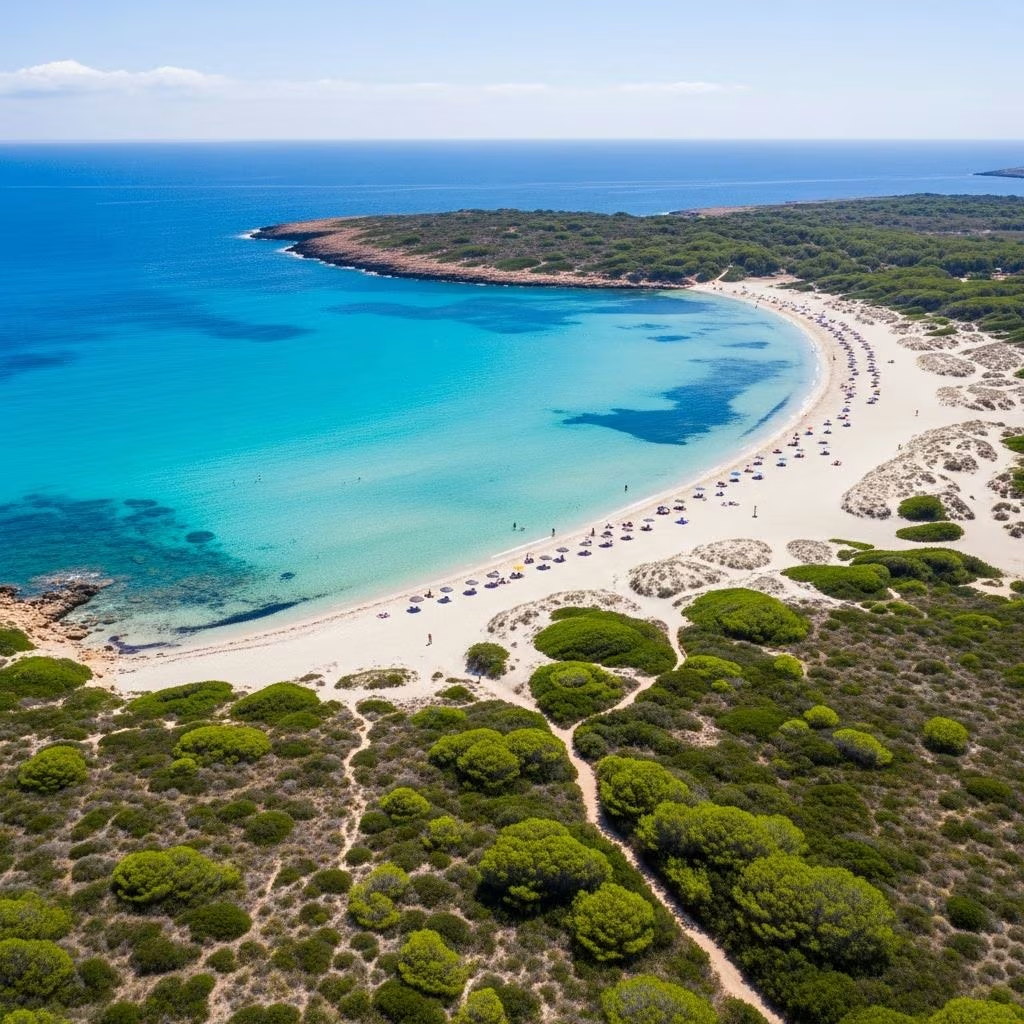
Nestled within the Balearic Islands, Formentera stands as one of the Mediterranean’s most enchanting destinations for travelers seeking authentic relaxation and natural beauty. As the smallest of the inhabited Balearic Islands, this Spanish gem has cultivated a reputation as a sanctuary for those yearning to escape the hustle of conventional tourism. Unlike its more bustling neighbors, Formentera embraces a philosophy centered on environmental stewardship, cultural authenticity, and unhurried living—a philosophy that permeates every aspect of the visitor experience.
What distinguishes Formentera from other Mediterranean destinations is its unwavering commitment to preserving its natural landscapes while limiting overdevelopment. The island spans a modest geographic footprint, yet contains remarkable ecological diversity and coastal splendor. Visitors frequently describe the experience as one where time seems to operate differently—where stress diminishes and presence heightens simply by virtue of the island’s serene atmosphere and pristine surroundings.
The island’s infrastructure has been thoughtfully designed to accommodate tourism without compromising its ecological integrity. Transportation options favor sustainable methods, including cycling infrastructure, electric vehicle rentals, and well-maintained public pathways. This deliberate approach to tourism development reflects a broader commitment to sustainable travel practices that benefit both visitors and local communities.
Formentera’s environmental significance extends beyond its beaches to encompass several protected natural areas that showcase Mediterranean biodiversity. The Ses Salines Natural Park represents one of the island’s most ecologically important zones, spanning over 14,000 hectares that straddle the waters between Formentera and Ibiza. This expansive reserve functions as a critical habitat for approximately 210 distinct bird species, making it a paradise for ornithology enthusiasts and nature observers.
Beneath the surface, the seabed of Ses Salines displays meadows of posidonia—a marine flowering plant essential to Mediterranean ecosystem health. This underwater landscape has earned recognition as a protected UNESCO World Heritage Site, reflecting its global significance for marine conservation.
The Reserva Marina de la Punta de Sa Creu occupies the southeastern reaches of Formentera’s coastline, distinguished by its own posidonia ecosystems and remarkable marine fauna. Visitors to this marine reserve frequently encounter sea turtles and dolphins in their natural habitat, providing unforgettable wildlife encounters.
Three lighthouses dot Formentera’s landscape, each occupying strategically significant coastal positions. The most renowned of these structures is Cap de Barbària, positioned on the southwestern extremity of the island. This lighthouse stands amid a dramatic rocky terrain featuring volcanic-like formations and windswept vegetation—an environment perfectly suited for capturing sunset photographs or observing raptors and smaller bird species that inhabit the headland. The location also hosts populations of small lizard species displaying striking green and blue coloration.
On the eastern end stands Far de Sa Mola, a lighthouse steeped in literary history. Jules Verne referenced this precise location in his novel *Off on a Comet (Hector Servadac)*, famously describing it as ‘the end of the world.’ This connection to classic literature adds a romantic dimension to visits to this remote lighthouse position.
Formentera’s underwater terrain rivals its terrestrial attractions in diversity and visual appeal. For divers possessing appropriate certifications, the island offers access to multiple exceptional dive sites that reveal Mediterranean underwater ecosystems in pristine condition. The wreck of *Don Pedro*, a cargo vessel exceeding 140 meters in length, constitutes one of the Mediterranean’s most significant shipwrecks and functions as an artificial reef supporting abundant marine life. This submerged vessel attracts moray eels, barracudas, and groupers, creating opportunities for divers to observe these species in their natural context.
Beyond *Don Pedro*, additional dive locations merit exploration: La Mariana, El Arco, and the Punta Rasa Caves each present distinct geological formations and marine habitats. These varied sites accommodate different skill levels and interests within the diving community, from photographers seeking specific subjects to adventurers exploring geological formations.
The island’s crystalline waters and protected bays create ideal conditions for numerous aquatic pursuits beyond diving. Visitors engage in snorkeling, sailing, and small vessel rentals, each activity providing distinct perspectives on Formentera’s marine environment. The calm waters and consistent weather patterns throughout much of the year create favorable conditions for both recreational and experienced water sports enthusiasts.
The whitewashed village of Sant Francesc Xavier functions as Formentera’s administrative capital and represents the island’s physical and cultural epicenter. This walkable community has retained its authentic character despite tourism development, featuring narrow streets lined with boutique establishments, casual cafés, and locally-oriented businesses.
The primary architectural landmark is the Església de Sant Francesc Xavier, a religious structure dating to 1726. This building transcends conventional church architecture, incorporating defensive fortification characteristics that reflect its historical dual purpose. The structure features robust stone walls and a vaulted ceiling equipped with artillery positions—features originally designed to provide community defense against pirate incursions that historically threatened Mediterranean island communities.
Additional cultural sites within Sant Francesc include the Capilla de sa Tanca Vella chapel, the Museo de Etnografía de Formentera dedicated to preserving local heritage and traditional practices, and the historic cemetery situated at the community’s periphery.
Formentera’s human occupation extends into prehistoric antiquity, evidenced by archaeological sites scattered throughout the island. The approach toward Cap de Barbaria passes through territory containing visible prehistoric remains, while the megalithic tomb of Ca na Costa dates to approximately 1800 BC. The Roman camp of Can Blai, featuring five defensive towers arranged around a quadrangular perimeter, provides physical evidence of Roman military presence during the classical period.
Bosc del Rei represents one of Formentera’s significant natural features—a pine forest that extended considerably more extensively during earlier historical periods. Prior to the 1930s, this forest covered substantially larger territory than contemporary conditions reflect. Today, visitors traverse this woodland habitat while traveling toward Cap de Barbaria, experiencing the interplay between Mediterranean vegetation and coastal geology.
The Rutas Verdes, or Green Routes, constitute a comprehensive network of carefully marked pathways accommodating both pedestrian and cycling exploration. These trails traverse diverse terrain including coastal paths, rural roads, and forested sections, enabling visitors to discover the island’s interior landscape and remote coastline without requiring motorized transportation. This infrastructure reflects Formentera’s commitment to sustainable tourism and environmental protection.
Accommodation options on Formentera reflect the island’s emphasis on boutique, environmentally-conscious tourism rather than mass-market development. Es Pujols contains the island’s primary concentration of hotel establishments, offering visitors diverse comfort levels and price ranges. Properties within this district typically feature modern amenities while maintaining design consistency with Mediterranean architectural traditions.
Boutique properties like Gecko Hotel & Beach Club exemplify the hospitality approach favored on Formentera—beachfront locations with luxury furnishings, quality amenities including yoga sessions and paddle boarding opportunities, gourmet dining facilities, and evening entertainment featuring DJ performances.
Formentera’s food culture emphasizes fresh Mediterranean ingredients and locally-sourced provisions. Establishments throughout the island, including notable venues like Es Molí de Sal, feature gourmet preparations highlighting regional specialties. The dining atmosphere typically mirrors the island’s overall philosophy—unhurried, quality-focused, and centered on authentic flavors rather than elaborate presentation.
While Formentera prioritizes relaxation over frenetic nightlife, Es Pujols hosts the island’s entertainment venues concentrated within narrow backstreets. Club Tipic holds historical significance as the island’s oldest and most established party venue, famous for hosting Pink Floyd in 1971. Other venues including Pineta Club, Pachanka Music Club, and The Beach Formentera provide evening entertainment options.
Pre-club activities include cocktail service at establishments like Neroopaco, where visitors prepare for themed evening events such as “Flow Power” and “Piratas” celebrations.
Formentera’s flat terrain and modest dimensions make the island exceptionally accessible for cycling adventures, a transportation method that aligns perfectly with the island’s sustainability philosophy. Bicycle rental facilities operate throughout the island, providing equipment ranging from casual recreation models to performance-oriented options.
For visitors preferring motorized transportation, car rental agencies operate at La Savina port, offering traditional gasoline vehicles, scooter rentals for agile navigation of narrow village streets, and increasingly, electric vehicles reflecting the island’s environmental commitment.
Port de la Savina functions as Formentera’s primary gateway, receiving ferry services connecting the island to Ibiza and other Balearic locations. The port maintains car and scooter rental facilities, providing immediate access to island transportation options upon visitor arrival.
Visitors based on Ibiza frequently undertake day excursions to Formentera utilizing guided bus tour services. These tours typically include €70 packages incorporating hotel pickup, ferry transportation from Ibiza, guided visits to primary attractions and viewpoints, dedicated beach swimming time at Las Salinas, and lunch provisions.
Extended visits typically follow predictable patterns: Day One encompasses eastern attractions including Sant Francesc Xavier, Cap de Barbaria lighthouse, Cala Saona beaches, Ses Salines natural area, and Ses Illetes coastal formations. Day Two or Three might incorporate ferry transfers to neighboring Balearic islands, enabling comparative island experiences.
Formentera experiences Mediterranean climate patterns with warm summers and mild winters. The tourism season intensifies during summer months when water temperatures and weather conditions optimize beach and water sports activities. Shoulder seasons—spring and autumn—provide pleasant weather with reduced visitor congestion, potentially offering more authentic cultural experiences and improved access to hospitality services.
Formentera’s exceptional ecological status depends upon visitor responsibility and conscious tourism practices. Protection of marine ecosystems, respectful treatment of archaeological sites, adherence to marked pathway systems, and minimization of waste during island visits constitute essential visitor obligations. The island’s sustainability philosophy extends to visitors through these behavioral expectations, ensuring that future generations can experience Formentera’s natural splendor without degradation.
Formentera represents a philosophical approach to Mediterranean tourism that prioritizes environmental integrity, cultural authenticity, and visitor wellbeing over economic maximization. The island’s combination of dramatic geological features, protected natural ecosystems, historical significance, and deliberately maintained relaxed atmosphere creates a distinctive travel experience rarely encountered in contemporary Mediterranean destinations. Whether engaging in water sports, exploring archaeological sites, experiencing local gastronomy, or simply appreciating coastal beauty, Formentera offers profound rewards for travelers willing to embrace its distinctive pace and values.
Summer months (June-August) provide optimal weather for beach and water activities, though shoulder seasons (May-June and September-October) offer pleasant conditions with fewer visitors.
Ferry services operate from Ibiza and other Balearic Islands to Port de la Savina, Formentera’s primary port facility.
The island’s flat terrain and manageable size make cycling a practical alternative to motorized transportation, and many visitors utilize bicycles as their primary exploration method.
Dive sites typically require standard recreational diving certification; visitors without certification can arrange training through local dive operators before attempting wreck and site exploration.
Lodging ranges from budget-friendly options to luxury boutique properties, with prices generally reflecting the island’s upscale positioning within Mediterranean tourism markets.
