

 Travel Essentials
 Travel Essentials

Discover key insights for first-time visitors to France: etiquette, safety, transport, food, and regional highlights to ensure a smooth adventure.
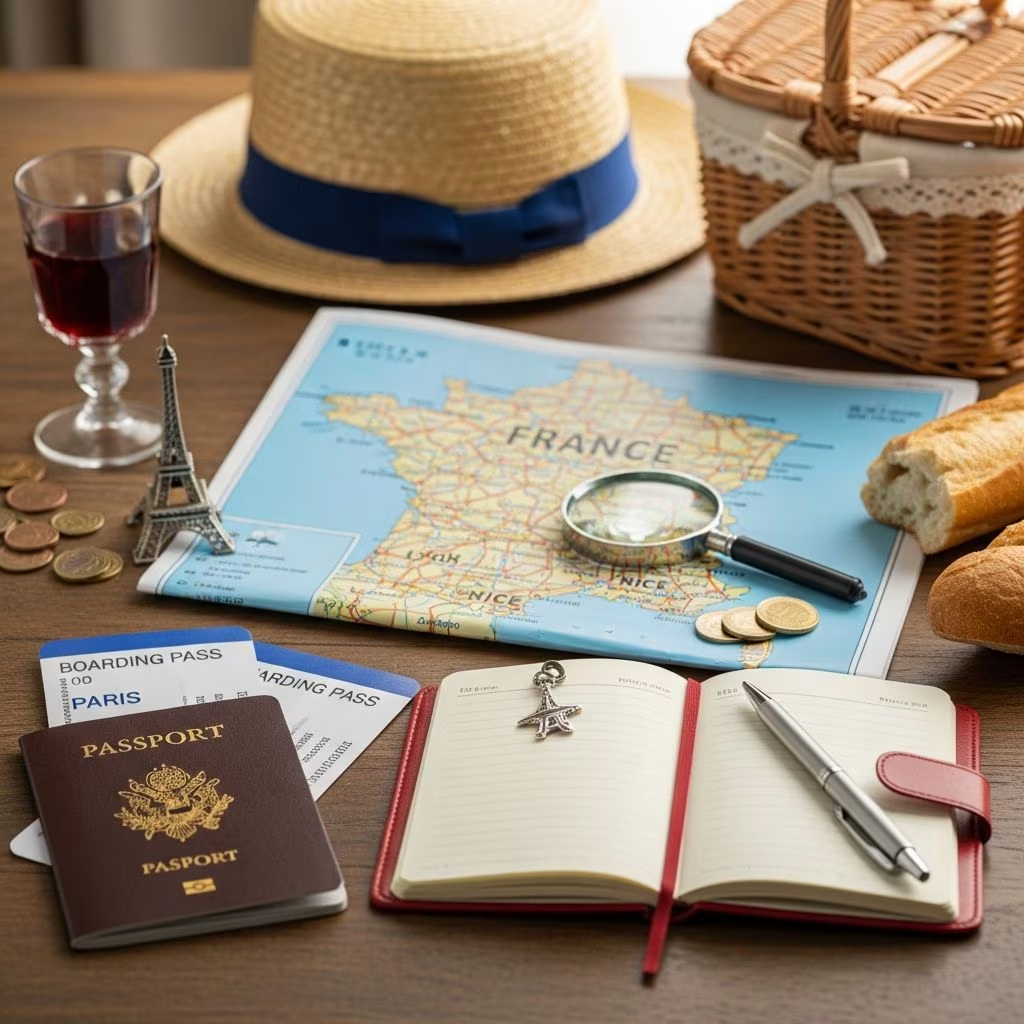 Travel Essentials
France captivates millions with its iconic landmarks, diverse landscapes, and rich culinary heritage. Beyond the glamour of Paris, the country offers mountain ranges, coastlines, historic villages, and vibrant regional cultures. To fully embrace this destination, understanding local customs, safety measures, and practicalities is crucial. This guide draws from reliable travel insights to equip you with actionable advice for a seamless journey.
France spans over 643,000 square kilometers, making it Europe’s largest country by land area. It features varied terrains from the Alps to the Mediterranean coast, and shares borders with eight nations. While Paris draws crowds, regions like Provence, Normandy, and the Loire Valley provide unique experiences. Limit your itinerary to one or two areas for deeper immersion rather than rushing nationwide.
Researching in French via translation tools uncovers hidden gems popular with locals, expanding beyond tourist traps.
French culture values formality and politeness. Greet shopkeepers, waitstaff, and locals with eye contact and a clear “Bonjour Monsieur” or “Bonjour Madame” upon entering any establishment. This simple act shows respect and often warms interactions. Failing to do so can lead to curt service, as personal businesses are deeply tied to owners’ livelihoods.
| Situation | Proper Greeting | Follow-Up |
|---|---|---|
| Entering a shop | Bonjour! | Au revoir upon leaving |
| At a café | Bonjour, un café s’il vous plaît | Merci beaucoup |
| Public transport | Excusez-moi | Pardon |
Use basic phrases like “merci” (thank you), “s’il vous plaît” (please), and “pardon” (excuse me). Memorizing five key expressions enhances connections and appreciation of l’art de vivre, the French art of living.
Expect fluid street dynamics. Jaywalking is common, with pedestrians crossing against signals if traffic allows. Queuing isn’t rigid; locals may slip ahead in lines at markets or metros without malice—it’s cultural, not rudeness. Stay alert on public transport, where priority seating goes to the elderly, pregnant women, and parents with children.
France’s regional diversity means customs vary: formal in Paris, relaxed in the south. Meals are sacred events lasting hours, centered on fresh, seasonal ingredients. Rushed dining signals disrespect.
No visa is required for stays under 90 days for many nationalities, but a valid passport is essential. No vaccinations are mandated, though standard precautions apply. France operates on Central European Time (CET), six hours ahead of U.S. East Coast, shifting to CEST in summer.
Petty crime targets tourists in crowded spots like metros, Eiffel Tower, and museums. Pickpocketing thrives via distractions like petitions or “found” gold rings. Phone grabs occur on streets and trains.
Protect yourself:
Terror risks persist; monitor alerts for demonstrations, common in cities. Stick to well-lit areas at night.
SNCF operates France’s high-speed TGV trains—book early for discounts up to 50%.
| Route | Travel Time | Tip |
|---|---|---|
| Paris to Lyon | 2 hours | Earliest bookings cheapest |
| Paris to Marseille | 3 hours | Scenic coastal views |
| Paris to Bordeaux | 2 hours | Wine region access |
In cities, metros and buses are efficient; get a Navigo pass for unlimited rides. Rent cars for rural areas, but note tolls and ZTL zones in historic centers.
France’s food scene shines through local specialties. Paris offers croissants and escargots, but venture out:
Dine leisurely; bread is free but not for dipping. Les Soldes sales in January and June offer deals on fashion and food items. Opt for markets for fresh produce.
Choices range from budget hostels (€30/night) to luxury hotels (€200+). Book apartments via platforms for kitchens, saving on meals. Shoulder seasons (April-May, September-October) balance weather and crowds.
Average costs:
Spring brings cherry blossoms; summer festivals like Fête de la Musique (June 21). Avoid August vacations when locals flee cities. Bastille Day (July 14) features fireworks nationwide.
Basic phrases go far; English is common in tourist areas, less so rurally.
Yes, with vigilance against theft. Women report feeling secure in well-populated zones.
Book 2-3 months ahead via SNCF app for lowest fares.
Yes, it’s potable and safe everywhere.
Seek local recommendations and eat where locals dine.
Connect deeply: Join wine tours, play pétanque in parks, or wander markets. Slow travel reveals France’s soul—from serene villages to bustling boulevards. Respect norms, stay vigilant, and prepare logistically for magic.
