

 Travel Essentials
 Travel Essentials

A comprehensive travel guide to Franconia, featuring historic sites, natural landscapes, regional cuisine, and practical visitor information.
 Travel Essentials
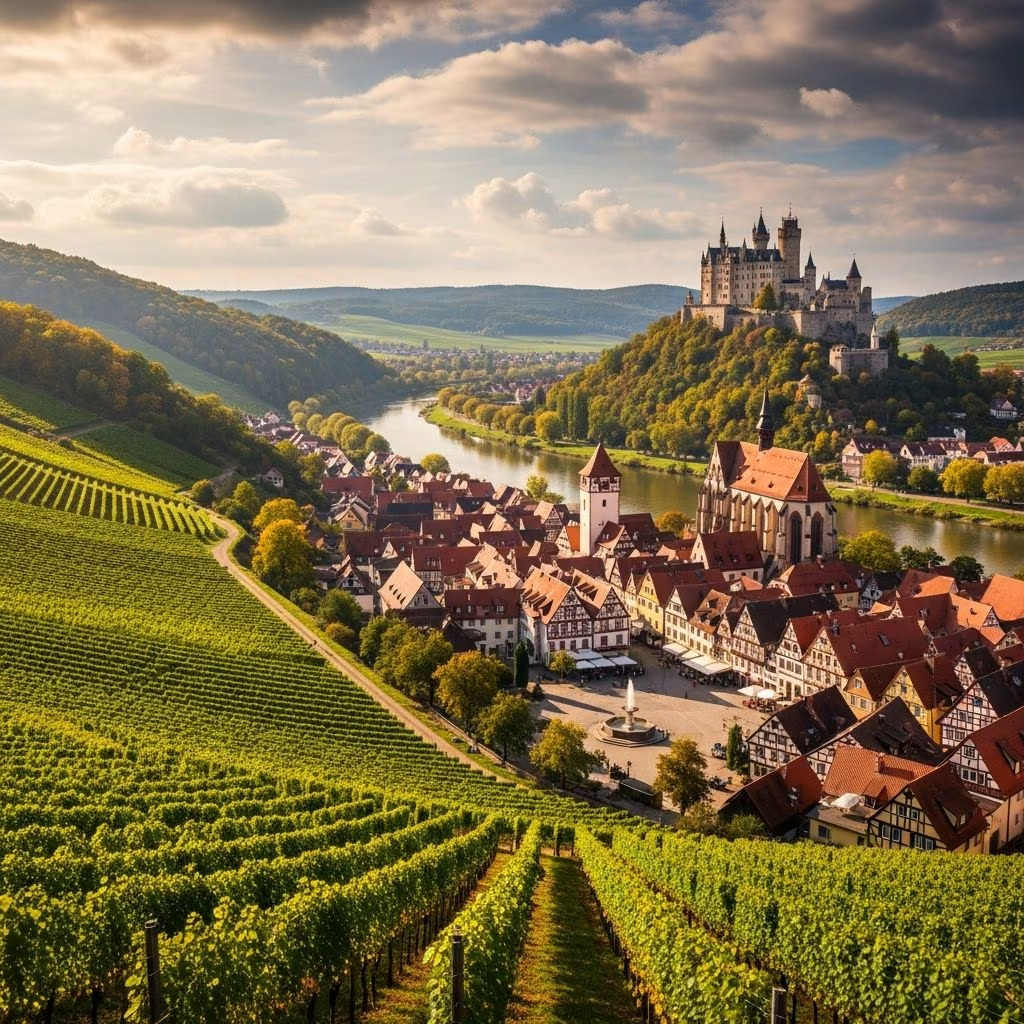
Nestled in northern Bavaria, Franconia represents one of Germany’s most underappreciated travel destinations. This distinctive region seamlessly blends historical significance with contemporary charm, offering visitors an authentic glimpse into Central European culture that extends far beyond the more commercialized attractions found in other parts of Bavaria. From meticulously preserved medieval town centers to expansive vineyards and world-renowned breweries, Franconia provides a multifaceted experience that appeals to history enthusiasts, nature lovers, culinary adventurers, and leisure travelers alike.
The roots of Franconia extend deep into European history, with the region having served as an independent duchy within the broader Holy Roman Empire framework. This historical independence shaped the region’s distinct cultural identity and architectural heritage. The legacies of centuries past remain tangible throughout Franconia, evident in countless castles, palaces, and fortifications that dot the landscape. Many of these structures showcase architectural evolution spanning multiple centuries, from Romanesque foundations to baroque embellishments.
The region’s historical importance is further underscored by its designation as home to several UNESCO World Heritage sites. These internationally recognized landmarks serve as testament to Franconia’s cultural contributions to European civilization and attract scholars and enthusiasts from across the globe.
Bamberg stands as one of Franconia’s most iconic destinations, renowned for its remarkably well-preserved medieval town center. The cityscape is dominated by the Romanesque-Gothic cathedral dedicated to St. Peter and St. George, which functions not only as a spiritual centerpiece but also as a repository of significant historical artifacts. The cathedral contains the Bamberg Horseman statue, a sculptural masterpiece that has captivated visitors for centuries, along with the tombs of Henry II and Cunigunde. Notably, this cathedral houses the only papal grave located within German territory, adding another layer to its historical significance.
Beyond the cathedral, Bamberg’s architectural portfolio includes the ornate New Palace and the medieval Alte Hofhaltung Palace. The town hall, strategically positioned in the central square, exemplifies the civic pride of earlier centuries. Perhaps most charming is the neighborhood known locally as “Little Venice,” where former fishermen’s residences featuring half-timbered construction and intimate gardens create an atmosphere that seems frozen in time.
Culinary experiences in Bamberg should not be overlooked, particularly the opportunity to sample the region’s famous smoked beer, a specialty that has been brewed according to traditional methods for generations.
Würzburg functions as another cornerstone of Franconian tourism, celebrated particularly for the magnificent Würzburg Residence. This palace underwent substantial reconstruction following World War II damage, emerging as a synthesis of multiple architectural traditions including German baroque, Viennese baroque, and French château styles. The interior spaces showcase unparalleled craftsmanship, with the White Hall, Imperial Hall, and Garden Hall representing highlights of palace design. The grand staircase itself serves as an architectural statement, while the ceiling fresco attributed to the master painter Tiepolo commands attention from visitors entering these ceremonial spaces.
The palace gardens extend the aesthetic experience beyond interior walls, featuring carefully maintained fountains, distinctive yew trees arranged in artistic patterns, and sculptures including cherub statues created by Johann Peter Wagner. These outdoor spaces provide contemplative respite and photographic opportunities throughout the seasons.
Nuremberg presents a more dynamic urban experience within Franconia. The city’s Altstadt (old town) offers pedestrian-friendly exploration through centuries of accumulated history. The Imperial Castle, positioned on a prominent hilltop, has maintained its sentinel position for nearly a thousand years and previously housed Holy Roman Emperors during significant historical periods. Modern visitors can ascend to the castle to gain panoramic perspectives of the city below.
The Hauptmarkt central square anchors Nuremberg’s old town experience, dominated by the distinctive Schöner Brunnen fountain and adjacent structures including the Frauenkirche church. Walking these historic streets provides contextual understanding of medieval urban planning and architectural development across multiple centuries.
Franconia’s geographical setting provides access to diverse natural environments suitable for various activity levels. The Fichtelgebirge mountains in the northeastern portion rise to approximately 1,000 meters elevation and feature an extensive network of hiking and cycling trails. These mountain environments offer both challenging routes for experienced hikers and manageable pathways suitable for casual visitors.
The Franconian Forest in the northern region similarly provides well-maintained trail systems connecting through woodland environments. Franconian Switzerland, situated centrally, combines natural beauty with romantic castle viewpoints and offers specialized routes for rock climbing enthusiasts. The Spessart-Mainland and Steigerwald forest areas provide additional hiking opportunities featuring varied terrain and ecological diversity.
Approximately 40-50 minutes from Würzburg, the Steigerwald Nature Park offers day-trip opportunities with trails ranging from beginner-friendly routes to more technical paths requiring appropriate footwear and experience. The park’s dense forests and integrated vineyards create distinctive landscapes where hiking and wine appreciation can be combined.
Northwestern Franconia encompasses the Rhön, a volcanic mountain region characterized by woodland, basalt knolls, isolated plateaus, and moorland environments. This distinctive landscape supports friendly villages and offers the Kreuzberg, which holds spiritual significance for the region and features a functioning monastery with its own brewery—combining historical, spiritual, and culinary interests in a single location.
Franconia maintains deeply rooted beer brewing traditions that extend back centuries. The region’s breweries continue producing beers according to traditional methodologies, with some establishments operating continuously for generations. The famous “5-Seidla-Trail” near Nuremberg allows visitors to combine hiking with brewery visits, sampling local beers at traditional inns positioned along the route. This integrated experience appeals to those seeking to understand regional beer culture within its social and geographical context.
The brewing heritage is not incidental to Franconian identity but rather central to regional culture and community life. Visitors can participate in brewery tours, tastings, and educational experiences that illuminate both the technical aspects of beer production and the cultural significance these beverages maintain within local society.
Franconia’s grapevine-covered hillsides produce wines that have gained international recognition. The region supports numerous wineries ranging from small family operations to larger commercial establishments. Bicycle touring through vineyard landscapes allows visitors to cover ground efficiently while stopping for tastings and educational tours. Many locals and visitors spend sunny days cycling between establishments, creating personalized wine appreciation experiences that connect directly to the geographical origins of specific vintages.
Multiple transportation methods enable effective Franconia exploration. The Main River Radweg (Main Bicycle Route) provides a dedicated cycling corridor following the waterway through picturesque landscapes. Visitors can traverse this route by bicycle, encountering charming towns, historic attractions, nature parks, and vineyard environments throughout the journey.
Train travel connecting major Franconian cities utilizes both national and regional rail networks administered through Deutsche Bahn. This option proves particularly suitable for those preferring not to navigate rental vehicles. Rental cars provide flexibility for custom itineraries and exploration of smaller villages and natural areas less accessible via public transportation. River boat cruises, particularly along the Main, offer alternative perspectives on riverside communities like Miltenberg while combining transportation with leisure activities.
Professional guide services and driver arrangements are available throughout the region for those preferring structured experiences. Walking and hiking tours led by knowledgeable guides offer contextual depth regarding historical sites, natural features, and cultural traditions. Bicycle tours specifically designed for Franconia capitalize on the region’s bike-friendly infrastructure and scenic routes.
Franconia’s appeal extends throughout the year, though seasonal variations affect specific activities and atmospheric conditions. Warmer months provide optimal conditions for walking along the Main River and exploring natural areas without weather constraints. Winter months bring earlier sunset times and cooler temperatures, requiring appropriate clothing adjustments.
Practical packing recommendations include comfortable footwear suited for cobblestone streets common throughout medieval town centers. Waterproof boots or sneakers with secure grip prove valuable given potential rainfall and resulting slippery surfaces. Layered clothing accommodates temperature fluctuations, particularly during transitional seasons when conditions can shift throughout the day. Sweaters and lightweight jackets provide necessary warmth during cooler periods without requiring heavy winter gear in most years.
Beyond major palaces and cathedrals, Franconia contains numerous architectural treasures reflecting different historical periods and purposes. The Pompejanum in Aschaffenburg functions as a 19th-century replica of a Roman house excavated in Pompeii, offering perspectives on classical architecture reimagined within European contexts. Positioned with striking views toward the Main River and adjacent castle structures, this site combines historical education with scenic vistas.
The Haus zum Falken in Würzburg presents an ornate façade that exemplifies civic pride and merchant prosperity from earlier centuries. This structure now serves dual functions as a public library and tourist information office, blending historical preservation with contemporary community needs. The Marienberg fortress overlooks Würzburg from a hilltop position, while the Alte Mainbrücke (old bridge) spanning the Main River provides a gathering point where locals and visitors congregate during sunset hours, wine glass in hand, experiencing the region’s relaxed approach to communal leisure.
The Main River functions as more than a geographical feature; it serves as a recreational corridor supporting multiple forms of engagement. Riverfront promenades in towns along the Main provide venues for dining, cycling, and casual strolling. These waterside spaces maintain distinct character from commercial districts, offering respite and alternative perspectives on urban environments. Birdwatchers exploring riverine environments may encounter the Penduline Tit, identifiable by its distinctive hanging nests constructed suspended from branches.
Compared to major German metropolitan areas such as Berlin or Munich, Franconia offers visitors a quieter, more manageable travel experience. The region maintains sufficient infrastructure to accommodate contemporary travelers while preserving characteristics that distinguish it from heavily touristed destinations. This balance appeals particularly to visitors seeking authentic cultural engagement rather than heavily commodified experiences.
The collective character of Franconia emerges from integrated elements: breweries, wine regions, picturesque landscapes, historic castles, and well-preserved medieval town centers create a composite experience reflecting centuries of Central European development. Each major city maintains distinct character while contributing to a unified regional identity centered on cultural heritage, natural beauty, and culinary tradition.
A 7-day exploration can efficiently encompass Franconia’s primary attractions. Such itineraries typically commence in Frankfurt, progress through Main River valley communities, and conclude in either Nuremberg or Munich. This routing permits gradual immersion into regional character while maintaining logical geographical progression. Self-drive options provide maximum flexibility for extended stops in particularly engaging locations, while train-based travel eliminates navigation concerns for those preferring alternative transportation methods.
Effective itinerary planning balances urban exploration, natural environment engagement, and culinary experiences. Days devoted to specific cities allow thorough engagement with architectural and cultural sites. Intermediate days positioned between major cities accommodate hiking, cycling, or wine-tasting activities. This rhythm prevents excessive travel days while ensuring diverse experience types throughout the journey.
