

 Travel Essentials
 Travel Essentials

A comprehensive guide to Frank Lloyd Wright's most significant residential projects and the organic architecture principles that shaped twentieth-century design.
 Travel Essentials
Frank Lloyd Wright stands as one of the twentieth century’s most influential and controversial architects, fundamentally reshaping how people conceive of domestic spaces and their relationship to the natural world. Over a prolific seven-decade career, Wright designed structures that challenged conventional building practices and introduced revolutionary concepts about how inhabitants could interact with their environments. His residential projects represent some of his most compelling work, demonstrating a consistent philosophy about creating spaces that grow organically from their settings rather than imposing artificial forms upon the landscape.
At the core of Wright’s design methodology lies a concept he termed “organic architecture,” a comprehensive approach that fundamentally departed from prevailing architectural traditions. This philosophy transcends mere aesthetics; it represents a systematic framework for integrating human habitation with natural surroundings through thoughtful material selection, spatial organization, and responsive design elements.
Organic architecture encompasses several interconnected principles that define Wright’s residential work. Open floor plans create fluid transitions between functional areas, allowing interior spaces to flow seamlessly rather than existing as isolated chambers. The distinction between exterior and interior dissolves through extensive use of windows, terraces, and materials that bridge the boundary between built and natural environments. Wright’s designs employ innovative material applications and technological solutions while maintaining direct responsiveness to the specific geographical and climatic conditions of each site.
Geometric abstraction and spatial manipulation serve functional and emotional purposes, often drawing inspiration from nature’s inherent forms and organizational principles. These designs break free from traditional rectangular constraints, instead adapting global cultural influences while facilitating contemporary living patterns. The approach integrates form, materials, technology, furnishings, and landscape setting into unified compositions where nothing exists in isolation—each element supports and enhances the whole.
Among Wright’s most celebrated contributions to architectural history is the development of the Prairie House aesthetic, a distinctive residential typology that emerged from his observations of the flat, expansive landscape characterizing the American Midwest. This movement represented a radical departure from the prevailing Victorian architecture that dominated American residential design during the late nineteenth and early twentieth centuries.
Traditional domestic architecture of that era emphasized vertical stacking, with floors piled atop one another in boxlike configurations that created compartmentalized, disconnected interior spaces. Wright envisioned an alternative approach where horizontal lines dominated, echoing the natural landscape’s apparent flatness and extension. Prairie Houses feature extended overhangs, bands of casement windows, and interior volumes that encourage movement through continuous spaces rather than requiring passage through numerous separate rooms.
The Frederick C. Robie House in Chicago exemplifies this movement at its zenith, showcasing Wright’s mastery of spatial flow and horizontal emphasis. Designated as a UNESCO World Heritage Site, this residence represents the quintessential expression of Prairie House principles, demonstrating the architect working at peak creative power.
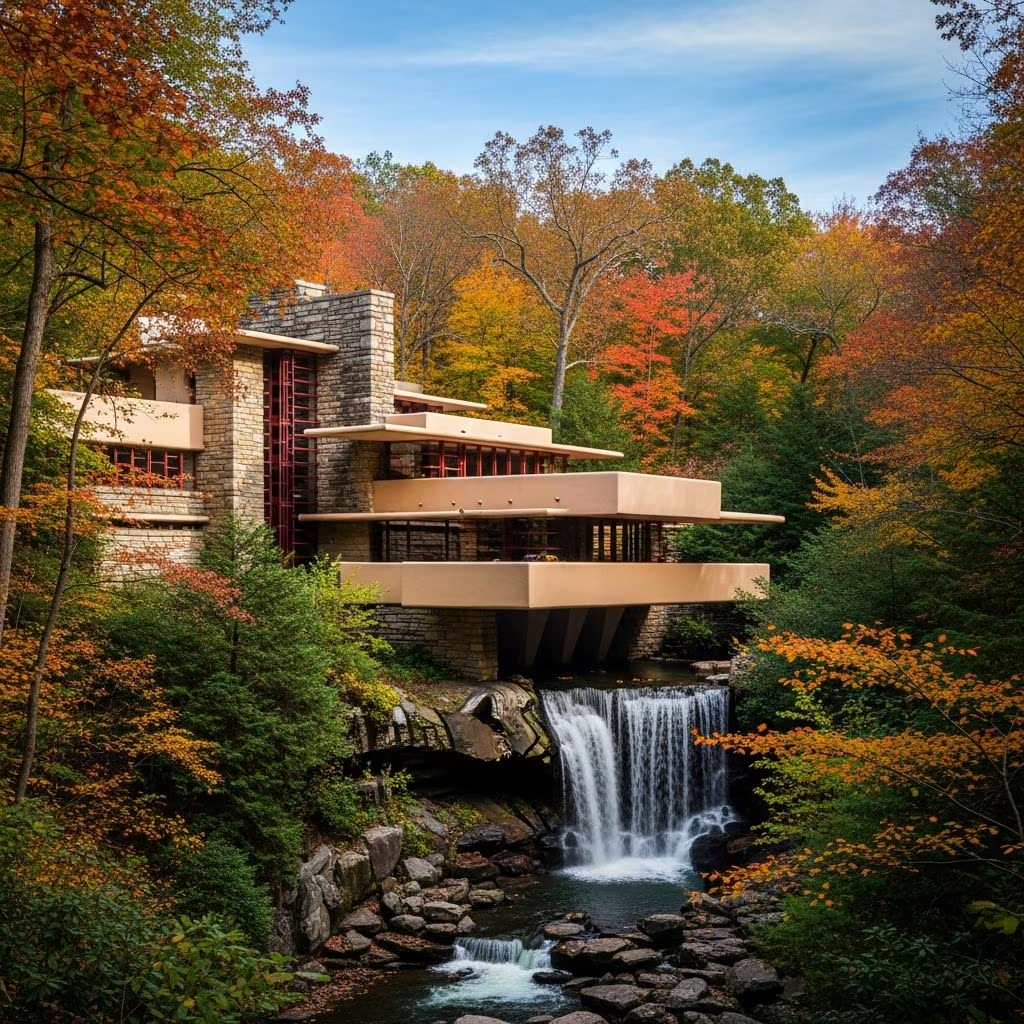
Perhaps Wright’s most internationally celebrated residential project, Fallingwater in Mill Run, Pennsylvania, constructed in 1939, demonstrates extraordinary restraint in material palette combined with imaginative spatial composition. This residence sits dramatically above a waterfall, with cantilevered terraces that appear to defy gravity as they extend over the cascading water below.
The design demonstrates how Wright could respond to specific site conditions with remarkable sensitivity. Rather than imposing a predetermined architectural scheme, he allowed the building to emerge from the landscape’s particular characteristics. A carefully controlled selection of materials, colors, and design motifs derived directly from the woodland setting creates visual and conceptual unity. These recurring elements tie the structure inextricably to its location, making it impossible to imagine the building existing anywhere else.
Located in Spring Green, Wisconsin, Taliesin evolved over decades, beginning in 1911 and continuing through 1959, serving simultaneously as Wright’s residence, studio, and eventually the headquarters for his architectural school. This complex represents the fullest expression of organic architecture principles, appearing to grow directly from its hillside setting rather than sitting upon it.
Extensive use of local materials—quarried stone, timber from the surrounding forests—integrates the structure with its environment at a fundamental level. Carefully orchestrated views of neighboring farms and rolling hills create intentional visual relationships between interior and exterior. Wright’s long occupation of the property allowed him to continuously refine and experiment with this relationship between building and landscape, resulting in a living laboratory of architectural experimentation.
Beginning in 1938, Wright established Taliesin West in Scottsdale, Arizona, creating a winter retreat that served as his studio and the home for the School of Architecture at Taliesin. This complex demonstrates how the same architect could create profoundly different responses to dramatically different environments. Where Wisconsin’s Taliesin emphasizes integration with pastoral farmland, the Arizona campus draws inspiration from desert conditions and ancient cultures.
The complex seamlessly blends structure and landscape through careful material selection—raw, rugged materials that evoke the primordial desert environment. A choreographed procession through the spaces creates an intentional sequence of experiences rather than random circulation. Despite its distinctly modern sensibility, the property radiates a timeless quality that suggests deep historical resonance.
Wright’s influence extended far beyond his individual commissions. Eight of his buildings across six states achieved recognition as World Heritage Sites, designated as “The 20th-Century Architecture of Frank Lloyd Wright.” These structures demonstrate solutions to modern needs for housing, worship, work, education, and leisure, providing templates that influenced not only American architects but modern designers worldwide, particularly in Europe.
Each commissioned residence reflects Wright’s deep respect for individual clients and particular circumstances. Though designed by the same architect, these buildings possess markedly different characters and appearances, revealing how thoroughly he customized designs to specific requirements and contexts rather than applying standardized formulas.
For those seeking to experience Wright’s vision firsthand, numerous residences remain accessible to the public. Illinois contains the world’s densest concentration of Wright-designed structures, including the Frederick C. Robie House and the Frank Lloyd Wright Home and Studio in Oak Park, where the architect maintained his own residence and workplace. The Frank Lloyd Wright Trust conducts guided tours throughout the neighborhood, allowing visitors to explore the areas where these revolutionary designs emerged.
Fallingwater operates as a museum property with daily tours available except Tuesdays and Wednesdays, offering intimate encounters with this spectacular hillside residence. Both Wisconsin and Arizona properties welcome visitors interested in understanding Wright’s evolving philosophy across different geographical and climatic contexts.
Wright’s career encompassed no fewer than twelve buildings recognized among the Architectural Record’s hundred most important structures of the twentieth century. His unorthodox approach and willingness to challenge prevailing conventions established him as both a prolific master and a controversial figure in architectural discourse.
The residential designs reveal why his influence persists. By demonstrating that modern architecture need not reject ornamentation or tradition, that innovation could emerge from careful attention to site and client needs, and that aesthetic excellence was achievable within the constraints of functional requirements, Wright expanded possibilities for what buildings could express and accomplish. His homes continue inspiring architects, designers, and homeowners to reconsider relationships between interior spaces, exterior landscapes, and daily life.
