

 Travel Essentials
 Travel Essentials

Explore Fred Olsen Cruise Lines' fleet of smaller ships offering personalized cruising experiences across Europe, the Mediterranean, and beyond.
 Travel Essentials
When seeking a cruise experience that emphasizes elegance, personal attention, and authentic exploration rather than mega-ship spectacle, Fred Olsen Cruise Lines represents a distinctive alternative in the modern cruising landscape. Operating as the UK’s largest independent cruise company, this Norwegian-owned enterprise has cultivated a reputation for delivering relaxed yet refined vacations that honor maritime traditions while catering to contemporary travelers seeking meaningful destinations and genuine onboard culture.
Understanding Fred Olsen Cruise Lines requires appreciating its deep historical roots. The organization traces its ancestry to 1848, when three Olsen brothers—Fredrik Christian, Petter, and Andreas—established their maritime enterprise in Hvitsten, a Norwegian settlement positioned along the Oslofjord. What began as a modest shipping venture has evolved into a multi-generational family business now in its fifth generation of leadership. This continuous family stewardship distinguishes Fred Olsen from numerous competitors who have undergone corporate consolidation or ownership transitions.4
Today, the organizational structure reflects its dual heritage. While maintaining operational headquarters in Ipswich, Suffolk, England, the company preserves its Norwegian roots through family offices positioned in Oslo and Tenerife, ensuring cultural continuity across international operations. This geographical and cultural duality shapes the distinctive character of Fred Olsen’s cruise offerings, blending British hospitality traditions with Scandinavian efficiency and aesthetic sensibilities.4
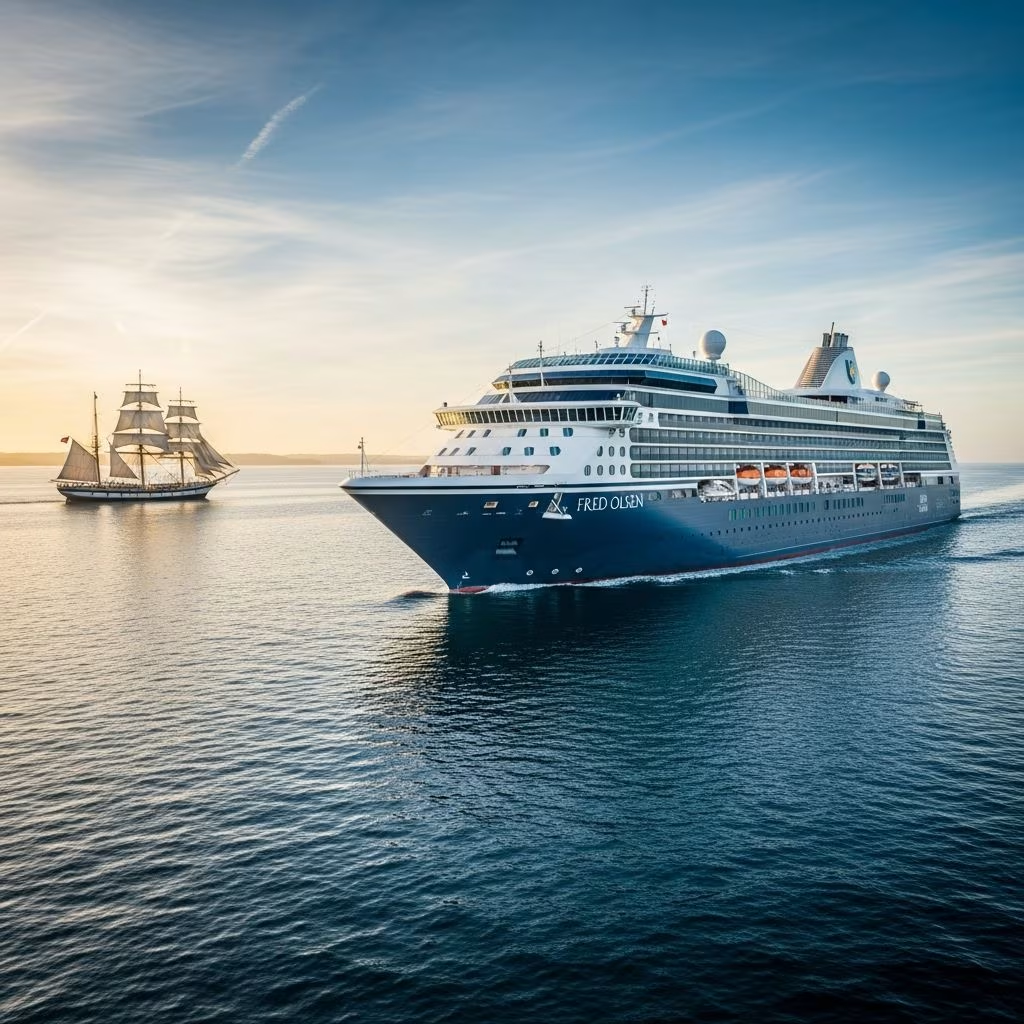
A defining characteristic of Fred Olsen Cruise Lines involves its deliberate focus on smaller, more manageable vessels rather than pursuing the mega-ship trend dominating contemporary cruising. The fleet currently consists of three primary ocean-going cruise ships: Black Watch, Boudicca, Braemar, and Balmoral, with vessel sizes ranging from approximately 24,000 to 62,000 gross tons.32
This size positioning creates multiple strategic advantages. Ships of this scale remain large enough to provide comprehensive onboard amenities—dining venues, entertainment facilities, recreational options, and accommodation variety—yet small enough to maintain an intimate, personalized atmosphere where crowding rarely occurs.2 Passengers frequently report that smaller vessel configurations facilitate social interaction and create a community-like environment absent from larger cruise experiences. Additionally, these ships can navigate ports and waterways inaccessible to massive container-vessel-sized cruise ships, opening unique itinerary possibilities.
The company has invested substantially in refurbishing its classic vessels, combining traditional naval architecture with contemporary comfort standards. This approach appeals particularly to maritime enthusiasts who appreciate classic ship design while expecting modern onboard conveniences.2
Fred Olsen maintains operational flexibility through a network of UK departure ports that few cruise lines can match. Ships embark and return from Southampton, Dover, Falmouth, London-Tilbury, Harwich, Liverpool, Newcastle, Rosyth (near Edinburgh), Portsmouth, Greenock (Glasgow), and Belfast in Northern Ireland.1 This decentralized departure strategy significantly enhances accessibility for British passengers, eliminating the necessity of traveling extensive distances to board vessels and reducing overall vacation complications.
The strategic emphasis on UK-based homeporting reflects the company’s core market positioning. Fred Olsen deliberately targets British holidaymakers through itineraries, onboard atmosphere, dining traditions, and service standards calibrated to UK preferences. This specialization creates an authentic cultural environment rather than attempting to serve competing international markets simultaneously.
Fred Olsen’s destination offerings demonstrate remarkable breadth despite the company’s focus on intimate cruising. The itinerary portfolio encompasses several distinct categories:
Recognizing evolving passenger interests, Fred Olsen has expanded beyond ocean cruising into European river navigation. The company operates a chartered 156-passenger river vessel, the MS Brabant (formerly MS Amadeus Princess), providing cruises along major European waterways including the Danube, Main, Rhine, and Moselle rivers.1
River cruise itineraries typically range from five to twenty-five nights, incorporating both waterway navigation and luxury land-based excursions. This diversification allows established Fred Olsen passengers to explore alternative vacation formats while maintaining the company’s emphasis on intimate, curated travel experiences.
Fred Olsen’s reputation rests substantially on distinctive onboard cultural characteristics. The company consciously maintains traditional British maritime customs including formal dining options with fixed seating arrangements, creating structured social environments encouraging passenger interaction and community formation.8 Evening entertainment emphasizes classic performances and singalong opportunities, particularly appealing to mature demographic segments seeking nostalgic entertainment formats.
Daytime programming incorporates enrichment activities, destination lectures, and cultural education, reflecting passenger expectations for meaningful engagement with visited destinations rather than superficial port experiences. Staff members receive training emphasizing personalized service and British hospitality traditions, with particular attention to understanding passenger preferences and accommodating individual requests.
The cruise experience deliberately avoids overstimulation and excessive programming inherent in mega-ship models. Passengers typically appreciate the relaxed pace, moderate passenger volumes, and emphasis on peaceful contemplation balanced against optional social engagement opportunities.7
Fred Olsen’s marketing strategy explicitly addresses mature, well-traveled passengers, with significant representation among individuals aged 65 and older.5 These passengers typically possess extensive cruise experience, appreciation for maritime traditions, sufficient discretionary income, and preference for destination exploration over onboard resort-style amenities. Many are British nationals familiar with the company’s heritage and cultural orientation.
The company also attracts younger families and professional adults seeking alternatives to mass-market cruise experiences, particularly those prioritizing authenticity, cultural immersion, and escape from crowded recreational environments. International passengers increasingly represent growing market segments, though British clientele remains predominant.
Fred Olsen positions itself within mid-to-premium cruise line segments rather than competing on budget or ultra-luxury dimensions. Pricing reflects vessel quality, itinerary sophistication, port selections, and service standards without the substantial premiums characteristic of ultra-luxury lines. This positioning appeals to value-conscious passengers seeking quality experiences without excessive per-diem expenditures.
The company frequently incorporates inclusions—gratuities, select beverages, entertainment, and enrichment programming—into base pricing rather than employing aggressive onboard spending strategies common among larger competitors. This transparency and value-inclusive approach aligns with passenger expectations and enhances perceived value.
Fred Olsen demonstrates operational flexibility through seasonal itinerary adjustments. Summer months emphasize Northern European and Norwegian operations, autumn features Mediterranean and Canary Island cruising, winter includes Caribbean and long-distance voyages, and spring focuses on emerging destination exploration. This seasonality maximizes destination appropriateness and climate optimization while enabling efficient fleet utilization.
Fred Olsen occupies a distinctive niche within contemporary cruising. Unlike mega-ship operators pursuing volume-based business models or ultra-luxury lines emphasizing extreme sophistication, Fred Olsen emphasizes authenticity, cultural connection, and passenger-centric service. The company represents continuity within a rapidly consolidating industry, maintaining family ownership, independent operational philosophy, and commitment to traditional cruising values.
This positioning provides advantages including operational flexibility, cultural authenticity, and passenger loyalty. Disadvantages include limited economies of scale compared to massive operators and reduced onboard amenities variety inherent to smaller vessel configurations. Despite these trade-offs, Fred Olsen’s financial viability and market success demonstrate sustained passenger demand for alternatives to industry consolidation trends.
As environmental consciousness increasingly influences cruise line selection, Fred Olsen’s smaller vessel fleet provides inherent advantages. Reduced fuel consumption, lower per-passenger environmental impact, and ability to access alternative ports minimize ecological footprints compared to mega-ship operations. This alignment with emerging sustainability expectations positions Fred Olsen advantageously within evolving passenger priorities.
Prospective passengers considering Fred Olsen voyages should recognize several distinctive characteristics. Onboard experiences emphasize relaxation and social engagement rather than constant programming and evening activities. Destinations reflect authentic cultural exploration rather than commercialized resort environments. Service standards maintain British hospitality traditions combined with Norwegian efficiency. Pricing reflects quality without excessive premiums. Passenger demographics typically skew toward mature, experienced travelers, though diverse age groups participate.
First-time cruisers considering Fred Olsen should anticipate traditional cruise formats, fixed dining arrangements, and emphasis on destination exploration. Those accustomed to mega-ship environments may experience transitions to reduced onboard amenity variety, but typically discover corresponding benefits through enhanced personalization and intimate atmosphere.
