

 Travel Essentials
 Travel Essentials

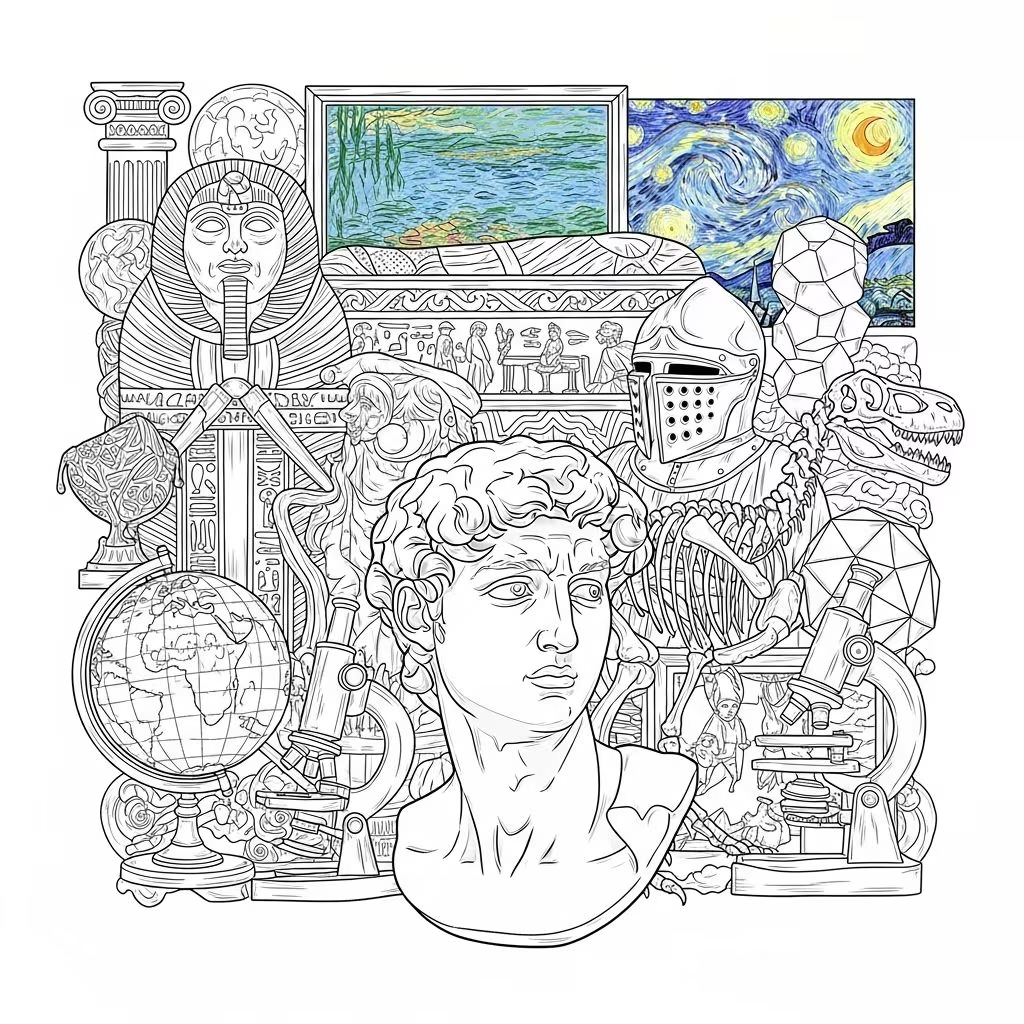
Free museum coloring pages make art and history accessible to everyone, turning collections into creative, printable experiences for all ages.
 Travel Essentials
Cultural institutions have traditionally served as repositories of human creativity and historical knowledge, yet access to their collections remains limited by geography, admission costs, and physical constraints. In recent years, a innovative movement has emerged that democratizes access to artistic works by transforming them into downloadable coloring pages. This approach makes masterpieces and historical illustrations available to anyone with internet access, bridging the gap between professional curators and the general public while fostering creative engagement across all ages.
The initiative known as #ColorOurCollections represents a coordinated effort among cultural institutions to share their holdings in an interactive format. Established by the New York Academy of Medicine Library in 2016, this annual campaign invites libraries, museums, archives, botanical gardens, and other cultural organizations worldwide to contribute black-and-white versions of works from their collections. The movement has grown exponentially since its inception, with participation expanding from a handful of institutions to over 100 organizations participating in recent years.
The foundational purpose of this initiative extends beyond simple entertainment. By translating curated artworks into coloring pages, participating institutions accomplish multiple objectives: they promote creativity among diverse audiences, introduce lesser-known works that might otherwise remain obscure, and create pathways for people to develop meaningful relationships with cultural heritage. The timing of the annual campaign—typically held during February—creates a concentrated moment of media attention and social media engagement that amplifies reach and participation.
The range of participating institutions reflects the breadth of cultural repositories across the globe. Major museums contribute alongside university libraries, botanical gardens, and specialized archives, each bringing unique perspectives from their collections. The participating organizations span multiple countries and continents, including institutions such as the Bibliothèque nationale de France, the New York Botanical Garden, the Toronto Public Library, and the University of California, San Francisco.
Each institution approaches the initiative differently based on its collecting mission and audience interests. Some organizations provide curated selections spanning diverse subject matter across their entire holdings, while others focus thematically—perhaps concentrating on botanical illustrations, historical manuscripts, or contemporary works. Certain institutions develop comprehensive coloring books specifically for this initiative, while others digitize existing materials or create entirely new content for the occasion. This diversity ensures that participants encounter varied artistic styles, historical periods, and cultural perspectives through a single unified platform.
One significant advantage of the coloring page format lies in its universal accessibility across age groups and skill levels. While adult coloring has emerged as a recognized wellness practice in recent years, the museum coloring initiative attracts equally diverse participation from children exploring art for the first time. The format removes barriers that might otherwise prevent engagement with cultural institutions—cost, intimidating atmosphere, or lack of prior art knowledge.
Children encounter authentic artworks and historical illustrations presented in an interactive medium that invites creative participation rather than passive observation. Young learners might color pages featuring animal imagery from natural history collections, historical figures from archival photography, or decorative elements from medieval manuscripts. Adults seeking mindful creative practice access sophisticated works including complex botanical illustrations, architectural drawings, and fine art compositions that provide engaging long-term projects.
The accessibility extends to diverse learning styles and artistic preferences. Some participants prefer detailed intricate designs requiring sustained focus and careful color choices, while others gravitate toward simpler compositions allowing for spontaneous experimentation and rapid completion. This flexibility means individuals at various stages of artistic development find materials matching their interests and capabilities.
Accessing these coloring resources requires minimal technical proficiency. Participating institutions typically host collections on their websites or contribute to centralized repositories coordinating the annual initiative. Users locate materials, download PDF files, and print pages at home or engage with digital coloring applications. The entirely free nature of these resources removes financial barriers that typically accompany cultural consumption.
The social media component amplifies engagement through community participation and sharing. Participants upload photographs of completed coloring pages using the #ColorOurCollections hashtag, creating visible galleries of creative outcomes. This peer engagement component transforms individual creative acts into collective celebration, fostering community among participants who may never interact directly but share appreciation for cultural heritage and artistic expression.
Museums and libraries participating in this initiative achieve multiple strategic objectives simultaneously. The projects expand institutional reach beyond traditional geographic and demographic audiences, introducing new potential visitors to collections and cultural missions. Young participants exposed to museum materials through coloring pages may develop sustained interest leading to future visits, membership, or support.
The initiative also addresses the challenge of making collection materials relevant to contemporary audiences. By presenting historical artifacts and fine art through an interactive medium, institutions demonstrate commitment to accessibility and community engagement. This approach counters perceptions of museums as exclusive spaces reserved for specialists or the wealthy, instead positioning cultural institutions as community partners invested in fostering creativity across population segments.
Additionally, the coordinated annual campaign generates media coverage and social media visibility that individual institutions might struggle to achieve independently. The collective announcement of participating organizations creates cultural moment deserving press attention and public conversation, amplifying awareness of individual institution missions alongside the broader movement.
The coloring page format opens unexpected possibilities for cultural engagement. Participants working with high-quality illustrations from museum collections often report increased appreciation for artistic techniques, compositional choices, and historical context. The act of coloring—selecting hues, considering contrasts, and making creative decisions—creates intimate involvement with artworks in ways that passive viewing cannot replicate.
Educational applications extend the initiative’s impact. Teachers incorporate coloring pages into classroom instruction, using museum materials to support curricula spanning art history, natural sciences, literature, and cultural studies. Parents utilize the pages as engaging activities during indoor time or travel. Libraries and community centers host coloring events where individuals gather to work collectively while sharing conversation and social connection.
Some participants advance beyond simple coloring, using the pages as foundations for mixed media projects, incorporating additional artistic techniques, or remixing elements across multiple pages. This creative freedom encourages experimentation and personal artistic development while maintaining connection to professional artworks and curatorial expertise.
While digital access has expanded dramatically over recent decades, digital divides persist affecting populations without consistent internet connectivity or printing resources. Cultural institutions addressing these disparities have begun offering additional distribution methods including workshops held at community centers, partnerships with schools providing printed materials, and collaborations with libraries ensuring access points throughout underserved neighborhoods.
The multilingual nature of many participating institutions helps address language barriers, though localization remains inconsistent. Some organizations provide materials and instruction in multiple languages while others focus on visual communication that transcends linguistic boundaries. Ongoing efforts to expand accessibility demonstrate commitment to equity within the cultural sector.
The global pandemic of 2020-2021 accelerated digital initiatives within cultural institutions as physical closures limited traditional access. Museums and libraries expanded online coloring initiatives as visitors sought engaging activities during extended home confinement. The #ColorOurCollections campaign experienced heightened participation as institutions recognized digital programming as essential service provision during crisis periods.
This acceleration normalized digital access to cultural materials, establishing expectations that museums and libraries would maintain robust online offerings alongside eventual reopening. Contemporary participants now expect seamless integration of physical and digital experiences, with museums maintaining active online collections even as in-person attendance resumes.
The coloring page initiative continues evolving beyond simple PDF downloads. Some institutions explore interactive digital coloring platforms allowing participants to work directly on tablets or computers using specialized applications. Virtual reality and augmented reality technologies offer emerging possibilities for immersive engagement with museum materials. Blockchain-based systems introduce concepts of digital ownership and collection, creating novel ways for participants to engage with artworks.
The core mission remains consistent despite technological evolution: making cultural heritage accessible, fostering creative participation, and building community connections through shared appreciation of artistic and historical materials. As cultural institutions navigate complex challenges including funding constraints, changing demographics, and evolving audience expectations, initiatives like #ColorOurCollections demonstrate innovative approaches to relevance and engagement.
Individuals interested in exploring these collections begin by visiting institutional websites or accessing centralized campaign platforms. The official #ColorOurCollections website coordinates participating organizations and provides direct links to available materials. Social media hashtags facilitate discovery of new collections and visibility into other participants’ creative work. Library staff and museum educators often maintain curated lists highlighting materials suited to specific interests or age groups.
No specialized materials or advanced artistic skills are required. Participants use whatever coloring implements they prefer—colored pencils, markers, watercolors, or digital tools. The flexibility of the format accommodates diverse preferences and encourages exploration of various media and techniques.
Yes, all materials are entirely free through participating institutions. Costs are limited to printing materials and coloring supplies that users choose to purchase independently.
The primary campaign typically launches in February each year, though participating institutions may offer materials year-round on their websites.
Most institutions permit personal use, but commercial applications require contacting individual organizations regarding specific intellectual property terms and licensing arrangements.
Yes, participating institutions offer collections spanning all ages and artistic skill levels, from simple designs suitable for young children to intricate compositions engaging experienced colorists.
Over 100 museums, libraries, and cultural organizations participate globally, with numbers growing annually as awareness increases.
