

 Travel Essentials
 Travel Essentials

Discover South Africa’s overlooked Free State province, where scenic drives, mountain hikes, cultural towns, and wildlife await.
 Travel Essentials
While many international travelers focus their South African itineraries on the well-trodden paths of Cape Town and Kruger National Park, the Free State province remains a refreshingly overlooked destination brimming with authentic experiences. Located in the central heartland of South Africa and bordered by six provinces as well as the Kingdom of Lesotho, this expansive region offers an intriguing blend of natural splendor, historical significance, and outdoor adventure that deserves far greater recognition on the travel circuit.
The Free State represents a different kind of South African experience—one defined by sweeping grasslands, dramatic mountain formations, and genuinely warm hospitality from residents who still value the slower pace of provincial life. For travelers seeking alternatives to crowded urban centers, this province provides the perfect balance between accessibility and authentic discovery.
One of the most compelling reasons to visit the Free State lies in its landscape itself. The province’s defining characteristic is its vast, open countryside interrupted only occasionally by small towns and villages. This creates an ideal setting for the classic South African road trip experience, where travelers can enjoy hours of uninterrupted driving through changing scenery without the congestion of major metropolitan areas.
The province’s geography encourages exploration by vehicle, with long stretches of well-maintained roads connecting points of interest. The experience of traversing these expanses reveals the true character of South Africa’s interior—a region where the horizon seems infinite and the pace of life follows the natural rhythms of agricultural seasons and wildlife patterns.
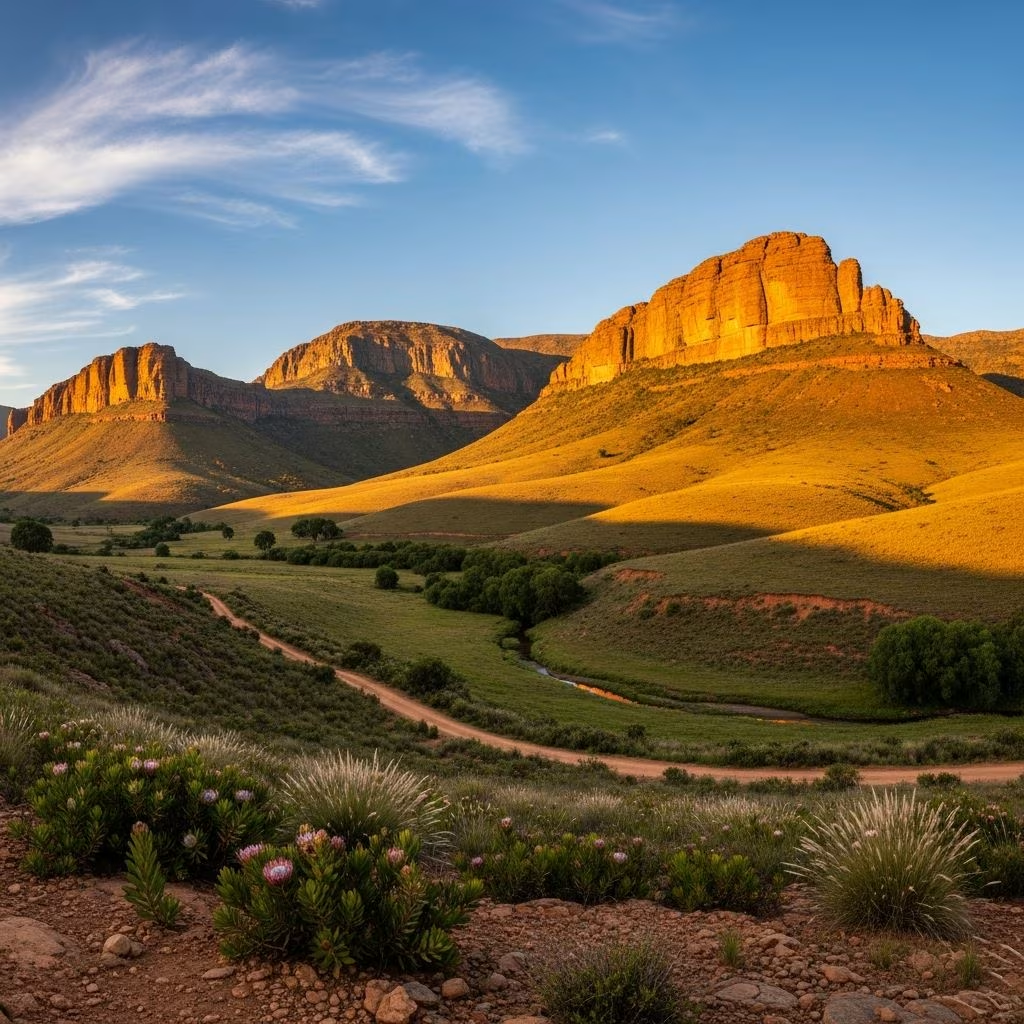
For those who enjoy scenic drives, the terrain around the Free State presents constantly evolving vistas. Travelers moving through the province witness transformations from flat grasslands to undulating hills, and eventually to the dramatic mountain ranges that define the eastern edge. This gradual transition makes the Free State an exceptional destination for photography enthusiasts and those seeking contemplative travel experiences.
The provincial capital of Bloemfontein serves as the natural starting point for any Free State exploration. While this city of moderate size may not rival the international profiles of Cape Town or Johannesburg, it offers substantial cultural and historical resources worthy of consideration.
The city features an impressive collection of 19th-century architecture that reflects its development during significant periods of South African history. Museums within Bloemfontein document various chapters of the nation’s past, including dedicated exhibitions exploring the complex history of conflicts that shaped the region. The Anglo-Boer War Museum provides detailed perspective on one of South Africa’s most pivotal historical episodes.
For nature enthusiasts, Bloemfontein incorporates green spaces into its urban fabric. The Free State National Botanic Gardens showcase local flora across carefully maintained grounds, offering peaceful respite from urban activity. Additionally, Naval Hill provides panoramic city views and functions as an inner-city wildlife reserve, demonstrating how conservation efforts integrate with urban planning in this provincial center.
The city’s accommodation options range from budget-friendly establishments to upscale guesthouses, and dining venues represent diverse culinary traditions reflecting the multicultural composition of the region’s inhabitants. Bloemfontein’s infrastructure and services make it an excellent operational base for exploring the broader province.
The eastern reaches of the Free State culminate in some of South Africa’s most spectacular mountain scenery. The Drakensberg Escarpment, particularly accessible via the Free State approach, represents an exceptional hiking destination that rivals other renowned mountain regions in the country.
The Sentinel Hiking Trail stands as the marquee mountain experience in the Free State. This 10-kilometer trail begins at the Sentinel car park at an elevation of 2,540 meters and ascends 4 kilometers to the Drakensberg plateau, where average elevations reach 3,000 meters. The trail showcases the dramatic geology of the escarpment and provides unobstructed views across vast distances. What distinguishes this trail is its accessibility relative to comparable hiking experiences—the same views that require exceptional fitness levels from other approaches become achievable for moderately experienced hikers when accessed from the Free State side.
The landscape along the escarpment features the Amphitheatre, a magnificent arc of mountain peaks that dominates the visual experience. The geological formations display millions of years of natural processes, with rock layers revealing the planet’s deep history. These mountains created natural barriers historically and continue to define the boundary between the South African interior and the mountain kingdom of Lesotho.
Beyond the famous Sentinel Trail, the region supports numerous other hiking options ranging from moderate day walks to challenging multi-day expeditions. The Rhebok Trail represents the most demanding option, restricted to group participation and requiring basic overnight camping accommodations. The trails pass through ecosystems where alpine flora and fauna create unique natural communities adapted to high-altitude conditions.
The Free State’s sole national park represents a concentration of the province’s natural attractions. Golden Gate Highlands National Park encompasses dramatic geological features, rich biodiversity, and archaeological treasures spanning centuries.
The park’s defining visual element consists of golden-hued sandstone cliffs and rock formations that give the park its name. These geological structures, sculpted by millions of years of erosion, create a landscape of extraordinary aesthetic appeal. The sandstone formations frame valleys and create natural amphitheaters that photographers and artists find endlessly compelling.
The park functions as a wildlife sanctuary, hosting populations of eland, zebra, and wildebeest alongside numerous bird species and smaller mammals. The mixture of open grasslands, rocky outcroppings, and water sources creates diverse habitats supporting varied fauna. Visitors to the park experience South Africa’s wildlife without the extreme tourism pressures encountered at some larger reserves.
Archaeological significance adds another dimension to the park’s appeal. Ancient San people carved paintings into cave walls throughout the region, creating art that endures centuries. These cave paintings represent one of humanity’s oldest artistic traditions and provide windows into cultures that inhabited southern Africa long before European contact. Guided tours can illuminate the meanings and contexts of these artworks.
The park accommodates both day-visit tourists and overnight guests. Self-guided game drives allow visitors to explore at their own pace, with wildlife encounters depending on timing and location within the park’s extensive territory. Multi-day hiking expeditions provide immersive experiences for those seeking deeper engagement with the landscape.
In the foothills of the Maluti Mountains, Clarens has developed into perhaps the Free State’s most distinctive town. Positioned at 1,850 meters elevation, making it the province’s highest town, Clarens combines natural beauty with creative culture in ways rarely encountered in South African provincial settings.
The town’s aesthetic appeal derives from multiple sources. Whitewashed buildings with traditional architecture create visual coherence throughout the town center. Surrounding geography provides dramatic backdrop—craggy limestone formations frame views, while verdant green hills and golden grain fields stretch toward the Maluti Mountains. The combination creates an almost Mediterranean feeling incongruous with Africa’s geography.
The mild mountain climate makes Clarens comfortable even during periods when other South African regions experience intense heat. This climatic advantage has attracted artists, craftspeople, and entrepreneurs who have established galleries, studios, and specialty shops throughout town. The creative community provides cultural vitality typically associated with larger cities, concentrated in a setting emphasizing tranquility and natural beauty.
Practical activities center on the mountain environment. Horse riding through surrounding countryside represents one of the most popular pursuits, with local operators offering guided excursions of varying difficulty levels. Trout fishing in mountain streams provides another traditional activity connecting visitors to rural South African life. The town functions as a weekend destination for residents from across the country seeking mountain air and artistic atmosphere.
The Highlands Route represents a carefully curated driving experience connecting Harrismith and Zastron through some of the Free State’s most visually stunning territory. Designated as one of South Africa’s premier scenic drives, the route traverses the mountainous eastern zone of the province and incorporates access to major attractions.
The route passes through Golden Gate National Park, already discussed for its own attractions, but the drive itself creates a coherent narrative of landscape transformation. Travelers following the route experience the gradual elevation increase as the terrain transitions from grassland toward mountainous terrain. Scenic overlooks provide stopping points for photography and contemplation.
Towns along the Highlands Route offer character without overwhelming tourist infrastructure. Clarens functions as the marquee stopping point, but smaller settlements provide authentic glimpses into provincial South African life. Local restaurants and accommodations reflect regional cuisine and hospitality traditions distinct from those of major tourist centers.
The route functions as both destination and transit corridor. Travelers moving between Johannesburg and the Eastern Cape or Western Cape provinces can incorporate the Highlands Route into their journey, transforming what might otherwise be a monotonous drive into a memorable travel experience.
North of Winburg, the Willem Pretorius Game Reserve serves as the Free State’s principal wildlife destination. While smaller than national parks in other provinces, the reserve concentrates essential wildlife experiences within accessible territory.
The reserve supports a diverse array of wildlife species in an environment that encourages authentic wildlife observation. Fishing constitutes another major draw, with excellent conditions for anglers seeking freshwater experiences. The reserve’s infrastructure includes recreational facilities supporting sports activities alongside wildlife viewing, making it suitable for families with varied interests.
The combination of wildlife and recreational amenities makes Willem Pretorius Game Reserve appropriate for visitors with different travel priorities. Some guests focus primarily on wildlife photography and observation, while others balance nature time with active pursuits.
The Free State’s water resources support recreational opportunities distinct from those available in most other South African provinces. The Vaal Dam and surrounding resorts provide established water recreation destinations.
Deneysville represents a popular resort destination along Vaal Dam’s banks, where fishing, sailing, and various water sports provide options for aquatic recreation. These water-based activities appeal to visitors seeking alternatives to land-based adventure pursuits.
Gariep Dam nature reserve, located in the southwestern portion of the province, offers an extensive range of leisure activities extending beyond water sports to include tennis, bowling, horse-riding, and golf. The reserve demonstrates how South African provinces integrate outdoor recreation with nature conservation objectives.
The Free State contains multiple towns reflecting specific periods of South African history, particularly the era of Boer settlement and development. Towns including Kroonstad, Frankfort, and Heilbron preserve architectural and cultural remnants of this historical period.
Winburg functions as a gateway town founded by Voortrekker pioneers and provides historical context for understanding this significant movement in South African history. The town’s established infrastructure makes it a suitable base for exploring both Willem Pretorius Game Reserve and historical sites in the surrounding region.
The eastern region of Thabo Mofutsanyana epitomizes the Free State’s cultural diversity. The Basotho Cultural Village provides opportunities to learn about traditional practices and ways of life of the region’s indigenous communities.
Ficksburg maintains annual traditions including the Cherry Festival, which attracts participants from across the region and celebrates local agricultural heritage through cultural festivities. These community celebrations offer visitors authentic cultural experiences rarely staged for tourism purposes.
The Free State’s multicultural population speaks approximately half a dozen languages including English, Afrikaans, Sotho, and other indigenous languages. This linguistic diversity reflects the region’s complex history and contemporary composition.
The Free State’s climate supports year-round visitation, though different seasons offer distinct advantages. Summer months (November through February) bring warm weather suitable for outdoor activities, though afternoon thunderstorms occasionally interrupt clear skies. Autumn (March through May) offers mild temperatures and reduced rainfall, making it ideal for hiking and outdoor exploration. Winter months (June through August) bring cool temperatures but generally clear skies, with high mountain areas occasionally receiving snow. Spring (September through October) brings wildflower blooms and migrating bird species, creating excellent opportunities for nature photographers.
Most Free State attractions are accessible by conventional automobiles on well-maintained roads, though some mountain routes may require vehicles with higher ground clearance during adverse weather. Accommodation options range from budget backpacker facilities to luxury lodges, with mid-range guesthouses predominating throughout the province. Dining options reflect both traditional South African cuisine and international offerings, particularly in Bloemfontein and Clarens. English speakers will encounter widespread English proficiency in tourism-oriented establishments, though Afrikaans remains prevalent in smaller communities.
A minimum of three to four days allows visitors to experience primary attractions including Bloemfontein, Clarens, and Golden Gate National Park. Longer visits of seven to ten days permit deeper exploration including multiple hiking trails, the full Highlands Route, and wildlife reserves.
Yes, the province supports independent travel effectively. Roads are well-marked, accommodation options accommodate walk-in travelers, and most attractions remain accessible without pre-arranged tours, though guided experiences enhance understanding of historical and cultural sites.
Day hikes vary substantially in difficulty, from gentle two-hour walks to strenuous full-day expeditions. The Sentinel Trail requires moderate fitness and acclimatization to altitude. The Rhebok Trail demands significant fitness and mountaineering experience and is restricted to groups.
Absolutely. Bloemfontein museums, Clarens artistic community, cultural villages, and leisurely town exploration provide cultural and intellectual engagement. Scenic drives and casual nature observation require no strenuous activity.
