

 Travel Essentials
 Travel Essentials

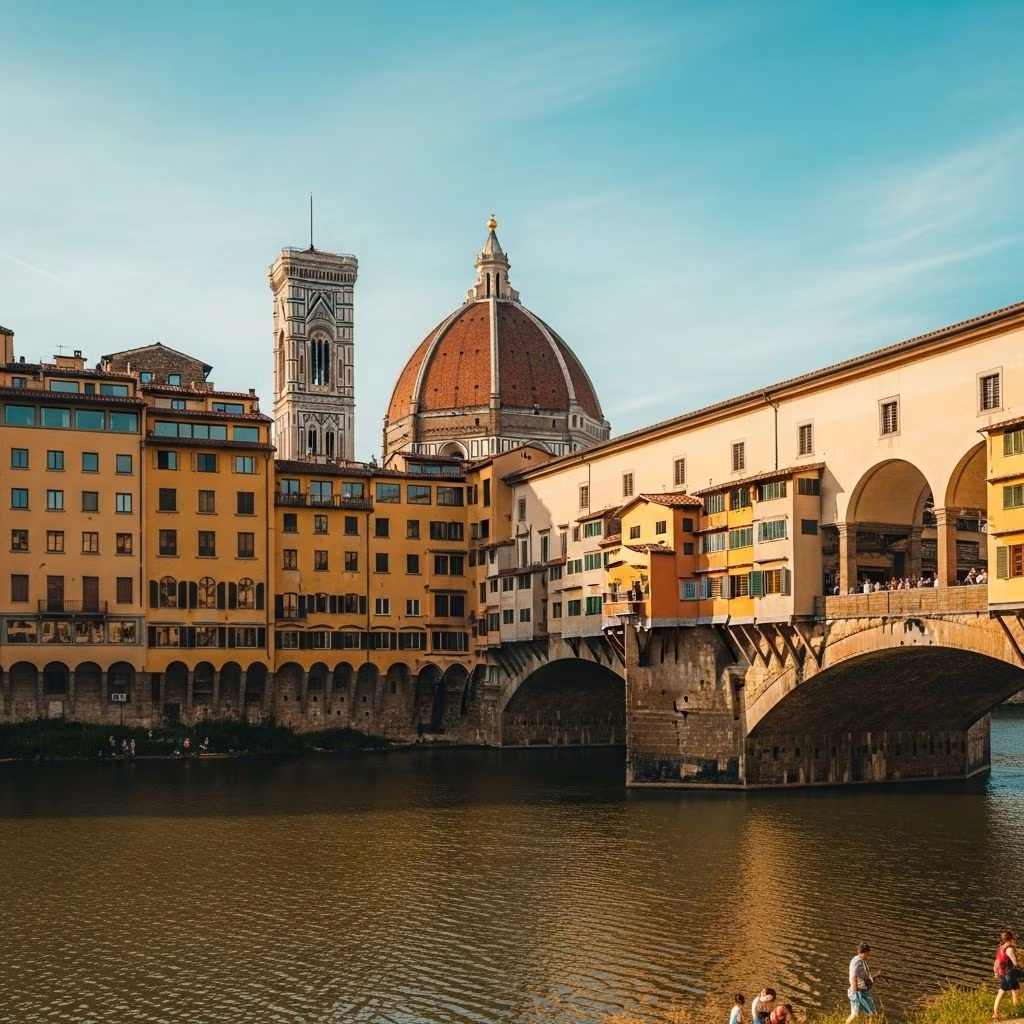
Explore Florence's treasures for free: iconic architecture, Renaissance masterpieces, scenic viewpoints, and vibrant markets that showcase the city's rich heritage.
 Travel Essentials
Florence stands as one of Europe’s most culturally significant destinations, yet many travelers assume experiencing its renowned art and architecture requires substantial spending. The reality tells a different story. This Italian Renaissance capital offers extraordinary opportunities to encounter world-class art, historic buildings, and authentic local culture without purchasing museum tickets or entrance fees. Strategic planning and local knowledge unlock access to galleries, churches, monuments, and viewpoints that rival any paid attraction.
The Cattedrale di Santa Maria del Fiore, universally recognized as the Duomo, dominates Florence’s skyline with its distinctive terracotta dome and marble facade. Visitors can enter the cathedral’s main interior space without purchasing an admission ticket, allowing access to the soaring nave with its Gothic proportions and atmospheric lighting. The cathedral’s free access provides an authentic religious experience alongside architectural appreciation. However, ascending the famous dome, visiting the bell tower, exploring underground crypts, and accessing other specialized areas require separate paid tickets. The main nave entrance involves queuing in Piazza del Duomo, particularly during peak travel seasons.
Adjacent to the cathedral, Piazza del Duomo itself functions as an open-air gallery and gathering space. The plaza’s surrounding architecture, including the Baptistry with its celebrated bronze doors and the Campanile bell tower designed by Giotto, creates a Renaissance composition that rewards extended exploration and photography from multiple angles.
Beyond the famous cathedral complex, Florence houses lesser-known religious spaces containing significant artistic works. The Chiesa di Ognissanti preserves a free-to-view gilded crucifix by Giotto, representing important pre-Renaissance sacred art. The Benedictine Monastery of St Apollonia, established in 1339, provides complimentary access to its refectory featuring Andrea del Castagno’s monumental *Ultima Cena* (Last Supper) fresco. Painted in 1447, this nearly 10-meter composition demonstrates Renaissance mastery of perspective and dramatic composition, surrounded by fading biblical scenes that enhance the monastery’s historical atmosphere.
San Miniato al Monte, positioned above Piazzale Michelangelo on elevated terrain, offers exceptional views alongside exposure to functioning monastic life. The Romanesque church provides opportunities to attend mass featuring chanting monks, creating an immersive cultural and spiritual experience. The monastery operates a small shop selling handcrafted items produced by resident monks, offering authentic souvenirs.
Piazzale Michelangelo represents one of the world’s most celebrated urban viewpoints, offering sweeping panoramas encompassing the Duomo, Ponte Vecchio, and surrounding Tuscan landscape. This 19th-century architectural achievement, designed by Giuseppe Poggi following Italy’s unification, includes dramatic monumental ramps adorned with grottoes and waterfalls leading from the San Niccolò neighborhood. Reaching the terrace requires climbing these ornamental staircases, known as Rampe del Poggi, which themselves constitute an architectural experience combining Renaissance principles with 19th-century ambition.
For visitors seeking less crowded alternatives, the Rose Garden situated directly below Piazzale Michelangelo provides comparable views with substantially reduced crowds and peaceful botanical surroundings. This combination allows flexibility based on weather conditions, time of day, and personal preferences regarding visitor density.
Ponte Vecchio transcends typical bridge functionality, operating as a covered corridor lined with jewelry shops, artistic vendors, and souvenir merchants. Walking this pedestrian-only structure provides unobstructed connections between historic neighborhoods while offering river views and authentic merchant interactions. Timing visits during early morning or evening hours minimizes crowds while enhancing photographic opportunities and contemplative experiences. Nearby All’Antico Vinaio serves panini that can be consumed while observing rowers navigating the Arno River below.
Piazza della Signoria functions as Florence’s most significant public square and simultaneously operates as an open-air sculpture museum requiring no admission. The Loggia dei Lanzi, a 13th-century covered portico along the plaza’s northern edge, displays Renaissance and classical sculpture including masterworks by Michelangelo, Giambologna, Benvenuto Cellini, Bartolomeo Bandinelli, and Bartolomeo Ammannati. The loggia’s architectural significance combines with its sculptural collection to create an experience rivaling formal museum galleries.
The plaza proper contains additional monumental sculptures, including a reproduction of Michelangelo’s *David* (the original resides in the Accademia Gallery) positioned in Palazzo Vecchio’s courtyard, along with the Fountain of Neptune celebrating Florence’s maritime power. Comfortable seating throughout the plaza enables extended observation, people-watching, and rest periods. Local gelateria surrounding the square provide refreshments that enhance the leisurely experience.
Florence’s historic center reveals artistic treasures embedded within seemingly ordinary streetscapes. Tabernacles—small architectural niches displaying frescoes, sculptures, or religious imagery—decorate building facades throughout medieval neighborhoods, representing 13th- and 14th-century devotional traditions. Seeking these remnants during exploration creates ongoing discovery and appreciation for the city’s layered artistic heritage. Autumn conditions provide particularly pleasant circumstances for such methodical wandering.
San Lorenzo Market extends across multiple streets behind the Basilica di San Lorenzo, operating daily except Sunday as a commercial and cultural epicenter. The outdoor market section features leather goods, clothing, accessories, and souvenirs aligned with conventional tourist shopping. Successful market navigation involves walking the entire marketplace before purchasing, comparing quality and prices across multiple stalls, then potentially returning to preferred vendors.
Mercato Centrale, the enclosed market structure, operates on a dual-schedule system. Morning hours (until 2 PM) emphasize fresh produce, meats, and flowers at ground-floor stalls. The historical food counter Nerbone, located on the ground floor, serves quick meals featuring local specialties. After 2 PM, upper-floor vendors offer upscale ingredients and prepared foods, remaining open until midnight daily. Dining options span sandwiches, pizza, and Florentine bistecca, accommodating various budget levels.
Sant’Ambrogio Market caters specifically to apartment residents and culinary-minded travelers seeking quality local ingredients without tourist-oriented markup. Operating daily from 7 AM to 2 PM, this venue combines indoor and outdoor sections featuring fresh produce, artisanal cheeses, premium meats, flowers, and household goods. In-house eateries provide budget-friendly meals after browsing the abundant provisions.
Le Cascine, Florence’s largest park, hosts the city’s most expansive outdoor market every Tuesday morning from 7 AM until approximately 2 PM. This itinerant marketplace encompasses fresh produce, meats, cheeses, flowers, household linens, clothing, shoes, and assorted merchandise from permanent and rotating vendors. The park setting and riverside boulevard location provide a fundamentally different atmosphere compared to central tourist markets, emphasizing local commerce and authentic daily routines.
Florence operates a distinctive free-access initiative called #DomenicalMuseo, offering complimentary admission to major museums on the first Sunday of each month during October through March. Participating institutions include the Uffizi Gallery, Accademia Gallery, Bargello Museum, Medici Chapels, and Pitti Palace with Boboli Gardens. This program provides extraordinary opportunities to experience world-renowned art collections, including works by Botticelli, Leonardo da Vinci, and Michelangelo, without ticket expenses. However, this schedule-dependent access requires advance planning and early arrival given predictable crowding on free-admission days.
Florence’s most popular sites experience peak visitor volumes during midday hours, particularly from 11 AM to 3 PM. Sunrise visits to Piazzale Michelangelo and early-morning Ponte Vecchio crossings provide substantially reduced crowds and improved photographic conditions. Evening exploration of major plazas reveals different atmospheric qualities while accommodating street musicians and evening activities. Off-season visits from November through February decrease competition for public spaces compared to summer months.
Strategic itinerary planning balances free attractions with selectively chosen paid experiences. Allocating budget to one or two major museums enables concentrated focus rather than superficial gallery touring. The Uffizi Gallery and Accademia Museum prioritize comprehensive viewing of essential artworks. Alternatively, the #DomenicalMuseo program consolidates multiple museum visits into single intensive days.
Comfortable footwear proves essential given Florence’s pedestrian-focused layout and hilly terrain. Public transportation (buses and trams) operates affordably for extended exploration beyond walkable downtown areas. Local tourist information centers provide free maps and current opening hours, particularly relevant for religious sites maintaining specific service schedules. Download offline maps and translation applications to enhance navigation and cultural understanding without data consumption.
Florence’s accessibility to budget-conscious travelers challenges assumptions about experiencing culturally significant destinations. World-class art, iconic architecture, and authentic local experiences remain available without substantial monetary investment. Strategic planning, timing flexibility, and willingness to explore beyond primary tourist routes reveal a multifaceted city supporting comprehensive cultural engagement at minimal financial cost. Whether observing Renaissance masterpieces in open-air galleries, ascending monumental staircases to panoramic viewpoints, or navigating historic neighborhoods, Florence accommodates travelers prioritizing experience over expense.
