

 Travel Essentials
 Travel Essentials

A comprehensive guide to London's best free attractions, from world-class museums to scenic viewpoints and vibrant neighborhoods.
 Travel Essentials
London, one of the world’s most vibrant capital cities, offers an impressive array of experiences that don’t require spending money. Visitors often assume that enjoying the city’s cultural richness demands substantial financial investment, yet the reality is quite different. The city provides numerous opportunities to engage with its world-class institutions, natural spaces, and iconic landmarks at no cost whatsoever. Whether you’re a first-time visitor or a seasoned traveler, understanding where to find these complimentary experiences can significantly enhance your London adventure while preserving your travel budget.
London’s museum landscape stands as one of the most accessible in the world, with several prestigious institutions offering free general admission. These repositories of human knowledge and artistic achievement welcome visitors daily without charging entrance fees, making world-class cultural experiences available to everyone.
The British Museum ranks among the most significant repositories of historical artifacts globally. Its extensive collections span ancient civilizations, from Egyptian mummies and the Rosetta Stone to Mesopotamian treasures and Greek sculptures. Visitors can spend hours traversing its galleries, encountering objects that have shaped human understanding of history across millennia.
The Natural History Museum captivates visitors with its impressive displays of dinosaur skeletons, precious gemstones, and the famous life-sized blue whale suspended from the ceiling. The museum’s architecture itself, housed in a Victorian Gothic building, contributes to the memorable experience alongside the collections.
Contemporary art enthusiasts appreciate the Tate Modern, housed within a converted power station on the South Bank. This institution showcases works by celebrated artists including Andy Warhol, Pablo Picasso, and Mark Rothko. The museum’s upper floors provide viewing platforms that offer panoramic perspectives across the River Thames toward St. Paul’s Cathedral.
The National Gallery houses masterpieces from renowned painters throughout history, including works by Leonardo da Vinci, Vincent van Gogh, and J.M.W. Turner. Located in Trafalgar Square, it serves as an essential stop for art lovers visiting the capital.
The Victoria and Albert Museum presents decorative arts, fashion, and design spanning from medieval times to contemporary haute couture. Its collections reflect humanity’s creative expression across centuries.
The Science Museum engages visitors with interactive exhibits demonstrating scientific principles and historical technological achievements. Its hands-on approach makes it particularly appealing to families and curious minds of all ages.
London’s skyline presents different characters depending on where you observe it from. Several elevated locations provide breathtaking perspectives of the cityscape without requiring admission payments.
Parliament Hill, situated within Hampstead Heath in North London, ranks among the capital’s highest accessible viewpoints. The climb to the top rewards visitors with stellar vistas of the city’s skyline, particularly stunning during sunset hours. Many locals carry picnic supplies to enjoy meals while gazing across the urban landscape stretching below them.
The Sky Garden occupies the uppermost floors of the distinctive office building at 20 Fenchurch Street. This green space features three terraces abundantly planted with tropical flora and trees, all enclosed within a glass dome. The 360-degree panoramic views encompass iconic landmarks including the Shard, Tower Bridge, and the winding River Thames. Reservations are recommended, though walk-ins are accommodated based on capacity. The venue operates weekdays from 10 am to 6 pm and weekends from 11 am to 9 pm.
London’s extensive network of parks and gardens provides accessible outdoor retreats for relaxation, recreation, and natural beauty appreciation. These spaces serve as the city’s lungs, offering respite from urban bustle.
Greenwich Park delivers stunning vantage points overlooking London with the Prime Meridian marking the world’s longitudinal reference point at its perimeter. The park accommodates visitors seeking peaceful moments, physical activity, or educational experiences regarding maritime history and astronomy.
Hampstead Heath encompasses over 790 acres of wild landscape in North London. Beyond Parliament Hill’s famous viewpoint, the heath features open grassland, wooded areas, and bathing ponds. The Hampstead Heath Bathing Ponds operate seasonally, offering inexpensive swimming experiences during summer months for minimal fees.
Regent’s Canal stretches through East London, providing a scenic walking route connecting Victoria Park and Little Venice. This waterway corridor passes through diverse neighborhoods, revealing London’s residential character and community spaces. The canal path attracts joggers, cyclists, and leisurely strollers throughout the year.
Richmond Park offers expansive green space in Southwest London where red and fallow deer roam freely. The park encompasses diverse habitats supporting various wildlife species while providing recreational opportunities for visitors.
London’s most recognizable public spaces embody the city’s historical significance and cultural importance. These locations serve as gathering points for residents and visitors alike.
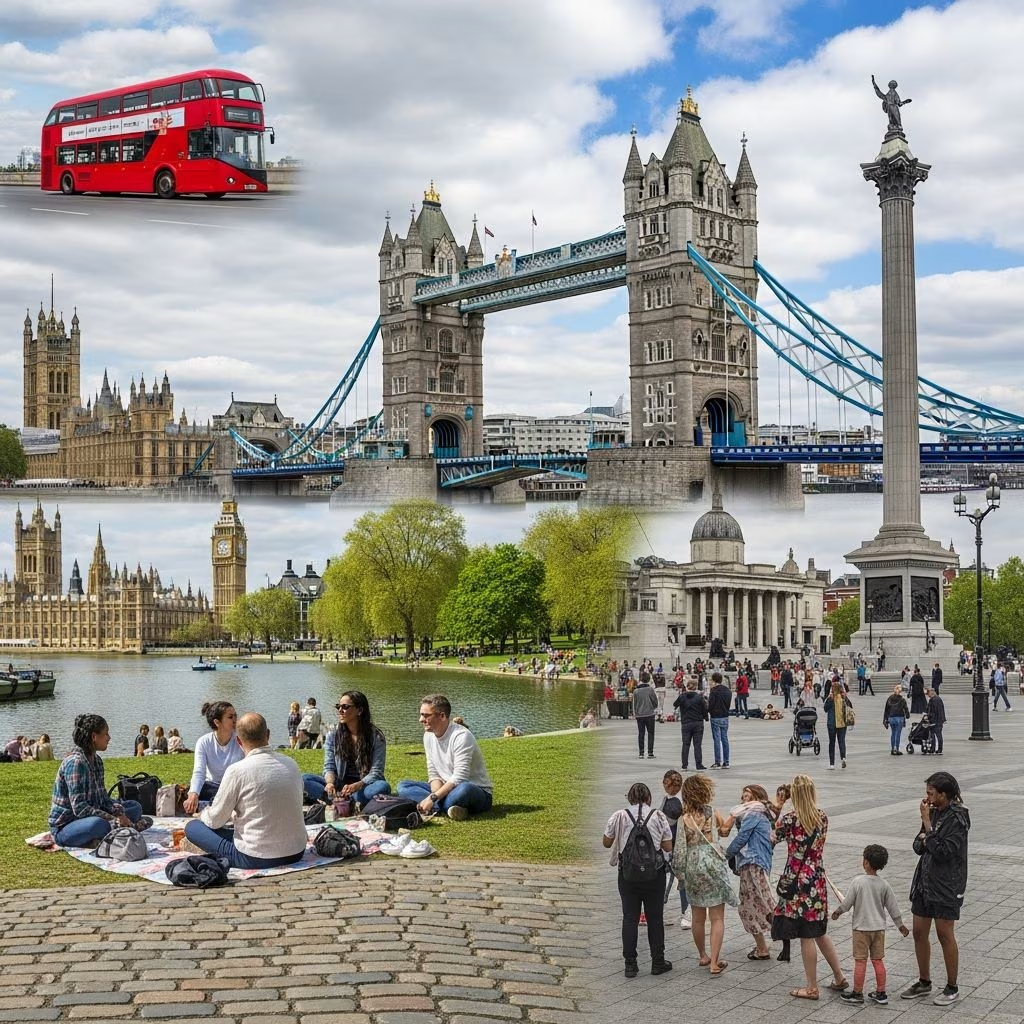
Trafalgar Square stands as the spiritual heart of central London, surrounded by imposing architecture and monuments. The grand statues and buildings that define this square showcase imperial aesthetics and historical commemoration. Seasonal transformations—particularly the installation of the massive Christmas tree during winter months—make this location perpetually engaging throughout the year.
The Houses of Parliament and Westminster Abbey anchor another historically significant precinct. Visitors can observe the exterior architecture and witness the Changing of the Guard ceremony at specified times, experiencing ceremonial traditions without purchasing tickets.
Beyond formal institutions, London’s neighborhoods themselves function as open-air galleries showcasing street art, independent retailers, and vibrant communities.
Covent Garden pulses with artistic energy despite its commercialized reputation. Street performers and living statues populate the historic marketplace, creating continuous entertainment. The surrounding streets branch into quieter passages lined with independent shops and galleries that reward exploration.
Neal’s Yard, tucked within Covent Garden’s vicinity, offers a peaceful retreat featuring colorful buildings, organic shops, and charming cafes. The compact courtyard creates an Instagram-worthy environment while maintaining authentic character.
Camden Market radiates creative energy through its eclectic merchandise, diverse food stalls, and artistic vendors. Walking through the market constitutes a cultural experience requiring no purchases, though many visitors find items they cannot resist.
Borough Market represents London’s food culture, with numerous vendors offering samples and prepared foods. The market’s vibrant atmosphere and community character make it worthwhile regardless of spending.
The Thames and its adjacent pathways create extended recreational corridors through London. The South Bank particularly concentrates cultural attractions and public spaces along the waterfront.
South Bank stretches from Westminster Bridge eastward, encompassing cultural institutions, performance venues, and public seating areas. The Thames Path provides unobstructed river views while connecting major attractions. Millennium Bridge, a pedestrian-only crossing connecting St. Paul’s Cathedral with the Tate Modern, offers distinctive perspectives of these landmarks.
London’s markets transcend their commercial function, serving as cultural hubs reflecting community character and culinary traditions. Exploring markets constitutes a complete experience independent of purchasing.
Are London’s major museums truly free to enter? Yes, the British Museum, Natural History Museum, V&A Museum, National Gallery, Tate Modern, and Science Museum offer free general admission, though donations are encouraged. Some special exhibitions may require paid tickets.
What are the best times to visit free attractions? Weekdays typically experience fewer crowds than weekends. Early morning or late afternoon visits often provide less congested experiences. Summer months attract larger crowds across outdoor spaces.
Do I need to book tickets in advance for free museums? While general admission remains free, some museums recommend advance registration during peak seasons. Check individual museum websites for current capacity information and booking recommendations.
Which parks offer the best views of London’s skyline? Parliament Hill in Hampstead Heath and Greenwich Park provide the most comprehensive skyline views. The Sky Garden offers modern architectural perspectives for those preferring elevated indoor spaces.
Are there free outdoor performances or events? Yes, Covent Garden regularly features street performers and living statues. Various parks host seasonal events and performances throughout the year, particularly during summer months.
Experiencing London without substantial expenditure requires strategic planning and awareness of available resources. Begin by prioritizing attractions matching your interests—whether cultural institutions, natural spaces, or neighborhood exploration. Most visitors can construct meaningful multi-day itineraries utilizing exclusively free attractions.
Combining museum visits with riverside walks creates balanced daily schedules incorporating diverse experiences. Many travelers pack picnic supplies purchased from market vendors, reducing meal expenses while enhancing outdoor experiences.
Transportation costs represent a significant budget component beyond attraction fees. London’s travelcard system offers economical daily passes for unlimited public transportation, enabling efficient movement between distributed attractions.
The city’s compact central areas encourage walking, reducing transportation needs while enabling spontaneous discoveries. Wandering through neighborhoods often reveals hidden courtyards, quiet parks, and independent galleries not featured in conventional guidebooks.
Visiting during shoulder seasons—spring and autumn—typically provides better experiences than peak summer months when crowds substantially increase across popular attractions. Off-season visits allow more relaxed exploration of museums and parks.
London’s commitment to free public access for major cultural institutions and natural spaces democratizes urban experiences that might otherwise remain inaccessible to budget-conscious travelers. The combination of world-class museums, extensive parks, historic neighborhoods, and riverside attractions creates comprehensive entertainment possibilities without requiring significant financial investment. Whether spending a single day or an extended stay, visitors can engage meaningfully with one of the world’s most culturally rich cities through strategic utilization of its abundant complimentary offerings.
