

 Travel Essentials
 Travel Essentials

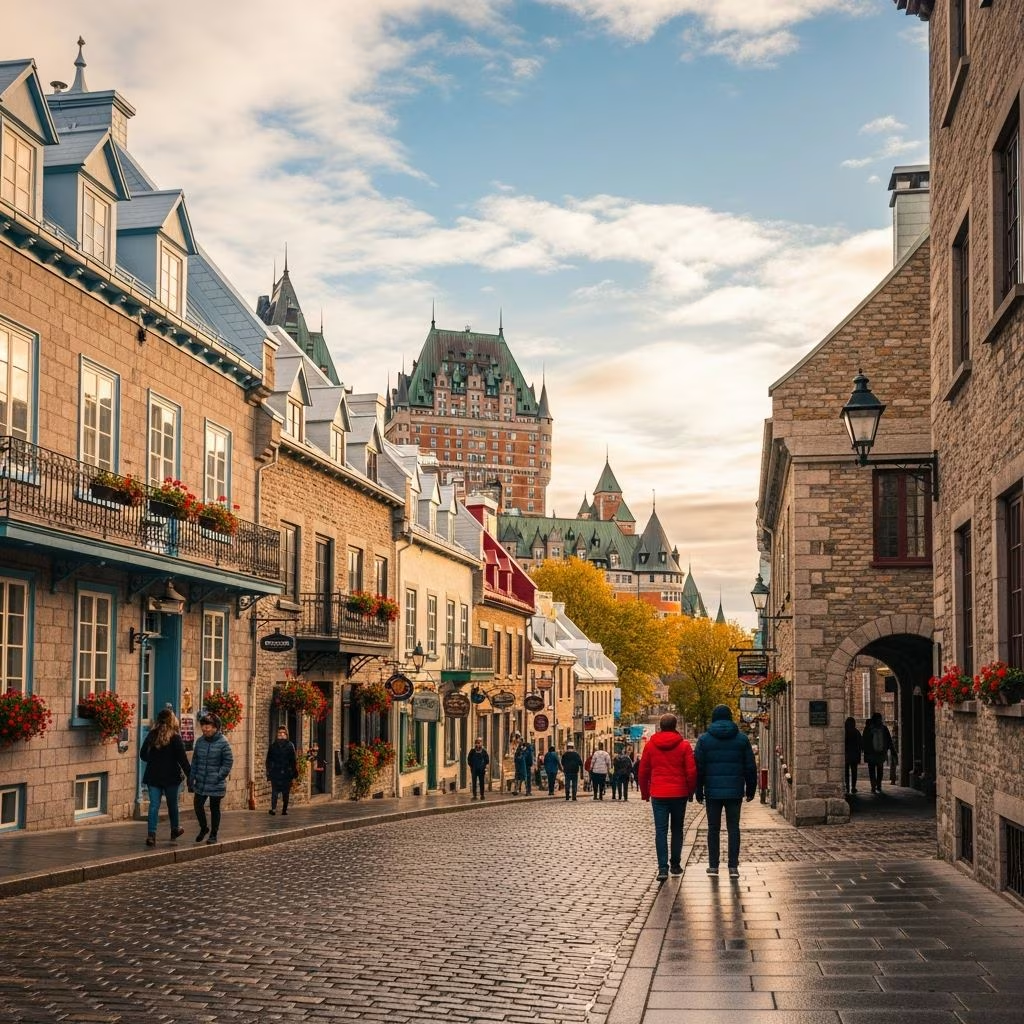
Explore Quebec City’s UNESCO-listed Old Town on a free self-guided walk, from Château Frontenac and the fortifications to Lower Town gems.
 Travel Essentials
Quebec City stands as a living testament to North American history, blending European elegance with New World resilience. As the continent’s only fortified city north of Mexico, its cobblestone streets and towering landmarks invite exploration on foot. This self-guided walking tour lets you immerse yourself in its UNESCO World Heritage-listed Upper and Lower Towns at no cost, revealing stories of French settlers, British conquests, and vibrant local life. Spanning about 3-4 hours depending on your pace, the route covers key sites while offering tips for deeper discovery.
Pedestrian-friendly paths make Quebec City ideal for walkers. The compact layout of Old Quebec—divided into Upper Town (Haute-Ville) and Lower Town (Basse-Ville)—concentrates attractions within a few kilometers. Free tours like those from local operators emphasize pay-what-you-wish models, but this DIY version empowers you to go solo, pausing at cafes or viewpoints as desired. Expect hilly terrain, so wear sturdy shoes. Best times: early morning or late afternoon to avoid crowds.
Begin at Place d’Armes, the bustling square fronting the iconic Château Frontenac. This fairy-tale hotel, opened in 1893, dominates the skyline and symbolizes Quebec’s grandeur. Built by the Canadian Pacific Railway, it hosted dignitaries like Roosevelt and Churchill during WWII summits. Snap photos from the terrace overlooking the St. Lawrence River, where the city’s strategic cliff-top position first drew Samuel de Champlain in 1608.
From here, wander Terrasse Dufferin, a boardwalk offering panoramic views. In summer, street performers add flair; in winter, it transforms into a toboggan run, a tradition since 1884.
Stroll west along the ramparts, Quebec’s star-shaped defenses completed in the 19th century. These walls, unique in North America, withstood sieges like the 1759 Battle of the Plains of Abraham, where British General Wolfe defeated French forces, shaping Canada’s fate. Peer through artillery slits at the Plains below, now a vast park for picnics and reenactments.
Visit the Porte Saint-Jean gate, the main northern entrance since 1694. Its inscription honors Louis XIV, underscoring Quebec’s French roots. Nearby, Artillery Park National Historic Site displays cannons and barracks—free entry on certain days.
| Key Fortification Sites | Description | Fun Fact |
|---|---|---|
| Porte Saint-Louis | Grand western gate with drawbridge remnants | Used in films like Caught (1949) |
| Porte Saint-Jean | Northern access with royal crest | Rebuilt after 1760 fire |
| Citadelle | Star fort overlooking river | Active military base; daily noontime cannon firing |
Head south to the Parliament Building (Hôtel du Parlement), a Second Empire masterpiece inaugurated in 1886. Its architecture echoes Versailles, with a library housing rare volumes on Quebec’s governance. Free interior tours (when in session) reveal frescoes depicting Canadian history. Opposite, admire the Fontaine de Tourny, a nod to Renaissance France.
This area pulses with political energy—protests and festivals animate the lawns, reflecting Quebec’s distinct identity within Canada.
The real adventure ramps up with the funicular or scenic stairs like the Escalier Casse-Cou (Breakneck Stairs), dating to 1635. They link Upper to Lower Town, once a muddy path for merchants. Emerge in Petit-Champlain, North America’s oldest commercial district. Cobblestone lanes line with 17th-century warehouses turned boutiques and bistros. Cross Place Royale, site of Champlain’s 1608 Habitation—Canada’s birthplace. The Notre-Dame-des-Victoires Church here, built 1688, survived bombardments.
Follow Rue Notre-Dame east to the Fresque des Québécois, a massive mural chronicling 400 years of history. Pose with painted figures like Cartier, who claimed the land for France in 1534. Continue to Place de la Gare, near the Palais Station, for river views.
For a loop back, ascend via L’Escalier du Ciel (Stairway to Heaven) or the funicular (small fee, but walkable).
Beyond majors, seek these offbeat spots:
Taste Quebecois specialties: try crepes at Cochon Dingue or smoked meat at Boulangerie Ange Albert. Hydrate at public fountains—water is pristine.
Spring blooms Dufferin; summer hosts festivals like Fête Nationale (June 24). Autumn foliage rivals New England; winter’s Carnaval (February) adds ice sculptures and parades. Adjust for snow—cleats help on icy paths.
Download offline maps via apps like Maps.me. Public restrooms abound in plazas. Respect no-flash photography in churches. For guided alternatives, operators like Samuel Dubois offer tip-based tours from the fountain or station.
| Essentials | Details |
|---|---|
| Weather Prep | Layers for variable temps; rain poncho |
| Accessibility | Some stairs; elevators at funicular |
| Family-Friendly | Stroller-challenging; kids love cannons |
Yes, entirely self-guided with no fees. Optional funicular or cafe stops at your discretion.
3-4 hours leisurely; shorten by skipping detours.
9 AM to beat crowds; check sunset for golden light photos.
Leashed pets welcome on streets; not inside churches.
Many covered alleys; indoor alternatives like Musée de la Civilisation nearby.
Yes—extend to Montmorency Falls via bus or Île d’Orléans for food tours.
Post-tour, ferry across the St. Lawrence to Lévis for skyline views. Hike the Plains of Abraham trails or visit the Citadelle museum (entry fee). Nighttime illuminates Frontenac magically—return after dark.
This walking route captures Quebec’s essence: resilient history, culinary delights, and welcoming spirit. Whether first-timer or repeat visitor, striding its paths fosters a profound connection to this gem.
