

 Travel Essentials
 Travel Essentials

Explore the Freedom Monument Sculpture Park in Montgomery, AL: a transformative site with monumental sculptures, historical relics, and the National Monument to Freedom etched with 122,000 surnames from the 1870 census.
 Travel Essentials
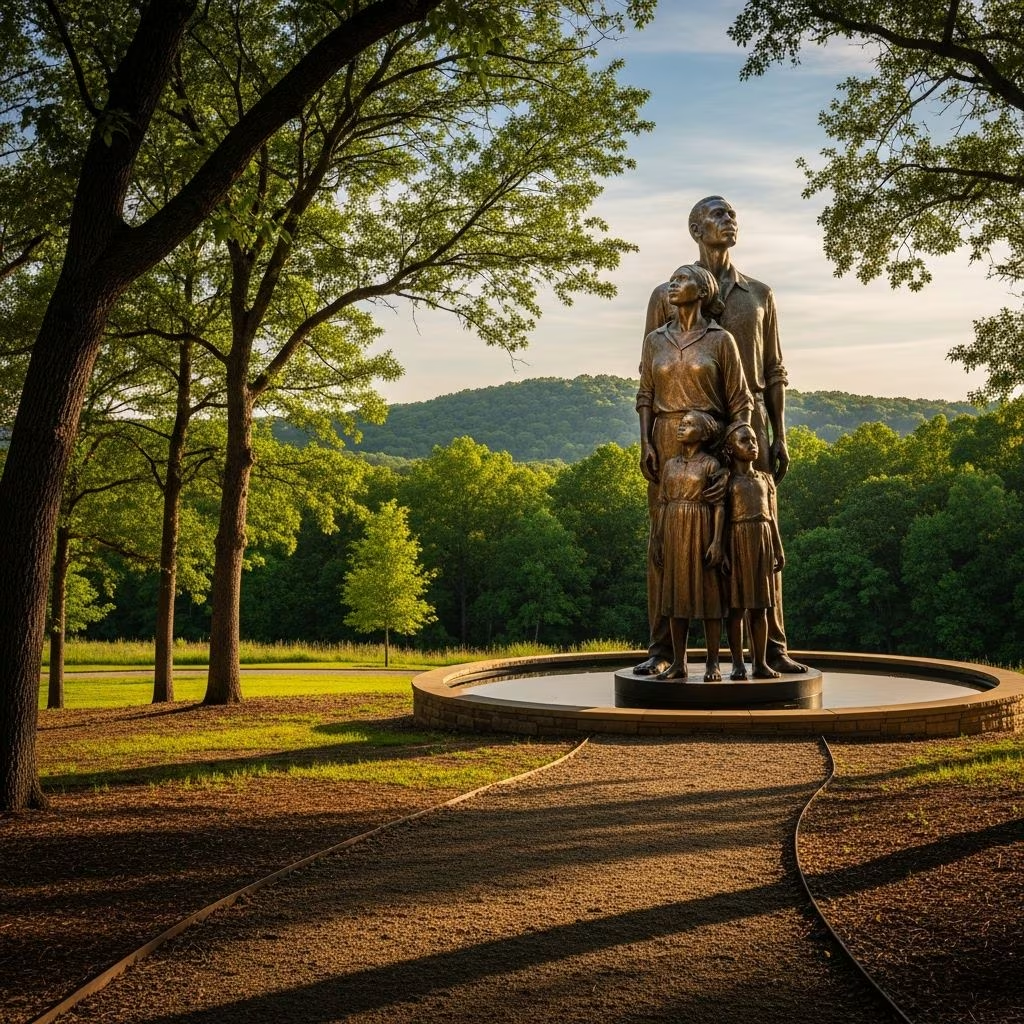
Perched along the banks of the Alabama River in Montgomery, Alabama, the Freedom Monument Sculpture Park stands as a poignant 17-acre sanctuary dedicated to illuminating the lives of over 10 million Black individuals enslaved in America. Developed by the Equal Justice Initiative (EJI), this site masterfully intertwines contemporary sculptures, authentic historical artifacts, and immersive narratives to foster a deep understanding of slavery’s enduring impact.
The inception of the Freedom Monument Sculpture Park traces back to EJI founder Bryan Stevenson’s profound reflections on America’s hidden histories. Inspired by a 2021 visit to a former plantation—his first such experience—Stevenson sought to counter narratives that often glorify enslavers while sidelining the humanity of the enslaved. This led to the acquisition of riverside land in Montgomery, a historic hub for the domestic slave trade where tens of thousands were trafficked via the Alabama River.
Opening on March 27, 2024, the park completes EJI’s trio of Legacy Sites in downtown Montgomery, alongside the Legacy Museum: From Enslavement to Mass Incarceration and the National Memorial for Peace and Justice. Together, these venues create a cohesive pilgrimage tracing racial injustice from slavery through lynching, segregation, and modern mass incarceration.
Visitors embark on a thoughtfully curated journey through the park’s winding paths, each segment unveiling layers of the enslavement experience. The narrative begins with Indigenous histories, including Muscogee family stories shared via ancient oral traditions from the very land now occupied by the park.
Key thematic zones include:
Artifacts anchor these stories in reality: a 170-year-old plantation dwelling, a whipping post, and bricks crafted by enslaved hands evoke visceral connections to the past.
Over two dozen sculptures by globally renowned artists transform abstract history into tangible emotion. These works, commissioned specifically for the park, blend abstraction, figuration, and symbolism to honor enslaved lives.
| Artist | Sculpture | Medium & Significance |
|---|---|---|
| Simone Leigh | Brick House (2019) | 16-foot bronze of a Black woman’s head and torso; greets visitors at the entrance, symbolizing strength and shelter built by enslaved labor. |
| Kwame Akoto-Bamfo | Various | Concrete works evoking chains and resistance, drawing from ancestral memory. |
| Wangechi Mutu | Untitled works | Surreal forms exploring displacement and resilience in the trade routes. |
| Charles Gaines, Alison Saar, Rose B. Simpson, Theaster Gates, Kehinde Wiley, Hank Willis Thomas | Diverse installations | Abstract and figurative pieces addressing labor, identity, and liberation. |
| Thaddeus Mosley | Benin Strut (2020) | Bronze abstract with dynamic arms conveying pride and swagger. |
These pieces, many monumental in scale, invite contemplation amid lush landscapes overlooking the river—a deliberate juxtaposition of beauty and brutality.
Crowning the park is the National Monument to Freedom, a colossal 43-foot-high, 155-foot-long wall shaped like an open book. Etched into its surface are 122,000 surnames chosen by the 4.7 million formerly enslaved African Americans recorded in the 1870 U.S. Census—the first to list them fully as free citizens.
This monument honors not just individuals but tens of millions of descendants, providing a dignified resting place for spirits long denied surnames and recognition. Its weathered steel surface gleams under the sun, a testament to perseverance.
Location and Access: Situated at 32°23′22″N 86°18′49″W, the park is easily accessible from downtown Montgomery. Ample parking and pathways accommodate all visitors.
Hours and Tickets: Open daily; advance tickets recommended via EJI’s official site. Self-guided tours with audio narratives enhance the experience.
Tips for an Impactful Visit:
Families, educators, and historians praise its accessibility for all ages, blending education with emotional depth.
At the helm is Bryan Stevenson, EJI’s founder and a MacArthur ‘Genius’ Fellow. His legal battles against racial injustice, chronicled in Just Mercy, fuel these sites. Stevenson envisions the park as a space for truth-telling, urging America to confront its past for a just future.
Since opening, the park has garnered widespread praise. The New York Times dubbed it “an unflinching and moving journey,” while CBS News highlighted its fusion of artifacts and art. NBC Nightly News featured it as a first-of-its-kind slavery monument. International visitors and media underscore its role in global reckonings with colonial histories.
Reviews note its power to evoke empathy without sensationalism, fostering dialogue on reparative justice.
Montgomery, once the slave trade’s epicenter, now pivots toward healing through tourism. The park boosts local economy while challenging sanitized histories. EJI’s work extends to community truth projects nationwide, documenting racial violence.
Educators integrate it into curricula, with virtual tours expanding reach. It prompts questions on slavery’s economic legacies, from infrastructure to wealth gaps.
A 17-acre EJI site in Montgomery honoring enslaved Black lives through art, artifacts, and the National Monument to Freedom.
March 27, 2024.
122,000 surnames from the 1870 census.
Simone Leigh, Kwame Akoto-Bamfo, Wangechi Mutu, Kehinde Wiley, and others.
Yes, with guided narratives suitable for ages 10+; younger children with parental discretion.
Absolutely—purchase a combo ticket for the Legacy Museum and National Memorial.
This park transcends a mere attraction; it’s a vital space for national introspection. By humanizing the enslaved through art and evidence, it charts a path toward collective healing and equity.
