

 Travel Essentials
 Travel Essentials

Learn practical strategies for visiting French Polynesia on a budget, including accommodation tips, dining options, and inter-island transportation choices.
 Travel Essentials
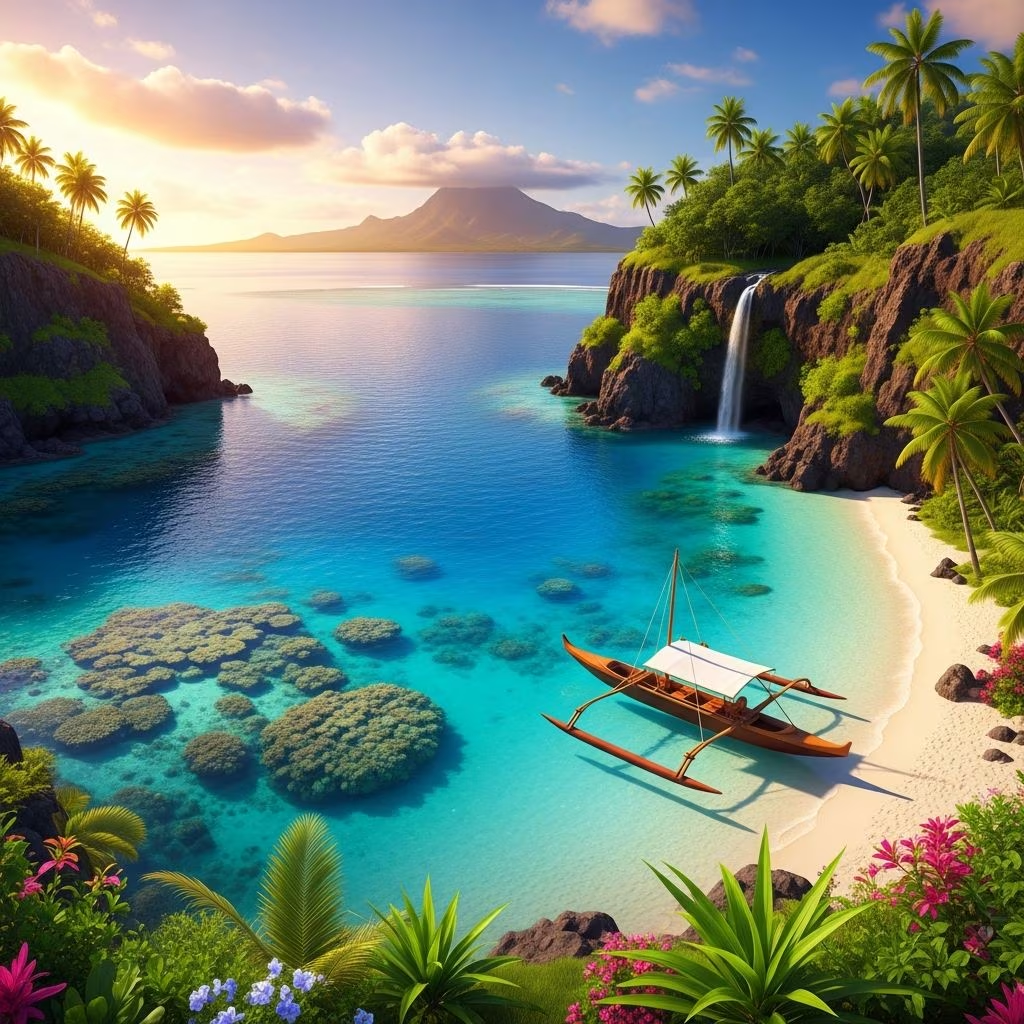
French Polynesia conjures images of overwater bungalows, pristine lagoons, and exclusive resorts that seem accessible only to the wealthy. However, this idyllic South Pacific destination is far more attainable than popular travel media suggests. With thoughtful planning and strategic choices, travelers on modest budgets can experience the natural beauty, cultural richness, and island charm that make French Polynesia extraordinary. Understanding where to invest money and where to economize transforms what appears to be an impossibly expensive vacation into a realistic and memorable adventure.
Before embarking on a journey to French Polynesia, establishing realistic daily spending expectations helps guide all subsequent decisions. The region operates on the CFP franc, and costs vary significantly depending on your comfort preferences and travel style.
Budget-conscious travelers should anticipate daily expenses falling into predictable categories. Accommodation represents your largest expense category, followed by meals and transportation. Understanding these benchmarks allows for more accurate trip planning and helps identify areas where compromises might feel natural versus those where splurging enhances the experience.
Accommodation choices fundamentally shape both your budget and your travel experience. The region offers surprising diversity beyond the famous luxury resorts, with options ranging from family-run guesthouses to camping facilities that provide authentic cultural connections while preserving your financial resources.
Pensions represent the cornerstone of budget travel throughout French Polynesia. These family-operated guesthouses blend seamlessly into island communities and offer a distinctive alternative to commercial hotel infrastructure. Rather than chains or impersonal establishments, pensions provide intimate settings where visitors interact directly with local residents and gain genuine insights into daily island life.
Budget-tier pensions typically feature simple bungalow-style accommodations with basic amenities, ranging from $80-100 USD nightly for double occupancy. These humble establishments include essential facilities but prioritize functionality over luxury. Mid-range pensions, priced between $150-250 USD per night, incorporate additional amenities while maintaining the personalized service characteristic of family operations. The financial differential between pension stays and comparable commercial hotels represents substantial savings, particularly across week-long or extended visits.
A significant advantage of pension accommodations involves access to half-board meal arrangements. For approximately $30-40 USD per person daily, visitors receive overnight lodging plus breakfast and one additional meal prepared according to traditional local recipes. This arrangement accomplishes multiple objectives simultaneously: it dramatically reduces dining expenses, facilitates meaningful interactions with hosts and other guests, and guarantees exposure to authentic Tahitian and Polynesian cuisine. Many visitors find that half-board arrangements represent exceptional value, effectively covering two meals daily while generating opportunities for cultural exchange impossible in conventional restaurants.
For visitors seeking assistance identifying appropriate pension accommodations, the Tahiti Tourism website maintains comprehensive listings with contact information and detailed descriptions enabling direct communication with proprietors.
Travelers visiting as couples or small groups may find self-catering accommodations particularly economical. Vacation rental platforms, combined with local property listings through specialized tourism sites, offer studios and small homes with kitchen facilities ranging from $100-350 USD nightly. These arrangements prove especially cost-effective when multiple travelers share expenses. Equipped kitchens facilitate purchasing fresh ingredients from island markets rather than relying exclusively on restaurant meals, generating incremental savings throughout an extended visit.
For adventurous travelers prioritizing budget maximization, camping represents the most economical overnight arrangement. French Polynesian camping typically differs from conventional campground experiences; rather, local guesthouses designate areas where visitors may pitch tents and access facility amenities. This arrangement costs approximately $20 USD per person nightly, providing shelter and bathroom access at minimal expense. While sparse compared to formal campground infrastructure, this option appeals to travelers comfortable with rustic conditions and seeking maximal budget efficiency.
Food represents the second major travel expense after accommodation, yet numerous strategies enable significant savings without sacrificing quality or authentic experiences.
French Polynesia’s street food culture provides exceptional value and genuine culinary experiences. Food trucks, locally called roulottes, and permanent snack stands operate throughout populated islands, offering prepared meals at fraction of restaurant prices. These venues typically feature fresh-caught fish, marinated salads, grilled meats, and satisfying sandwiches for $3-6 USD per item. Meals purchased from these informal establishments match or exceed quality available in formal dining establishments while supporting small-scale local entrepreneurs rather than large corporate chains.
Every island maintains at least one boulangerie where freshly baked baguettes sell for approximately $0.60 USD. This staple ingredient transforms breakfast from an expense into an economical ritual. A simple breakfast combining a warm baguette with butter and a hot beverage totals just a few dollars while providing substantial fuel for full days of exploration. Visitors quickly discover that morning market visits for baguettes connect them to local rhythms while establishing a sustainable eating pattern compatible with tight budgets.
Fresh produce, fish, and prepared items appear abundantly at roadside markets and formal market locations throughout major islands. Visitors with access to kitchen facilities may purchase raw ingredients for substantially less than restaurant equivalents. The main market in Papeete (Le Marché Papeete) provides particularly good selections and competitive pricing. This approach requires modest meal planning but generates savings enabling either extended stays or allocation of funds toward experiences and activities.
French Polynesia’s archipelago geography necessitates transportation choices that significantly impact budgets. Strategic decisions regarding island-hopping methods shape both costs and travel experiences.
Local ferry companies operating between Tahiti and nearby Society Islands provide the most economical inter-island transportation. Services connect Tahiti to Bora Bora, Mo’orea, and surrounding islands through established operators including Vaeara’i, Aremiti, and Apetahi Express. Ferry travel requires more time than flying but costs a fraction of airfare while providing unique maritime perspectives of island landscapes. Travelers with flexible schedules find ferry options economical and often enjoyable.
For visitors prioritizing inter-island exploration through air travel, Air Tahiti Multi-Island Passes present optimized value. These pre-purchased pass arrangements permit visiting multiple islands for single consolidated prices rather than paying per-flight costs. Discovery Passes covering three main islands begin at 38,000 XPF, with more comprehensive packages reaching 80,000 XPF depending on destination selections and seasonal factors. Travelers must book all flights in advance, requiring upfront planning but generating significant savings versus individual ticket purchases.
Air Moana, a newer carrier entering the French Polynesian aviation market, offers competitive pricing against established Air Tahiti while serving primary destinations, though with less extensive coverage. Direct competition between carriers maintains pricing discipline beneficial to budget-aware travelers. Recognizing that flight prices escalate during school holidays and peak season (May through October) enables strategic timing of island-hopping activities during shoulder seasons when pricing moderates.
Most islands accommodate ground transportation without necessitating expensive car rentals. Public bus systems operate most reliably during peak hours on weekdays, particularly morning (6-8 AM) and afternoon (3-6 PM) periods in Tahiti. Purchasing prepaid bus cards at the main Papeete terminal reduces fares by 25%, making this budget-friendly option even more economical.
Bicycle transportation proves surprisingly practical across most islands where distances remain modest and road conditions accommodate cycling. Standard bicycle rentals operate at under $20 USD daily, while emerging e-bike options rent for approximately $60 USD on heavily touristed islands. Both options eliminate car rental expenses while providing active engagement with local landscapes and communities.
Intelligent budget travel doesn’t require eliminating all premium experiences; rather, it involves identifying which splurges generate disproportionate satisfaction and memories.
Allocating modest funds toward guided cultural experiences, snorkeling excursions, or beach picnics often generates more lasting value than upgrading accommodation or dining. Visitors typically find that modest investment in activities creates the most vivid memories and authentic connections, while viewing upgraded hotels and restaurants as transient comforts.
The iconic overwater bungalow represents the archetypal French Polynesian luxury experience, with nightly rates ranging from 90,000-200,000+ CFP ($900-2,000+ USD). For budget-conscious travelers, experiencing these accommodations requires either strategic one-night indulgence or accepting that this particular experience remains outside trip parameters. Many visitors find that viewing these structures, photographing them, or enjoying them through day visits suffices, redirecting funds toward expanded exploration of multiple islands.
Recognizing that flight prices and accommodation rates spike during school holidays and May through October peak season, visiting during shoulder months (November-April, excluding major holidays) yields meaningful savings. Lower prices during these periods shouldn’t deter visitors from summer-season travel; they simply suggest that budget-conscious planners benefit from alternative timing.
Budget travelers can operate on $50-80 USD daily when prioritizing pensions, public transport, and street food, covering accommodation, meals, and basic transportation. This figure excludes international flights, activities, and optional experiences.
Pre-booking accommodation provides price certainty and stress reduction, particularly during peak seasons. Arriving without reservations risks finding available options at premium prices or limited selection.
Tahiti and Mo’orea offer the most developed infrastructure for budget travelers, with abundant pension options, ferry connections, and established food vendor networks. More remote islands provide authentic experiences but typically command higher prices with fewer budget accommodation options.
Hostels providing dorm rooms operate in main tourist areas, with nightly rates from $30-50 USD, enabling social connections while maximizing budget efficiency.
French Polynesia’s reputation for exclusive luxury obscures the reality that thoughtful travelers operating on modest budgets can experience the archipelago’s distinctive culture, stunning natural landscapes, and warm island hospitality. Success requires prioritizing authentic local interactions over luxury amenities, making transportation choices compatible with budget parameters, and recognizing that some of the destination’s greatest pleasures—swimming in turquoise lagoons, encountering local communities, enjoying fresh tropical fruits—cost nothing. By understanding your daily budget framework, selecting appropriate accommodation aligned with your priorities, making strategic dining choices, and optimizing transportation decisions, French Polynesia transforms from an impossible dream into an achievable adventure. The islands welcome thoughtful, culturally-respectful visitors regardless of spending capacity, offering memories and experiences that far exceed financial investment.
