

 Travel Essentials
 Travel Essentials

Discover friluftsliv, the Norwegian philosophy of open-air living that boosts well-being, strengthens families, and turns nature into daily life.
 Travel Essentials
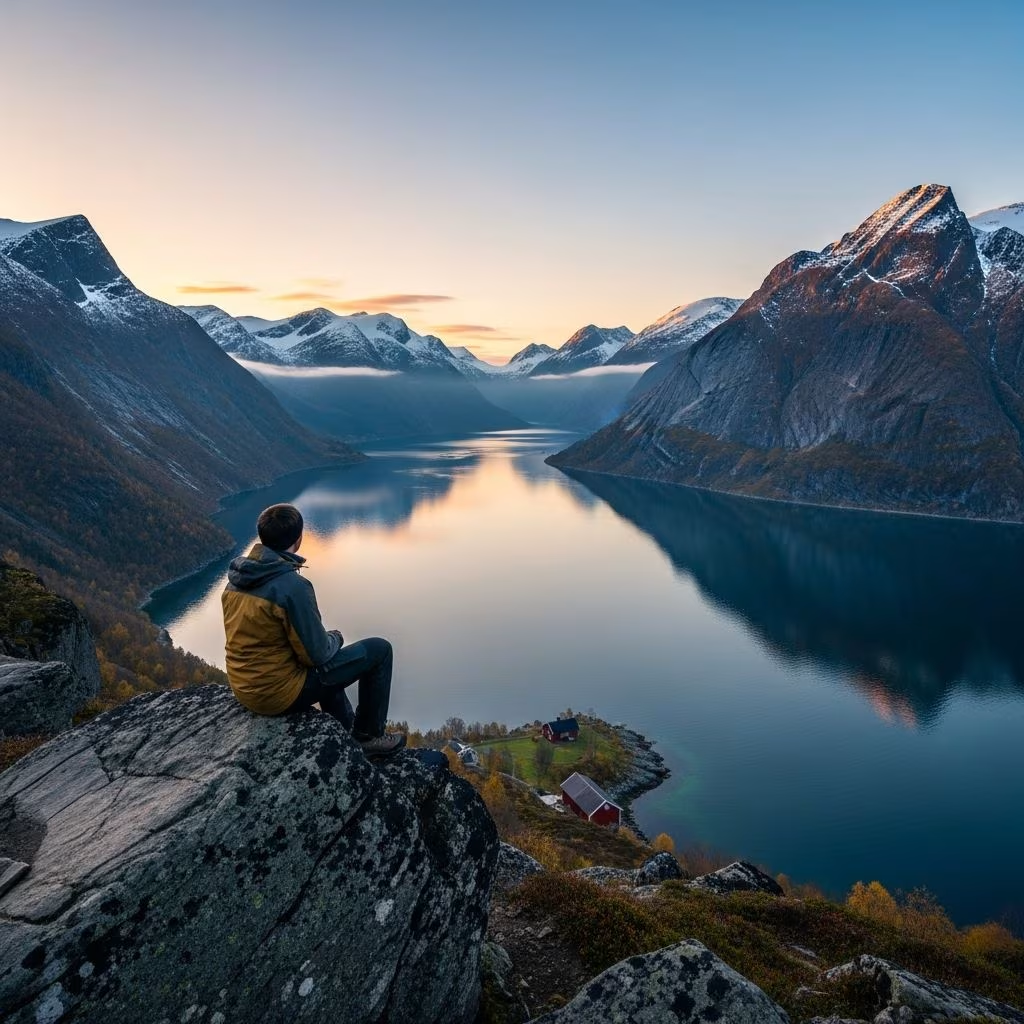
Friluftsliv, pronounced “free-loofts-liv,” translates to “open-air life” and represents a profound Norwegian cultural philosophy centered on thriving in nature regardless of weather or season. This mindset transcends mere recreation, weaving outdoor experiences into the fabric of daily existence to nurture body, mind, and spirit.
At its core, friluftsliv embodies a harmonious relationship with the natural world, emphasizing simplicity, respect, and rejuvenation. Norwegians view it not as a hobby but as an essential lifestyle that counters modern stresses by fostering freedom and connection. Rooted in centuries-old traditions, the term gained prominence in the 19th century amid a romantic nationalist movement. Explorer Fridtjof Nansen popularized it, highlighting nature’s invigorating power, while playwright Henrik Ibsen used it in the 1850s to underscore spiritual and physical renewal in remote settings.
This philosophy aligns with Norway’s dramatic landscapes—fjords, mountains, and forests—that have long shaped national identity. Today, nine out of ten Norwegians embrace friluftsliv, as noted by Norsk Friluftsliv, reflecting its role in building communal bonds and personal well-being.
Engaging in friluftsliv yields multifaceted benefits. Physically, it promotes activity through walking, skiing, or foraging, enhancing fitness without high costs or equipment. Mentally, it reduces anxiety by encouraging mindfulness amid natural beauty, allowing individuals to unplug and observe subtle details like rustling leaves or crisp air.
Unlike competitive sports, friluftsliv prioritizes non-motorized, accessible pursuits, making it inclusive for all ages and abilities.
Norwegians practice friluftsliv in all conditions, turning weather into an ally. Summer invites forest bathing and berry picking; autumn offers colorful hikes; winter demands cross-country skiing; spring brings coastal rambles.
| Season | Key Activities | Unique Appeal |
|---|---|---|
| Summer | Hiking, swimming, picnics | Endless daylight (midnight sun) for extended exploration |
| Autumn | Foraging mushrooms, trail walks | Vibrant foliage and harvest bounty |
| Winter | Skiing, snowshoeing, aurora viewing | Pure snowscapes and invigorating cold |
| Spring | Birdwatching, cabin stays | Thawing rivers and emerging greenery |
This adaptability ensures consistent engagement, proving that bad weather simply requires better clothing.
Friluftsliv thrives beyond wilderness; urban parks or nearby trails suffice. Families prioritize daily outings, like evening strolls or weekend cabin trips (hytte), blending adventure with coziness (kos). Start small: a 30-minute walk noticing surroundings, or picnics eschewing gadgets.
For families, it strengthens bonds through shared simplicity, teaching children environmental stewardship.
As urbanization rises, friluftsliv reminds us of nature’s accessibility via Norway’s allemannsretten (right to roam), granting public access to uncultivated lands. Yet, climate change and overtourism pose threats. Practitioners counter this with Leave No Trace principles: tread lightly, pack out waste, respect wildlife.
This ethos promotes responsibility, ensuring wild spaces endure. Globally, friluftsliv inspires movements like forest therapy in Japan (shinrin-yoku), adapting Nordic wisdom worldwide.
Adopting friluftsliv requires minimal barriers:
Communities like outdoor clubs offer guided introductions, easing entry.
“Friluft” (open air) + “liv” (life), denoting a life enriched by outdoor freedom.
No—it’s a universal philosophy adaptable anywhere with nature access.
Basic weatherproof clothing suffices; focus on experience over gear.
Friluftsliv lacks competition or goals, prioritizing joy and connection.
Absolutely—it’s ideal for family bonding through simple play.
Beyond Norway, friluftsliv influences wellness trends, from Nordic spas to eco-tourism. As mental health awareness grows, its prescription-like benefits—nature as therapy—gain traction. Post-pandemic, renewed outdoor appreciation echoes friluftsliv’s timeless call: step out, breathe deeply, live freely.
In essence, friluftsliv invites a paradigm shift toward sustainable joy, proving profound fulfillment lies in nature’s embrace, not material pursuits.
