

 Travel Essentials
 Travel Essentials

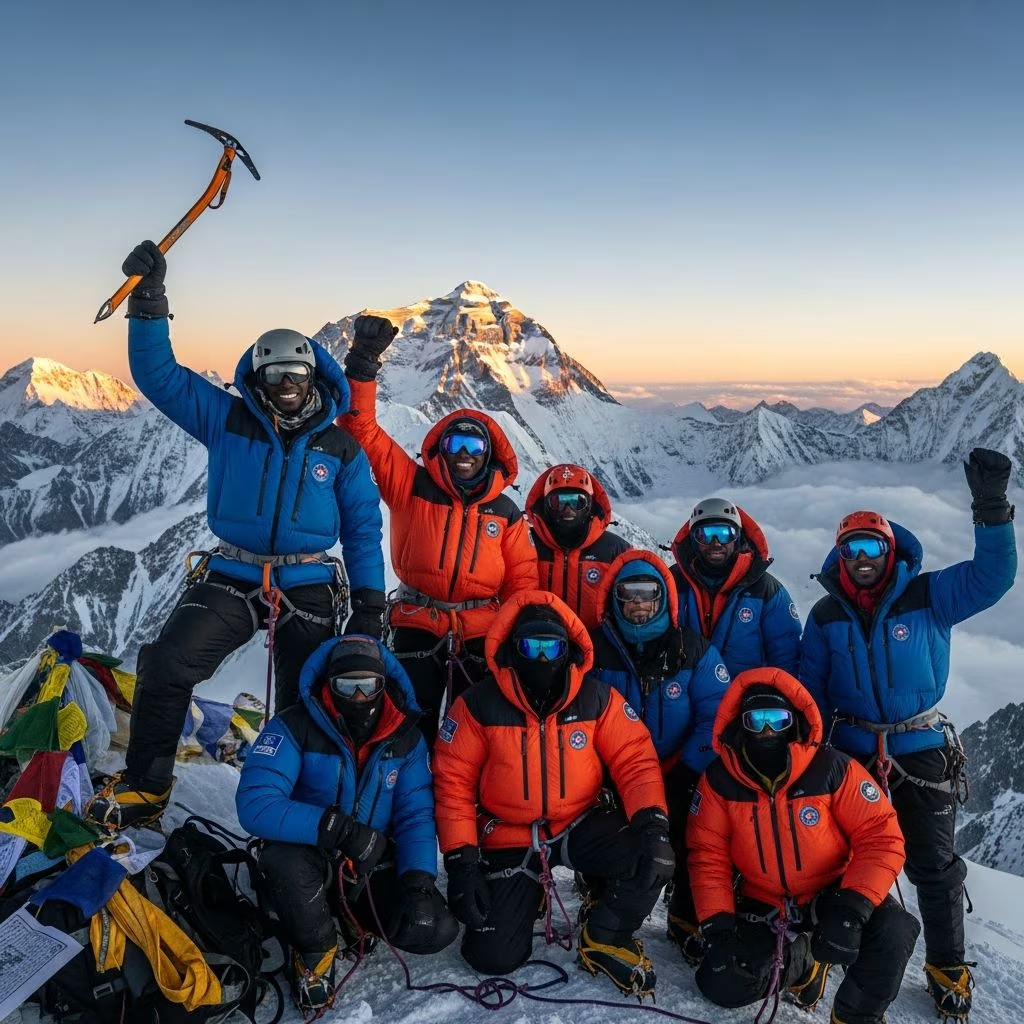
The Full Circle Everest expedition made history as the first all-Black climbing team to summit Mount Everest, inspiring outdoor access and representation.
 Travel Essentials
In a momentous achievement for mountaineering history, the Full Circle Everest expedition reached the summit of Mount Everest as the first all-Black climbing team to accomplish this feat. This groundbreaking accomplishment represents far more than a personal triumph for the climbers involved; it symbolizes a significant shift in the outdoor recreation landscape and opens important conversations about diversity, accessibility, and representation in extreme sports.
The Full Circle Everest expedition was comprised of nine dedicated mountaineers, along with support staff and eight Nepali guides who helped facilitate the successful ascent. The climbing team included both American and international members, demonstrating the global nature of this historic effort. The expedition was led by Philip Henderson, based in Cortez, Colorado, who directed operations from Base Camp during the summit push.
The seven climbers who reached the summit included:
One team member, Fred Campbell from Seattle, Washington, turned back before reaching the summit, demonstrating the immense physical and mental challenges inherent in high-altitude mountaineering. The expedition also included support personnel: photographer Evan Green and technician Adina Scott, who provided essential documentation and technical support without participating in the climb itself.
The achievement of the Full Circle team represents a remarkable milestone when contextualized within Everest’s climbing history. Since the first successful summit in 1953, approximately 6,000 climbers have reached the peak. However, prior to the Full Circle expedition, only ten Black climbers had ever stood atop the world’s highest mountain. This statistic underscores a significant disparity in mountaineering participation and achievement among different communities.
The expedition’s success effectively doubled the number of Black climbers who have summited Everest in the mountain’s entire history, highlighting the exclusionary patterns that have historically characterized high-altitude mountaineering. This single accomplishment serves as a powerful testament to what becomes possible when barriers are actively challenged and inclusive opportunities are created.
While the physical act of reaching Everest’s peak represents an extraordinary achievement, the Full Circle Everest expedition was designed with deeper objectives in mind. The team’s fundamental mission focused on illuminating and challenging the systemic barriers that have historically prevented Black communities from accessing and participating in outdoor recreational activities.
According to the expedition’s official objectives, the team aimed to accomplish multiple goals beyond the summit climb itself:
The Full Circle website explicitly states that the expedition seeks to “inspire the next generation of outdoor enthusiasts, educators, leaders, and mountaineers of color to continue chasing their personal summits.” This intergenerational approach recognizes that representation in high-profile adventures carries profound psychological and practical implications for younger individuals considering careers or pursuits in mountaineering and outdoor recreation.
Reaching the summit of Mount Everest requires far more than courage and determination. The Full Circle team invested years in preparation, planning, and fundraising efforts to bring this historic expedition to fruition. This extended timeline reflects the complexity of organizing high-altitude mountaineering expeditions and the significant financial resources required.
The expedition worked with Shangri-La Nepal Treks, an established outfitter managed by Jiban Ghimire, who confirmed the team’s successful summit achievement. The partnership with experienced local operators proved crucial to coordinating the logistics of managing a large climbing party, coordinating with Nepali guides, and ensuring safety protocols throughout the journey.
The team announced its summit bid for May 10, setting a specific timeline for the final push to the peak. This strategic scheduling aligns with the mountaineering season when weather patterns and conditions on Everest are most favorable for summit attempts.
Mount Everest presents extraordinary physical and environmental challenges that test even the most experienced climbers. Standing at 29,032 feet above sea level, Everest subjects climbers to extreme cold, reduced oxygen levels, and unpredictable weather conditions. The “death zone” above 26,000 feet contains so little oxygen that the human body begins deteriorating rapidly, making quick decision-making and descent essential.
The fact that one team member, Fred Campbell, made the difficult decision to turn back before summit illustrates the reality that even well-trained mountaineers must sometimes prioritize safety over achievement. This decision reflects the mature approach to mountaineering that emphasizes survival and long-term health over reaching the summit at any cost.
The Full Circle expedition’s focus on highlighting barriers to outdoor access reflects documented disparities in recreational opportunities. Research and anecdotal evidence consistently show that Black Americans participate in outdoor activities at lower rates than other demographic groups. These disparities stem from multiple interconnected factors, including historical exclusion from certain spaces, economic barriers, lack of representation in outdoor industries, and limited mentorship networks.
By bringing attention to these barriers through a high-profile expedition, the Full Circle team contributes to broader conversations about equity, accessibility, and inclusive community building in outdoor recreation. The visibility of their achievement creates opportunities to discuss not only what is possible for individual climbers but also what systemic changes might expand opportunities for entire communities.
The presence of two women on the Full Circle summit team—Rosemary Saal and Abby Dione—adds another dimension to the expedition’s significance. Women remain underrepresented in high-altitude mountaineering, particularly among climbers of color. Their achievement contributes to expanding perceptions of who can participate in and succeed at the highest levels of extreme sports.
Role modeling represents a crucial mechanism through which visibility translates into expanded opportunities. Young people from underrepresented communities who see climbers who share their identities succeeding at extraordinary endeavors develop new mental maps of possibility. They recognize that pathways exist within spaces where they might previously have assumed they did not belong.
The Full Circle Everest expedition’s success extends beyond the individual accomplishments of its team members. The achievement generates conversations within outdoor industries about recruitment, retention, and leadership development for people of color. It prompts educational institutions to consider how they present mountaineering and outdoor careers to diverse student populations.
Media coverage of the expedition also normalizes the presence of Black climbers in spaces where such representation has historically been rare. Normalization through visibility gradually shifts cultural expectations and widens the perceived boundaries of who belongs in particular spaces and pursuits.
The Full Circle Everest expedition establishes a foundation upon which future inclusive mountaineering initiatives can build. By demonstrating the feasibility and value of organized, well-supported climbing expeditions that prioritize diversity, the team creates a model that other organizations might adopt or adapt.
Future expeditions might expand on this foundation by developing mentorship programs, creating youth development pipelines, establishing scholarship funds for aspiring mountaineers of color, or documenting educational resources about mountaineering careers and opportunities. The symbolic breakthrough achieved by Full Circle creates momentum for practical systemic changes that could reshape the outdoor recreation landscape.
Seven climbers from the Full Circle Everest expedition reached the summit, along with their eight Nepali guides. One team member, Fred Campbell, turned back before the summit.
Beyond reaching the summit, the expedition aimed to highlight barriers preventing Black communities from accessing outdoor recreation and to inspire future generations of mountaineers and outdoor leaders of color.
Prior to the Full Circle expedition, only ten Black climbers had ever reached the Everest summit in the mountain’s entire history since 1953.
Philip Henderson, based in Cortez, Colorado, led the expedition and directed operations from Base Camp during the summit push.
Shangri-La Nepal Treks, managed by Jiban Ghimire, served as the outfitter and operator coordinating the expedition’s logistics and guide services.
