

 Travel Essentials
 Travel Essentials

Explore Gabon's remote national parks, track western lowland gorillas, and experience diverse wildlife in Africa's most biodiverse and least-visited safari destination.
 Travel Essentials
Central Africa harbors some of the planet’s most remarkable ecological treasures, and few destinations exemplify this better than Gabon. Known as Africa’s Last Eden, this West-Central African nation represents a rare opportunity to venture into genuinely untouched landscapes where wildlife roams freely in their natural habitats. With approximately 88 percent forest coverage and a remarkably low tourism footprint compared to traditional safari destinations, Gabon offers adventurers an authentic and exclusive wilderness experience.
While East African countries like Kenya, Tanzania, and Uganda dominate mainstream safari tourism, Gabon maintains a distinctly different character. The nation’s commitment to conservation and limited development infrastructure have inadvertently created a paradise for ecotourism enthusiasts seeking genuine off-the-beaten-path experiences.
The fundamental difference lies in Gabon’s landscape composition. Unlike the expansive savannas of southern Africa, Gabon presents a mosaic of ecosystems: dense tropical rainforests, coastal lagoons, river systems, and small savanna clearings. This environmental diversity supports wildlife populations rarely encountered elsewhere in Africa.
Gabon’s conservation network includes several world-class destinations, each offering distinct wildlife viewing opportunities and ecological significance.
Loango National Park represents Gabon’s most celebrated wildlife destination and arguably one of Africa’s most remarkable protected areas. This extraordinary park combines rainforest, savanna, wetlands, and extensive coastline within its boundaries, creating an unprecedented diversity of habitats and wildlife encounters.
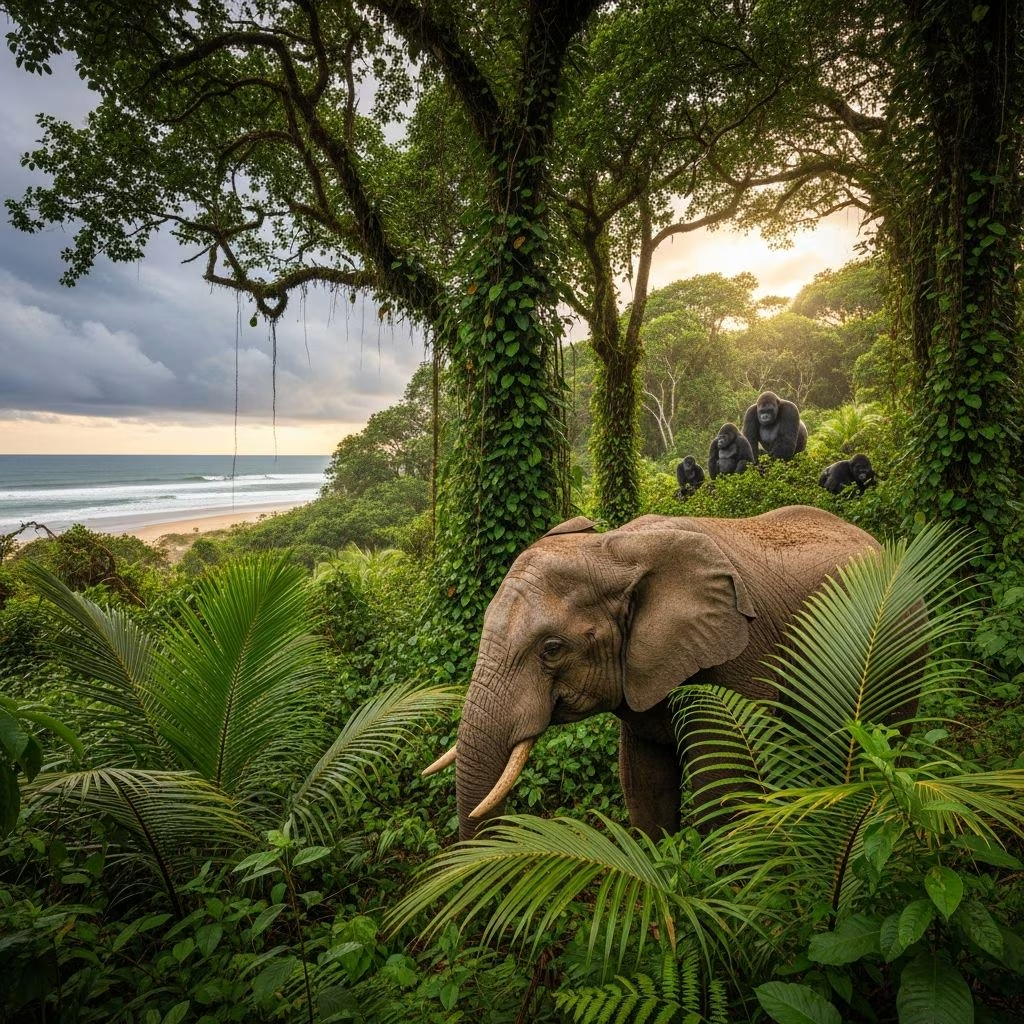
The park’s most distinctive feature is witnessing large terrestrial animals utilizing the beach environment. Forest elephants regularly walk along the shoreline, hippos emerge from lagoons to forage in coastal grasslands, and buffalo herds graze on beach vegetation. This unusual behavior occurs because the park’s protected status allows animals to behave naturally without human persecution.
Loango also protects crucial marine ecosystems. The 885-kilometer coastline serves as the largest nesting ground for leatherback sea turtles in Africa. During nesting season from December through February, visitors may witness female turtles coming ashore to lay eggs. From July through September, humpback whales migrate through coastal waters, creating spectacular marine viewing opportunities.
Established in 2002, Lopé National Park spans 4,910 square kilometers and represents the largest protected area in Gabon. Its distinctive terrain combines thick tropical forests with open savanna, creating a transitional ecosystem that supports exceptional primate and mammal populations.
The park harbors an estimated 350 bird species and substantial populations of forest elephants, chimpanzees, and western lowland gorillas. A unique feature of Lopé is the presence of mandrills—charismatic primates endemic to Central African forests. The Sun-Tailed Guenon, discovered only three decades ago, inhabits the park’s northern forests as an endemic species found nowhere else on Earth.
Gorilla trekking stands as the quintessential Gabon safari experience. Western lowland gorillas inhabit the region’s rainforests, living in family groups led by dominant silverback males. The experience of approaching these magnificent creatures in their natural habitat represents one of Africa’s most profoundly moving wildlife encounters.
Gorilla trekking requires physical preparation and early morning starts. Expert trackers lead groups into dense forest, following trails and signs to locate gorilla families. The trek’s duration varies considerably, ranging from several hours to full-day expeditions depending on gorilla movement patterns. The dry season from June through October generally provides optimal trekking conditions, as gorillas travel less extensively and remain more predictable in their movements.
Late January through May represents another excellent window for gorilla encounters, when animals traverse smaller territories and remain closer to their established ranges. Successfully finding gorillas requires patience, physical endurance, and respect for these endangered primates and their ecosystem.
Gabon shelters approximately 40 percent of Africa’s remaining forest elephants—a subspecies distinctly different from savanna elephants. These animals possess straighter tusks and smaller ears adapted to forest environments. Viewing forest elephants requires both patience and professional guidance, as their forest habitat limits visibility compared to open savanna settings.
Game drives through savanna clearings and forest galleries offer the most reliable elephant viewing opportunities. The dry season transforms coastal plains into open grasslands where elephant herds concentrate around remaining water sources, increasing sighting probability.
Gabon’s rainforests support remarkable primate diversity. Chimpanzees inhabit multiple forest regions, offering tracking opportunities distinct from gorilla experiences. These highly intelligent animals display complex social behaviors and tool-use capabilities that captivate observers.
Mandrill tracking expeditions in Lopé National Park provide encounters with these colorful and endangered primates. While possessing radio collars that assist tracker location, finding mandrills still requires dedicated forest exploration. Multiple monkey species including red colobus, mangabeys, and various guenon species populate the forest canopy, contributing to Gabon’s exceptional primate richness.
Beyond terrestrial viewing, Gabon’s waterways support substantial wildlife populations. Lagoon safaris by boat reveal hippopotamus families, crocodile species, and extraordinary avian diversity. The Ogooué River system and associated lagoon complexes provide intimate wildlife viewing opportunities distinct from traditional game drive experiences.
Coastal waters support marine megafauna including humpback whales during migration periods and sea turtles year-round. Birdwatchers find exceptional rewards with 659 recorded species throughout the country, including specialized forest species and coastal seabirds.
Wildlife viewing opportunities vary substantially throughout the year in Gabon. Understanding seasonal patterns enables strategic trip planning aligned with specific wildlife objectives.
| Season | Wildlife Highlights | Best For |
|---|---|---|
| December–February | Sea turtle nesting, moderate forest conditions | Turtle encounters, mixed wildlife viewing |
| March–May | Green vegetation, limited elephant viewing, good gorilla tracking | Gorilla trekking, lush forest exploration |
| June–August | Dry season, elephants on coastal plains, whale migration begins | Elephant viewing, coastal wildlife |
| September–November | Peak whale season, hippos concentrate around water sources | Whale viewing, concentrated wildlife viewing |
Gabon’s remote nature necessitates staying at specialized eco-lodges located within or adjacent to national parks. These establishments typically feature comfortable yet rustic accommodations, expert naturalist guides, and all-inclusive meal service. Accessing parks requires charter flights from Libreville, Gabon’s capital, combining several hours of ground transportation with scenic aviation perspectives over rainforest landscapes.
Typical safari packages range from 6 to 9 days, incorporating multiple park visits with various activity types. Costs reflect the destination’s exclusivity and limited infrastructure, generally ranging from $4,700 to $14,500 per person depending on accommodation standards, group size, and inclusions.
Gorilla trekking demands reasonable physical fitness and acclimatization to humid tropical conditions. Treks involve navigating steep terrain, dense vegetation, and unpredictable forest paths. Participants should possess good cardiovascular conditioning and mental resilience for extended exertion in challenging environments.
Vaccinations for yellow fever, hepatitis A and B, and routine immunizations are typically recommended. Malaria prophylaxis should be discussed with healthcare providers. Comprehensive travel insurance covering medical evacuation proves essential in this remote destination.
Gabon’s status as Africa’s Last Eden reflects decades of conservation commitment. The nation designates approximately 13 percent of its territory as protected areas, representing serious ecological stewardship. Leatherback turtle populations, forest elephant herds, and primate communities benefit from these protections.
Responsible tourism practices directly support conservation objectives. Visitor fees fund park management, anti-poaching operations, and local community development. Choosing operators committed to sustainable practices ensures tourism revenue translates into tangible conservation benefits rather than environmental degradation.
Local communities surrounding protected areas increasingly participate in tourism benefits through employment, cultural exchange opportunities, and economic incentives for wildlife protection. Supporting community-based tourism initiatives strengthens both conservation outcomes and cultural preservation.
Most international visitors require visas for Gabon entry. Citizens of certain nations may obtain visas upon arrival, while others must apply beforehand through Gabonese diplomatic missions. Passport validity must extend at least six months beyond the intended departure date. Consular websites and professional travel operators provide current visa information and application procedures.
Late January through May offers optimal gorilla trekking conditions when animals travel shorter distances and remain more predictable. However, the dry season (June–August) also provides excellent opportunities with reduced forest density improving visibility.
Gorilla treks involve challenging terrain navigation, elevation changes, and dense vegetation traversal. Physical fitness adequate for 4-6 hours of sustained hiking in humid tropical conditions is essential. Treks can be modified for varying abilities with guide assistance.
Habituated wildlife in protected areas generally maintains respectful distances from humans when guidelines are observed. Professional guides enforce strict behavioral protocols ensuring both human safety and animal welfare. Serious incidents remain exceptionally rare with established tourism operations.
While wildlife sightings depend on seasonal factors and forest conditions, visitors should expect substantial bird diversity, various monkey species, forest elephants, and likely hippos in aquatic settings. Gorilla, chimpanzee, and specific mammal sightings are probable but not absolutely guaranteed.
Yes, Gabon’s remote location, limited infrastructure, and low tourist volume result in higher costs than traditional safari destinations. However, exclusivity and genuine wilderness preservation justify premium pricing for dedicated ecotourism enthusiasts.
Gabon represents Africa’s final frontier for wilderness tourism—a place where ecological integrity remains paramount and human impact minimal. From rainforest gorilla encounters to beach walks alongside forest elephants, this destination offers experiences impossible elsewhere on the continent. For travelers willing to embrace remote conditions and higher costs in exchange for genuine wilderness authenticity, Gabon delivers incomparable rewards.
