

 Travel Essentials
 Travel Essentials

Ecuador doubles Galapagos National Park entry fees to $200 from August 2024, the first rise in 26 years, to support conservation, infrastructure, and local communities amid rising tourism pressures.
 Travel Essentials
The Galapagos Islands, a pristine archipelago renowned for its extraordinary biodiversity, are implementing a significant policy change: doubling the National Park entry fee for international visitors to $200 starting August 1, 2024. This adjustment, the first in 26 years, addresses escalating conservation needs and tourism pressures while ensuring the islands’ unique ecosystem endures for future generations.
The updated fees reflect a tiered system designed to balance accessibility with sustainability. International travelers now face a fee rising from $100 to $200 per person. Visitors from CAN/MERCOSUR countries (including Bolivia, Colombia, Peru, Argentina, Brazil, Paraguay, and Uruguay) will pay $100, up from $50. Ecuadorian nationals see their fee increase from $6 to $30, while children under 12 receive reduced rates, and those under 2 enter free.
This structure must be paid in cash upon arrival at Galapagos airports, separate from the $30 Transit Control Card (TCT) obtained online or at mainland airports in Quito or Guayaquil.
Tourism to the Galapagos has surged, straining the fragile environment that inspired Charles Darwin’s theory of evolution. With visitor numbers growing, authorities cite outdated fees—unchanged since 1998—as insufficient for modern conservation demands. Rising costs for habitat protection, species monitoring, and infrastructure maintenance necessitate this update.
The Galapagos National Park Directorate, Governing Council, and Ministry of Tourism emphasize that extra revenue will fund ecological restoration, community programs, and tourism enhancements. Officials like Arturo Izurieta and Niels Olsen highlight it as a commitment to long-term preservation.
The hike is expected to generate up to $40 million annually by 2025, a substantial leap from prior collections. Funds will prioritize:
One year post-implementation, early reports indicate effective use toward these goals, validating the policy’s intent.
| Fee Category | Old Fee (USD) | New Fee (USD) | Annual Revenue Projection |
|---|---|---|---|
| International | 100 | 200 | $40M total by 2025 |
| CAN/MERCOSUR | 50 | 100 | Included in total |
| Ecuadorian | 6 | 30 | Included in total |
At $200, the Galapagos fee aligns with other premier eco-destinations. For instance, Masai Mara charges $285 per person per day in high season, Bhutan $100 daily, and Serengeti $82.60 per day. These comparisons underscore the Galapagos’ value as a fixed-entry model for multi-day visits, praised by operators like Metropolitan Touring for promoting sustainability.
Unlike daily fees elsewhere, Galapagos’ one-time charge covers the entire stay, making it competitive while channeling funds directly to protection efforts.
Budget-conscious adventurers may rethink plans, but industry leaders applaud the move. Paulina Burbano de Lara of Metropolitan Touring notes it signals governmental dedication to the islands’ future. Early data suggests minimal visitor drop-off, with many prioritizing ethical travel.
To offset costs, travelers can bundle fees into packages or seek promotions. Sustainable operators emphasize enhanced experiences through better-regulated sites, reducing overcrowding.
Prepare by:
Post-hike, infrastructure improvements promise smoother visits, from upgraded docks to better interpretive centers.
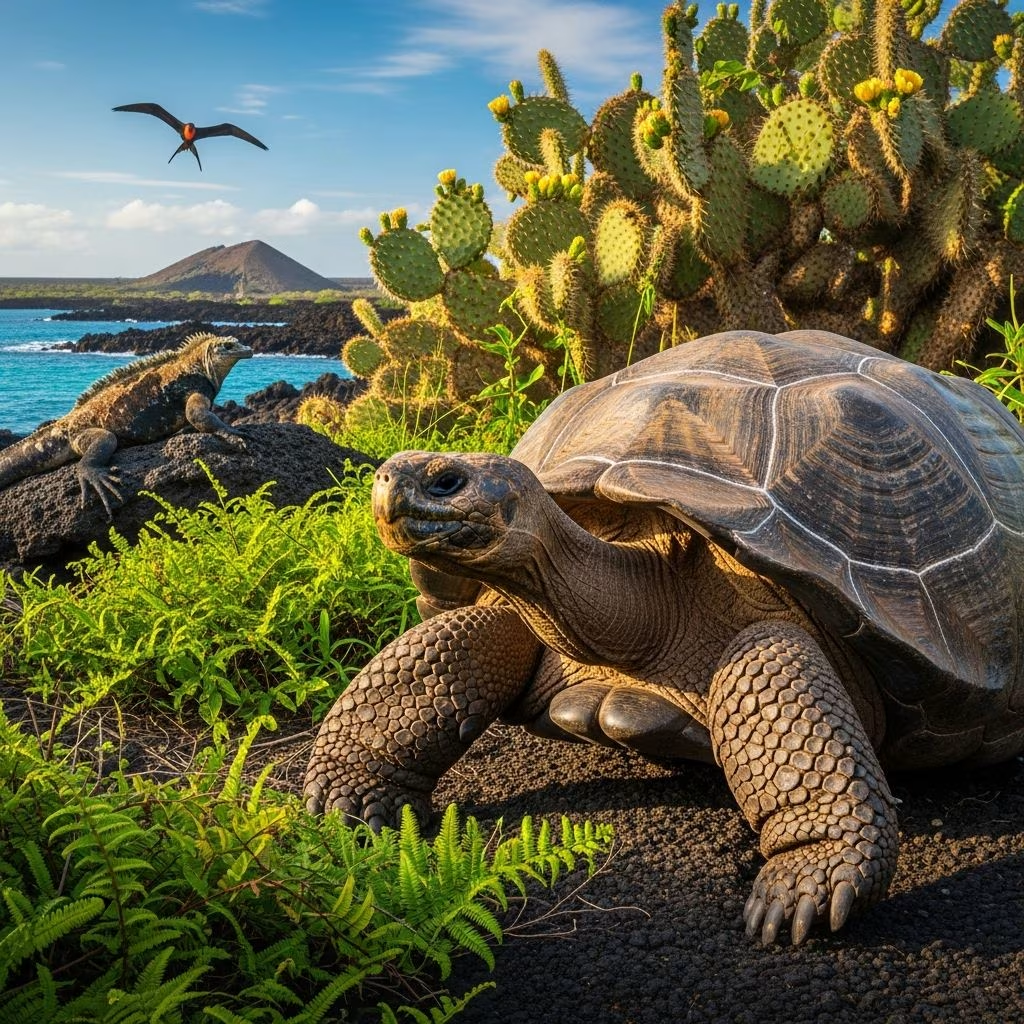
The Galapagos hosts over 3,000 species, many endemic, facing threats from climate change and invasives. Fee revenues bolster ranger patrols, research stations, and restoration—critical for giants like tortoises and marine iguanas. Local residents gain from training programs and economic diversification, fostering resilience.
This model sets a precedent for overtourism hotspots worldwide, proving visitors can fund their own environmental footprint.
August 1, 2024. All arrivals after this date pay the updated rates.
No, cash (USD) is required upon arrival at Baltra or San Cristobal airports.
It’s a one-time fee per person for unlimited duration during your visit.
No group or student discounts; only age-based reductions apply.
For conservation, infrastructure, monitoring, and community support, generating $40M yearly.
Many operators now include it; check packages for transparency.
Beyond iconic wildlife—blue-footed boobies, hammerhead sharks, lava lizards—the islands offer transformative experiences. Strict regulations ensure intimate encounters, unmatched elsewhere. Your fee investment secures this wonder, blending adventure with purpose.
In summary, the fee hike fortifies the Galapagos’ legacy as a global conservation beacon, inviting mindful explorers to witness evolution in action.
