

 Travel Essentials
 Travel Essentials

Complete guide to visiting the Galapagos Islands, covering travel options, island highlights, activities, and practical tips for an unforgettable adventure.
 Travel Essentials
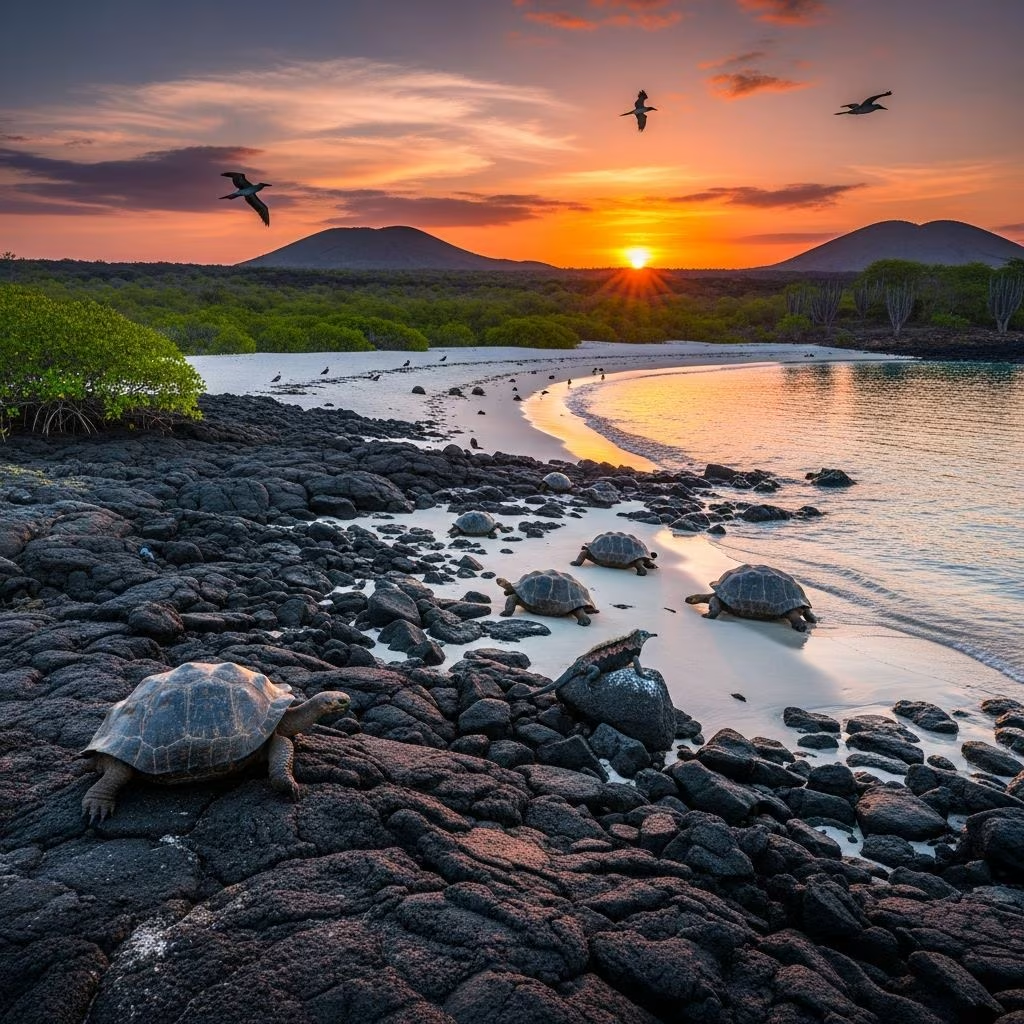
The Galapagos Islands represent one of Earth’s most remarkable destinations, offering travelers an unprecedented opportunity to encounter wildlife found nowhere else on the planet. Located off the coast of Ecuador, this archipelago has captivated explorers, scientists, and tourists for centuries with its unique ecosystems and breathtaking natural beauty. Whether you seek adventure, relaxation, or scientific discovery, the Galapagos provides an experience tailored to nearly every travel preference.
When planning a Galapagos expedition, prospective visitors encounter two fundamentally different approaches to exploration, each offering distinct advantages depending on personal travel style and preferences.
Multi-day live-aboard cruises represent the most popular method for experiencing the archipelago. These voyages typically range from four to twelve days in duration, with vessels accommodating between twelve and one hundred and ten passengers. Cruise operators offer four distinct service categories—economy, tourist, first class, and luxury—allowing travelers to select accommodations that match their budget and comfort expectations.
The cruise experience provides significant organizational advantages. Boats strategically conduct long-distance travel between islands during nighttime hours, allowing passengers to wake refreshed at each new destination. Most cruise operators include guided activities such as snorkeling, hiking, kayaking, and scuba diving, eliminating the need for independent activity coordination. All reputable cruise vessels employ licensed naturalist guides who must accompany visitors to protected park sites.
For travelers prone to motion sickness, selecting a larger, more stable vessel like the Galapagos Legend helps minimize seasickness, whereas smaller yachts and sailboats present greater instability in the water.
Independent travelers preferring greater flexibility favor the land-based island-hopping approach. This method involves staying overnight at accommodations on inhabited islands and arranging day-trips through local tour operators. Inter-island ferries transport visitors between major islands, with tickets available at shops and ticket booths throughout the main towns.
Island hopping offers several distinct advantages over cruise-based travel. Visitors maintain control over their daily schedule rather than adhering to predetermined itineraries. This approach typically costs less than comparable cruise experiences and allows for deeper engagement with island communities. However, this method requires more independent planning and logistical coordination.
Santa Cruz serves as the principal entry point and operational center for most Galapagos visitors. The island hosts Baltra Airport, the archipelago’s primary air gateway, and Puerto Ayora, a thriving town of over ten thousand permanent residents. This densely populated center provides abundant accommodation options, restaurants, tour operators, and retail establishments catering to visitor needs.
Santa Cruz functions as a transportation nexus; visitors traveling to other islands by boat typically transit through this central location, unless arriving via San Cristóbal’s alternative airport. The island’s accessibility and infrastructure make it an ideal starting point for first-time visitors unfamiliar with the region.
San Cristóbal offers a convenient secondary airport option, enabling visitors to design more efficient itineraries by flying into one airport and departing from another. The island’s town provides a more relaxed atmosphere compared to Santa Cruz, with fewer tourists and a stronger sense of local culture. Ferry connections link San Cristóbal to Santa Cruz and other inhabited islands, making it accessible for both arrivals and onward travel.
Isabela Island presents a dramatically different character than its developed neighbors. Known for its remote, tranquil atmosphere and limited lodging, the island attracts adventurous travelers seeking less-commercialized experiences. The island features unique geological formations and wildlife viewing opportunities, though its distance from main transportation hubs requires more planning to reach.
The Galapagos’ reputation rests on its extraordinary animal populations found nowhere else globally. Visitors regularly observe giant tortoises, marine iguanas, blue-footed boobies, sea lions, and various endemic bird species. The Charles Darwin Research Station and Fausto Llerena Breeding Center on Santa Cruz provide structured opportunities to observe conservation efforts and breeding programs protecting endangered species.
Marine wildlife viewing occurs primarily through snorkeling and diving expeditions. These activities frequently feature encounters with penguins, sea turtles, rays, and reef sharks in their natural habitats.
Snorkeling represents one of the most accessible and rewarding activities throughout the archipelago. Las Grietas, a unique freshwater crevasse on Santa Cruz, offers unusual freshwater snorkeling opportunities where visitors might encounter white-tipped reef sharks. Champion Islet near Floreana provides memorable sea lion snorkeling experiences, while Concha y Perla lagoon near Isabela offers sheltered waters suitable for varying skill levels.
Scuba diving appeals to certified divers seeking deeper marine exploration and encounters with larger pelagic species. Several tour operators cater specifically to diving enthusiasts, offering equipment and guidance for underwater expeditions.
Marked hiking trails traverse volcanic landscapes and unique ecosystems across multiple islands. Most trails measure less than one mile in length, passing over rough lava flows and uneven boulder fields that showcase the islands’ dramatic geological history. Punta Suarez on Española Island and Sullivan Bay on Santiago Island present particularly dramatic volcanic formations that illustrate the archipelago’s geologically dynamic nature.
Visitors encounter two types of landings during these explorations. Dry landings allow passengers to step directly onto established docks or natural platforms, while wet landings require wading from boats or dinghies to reach shore. Both landing types lead to established trails where certified guides provide ecological and historical context for natural features encountered during walks.
While the Galapagos emphasizes wildlife and adventure, pristine beaches provide opportunities for quieter pursuits. Floreana’s black sand beaches offer distinctive aesthetic experiences, while Gardner Bay near Española Island combines beach relaxation with accessible snorkeling opportunities. These locations provide respites from structured tours, allowing visitors to absorb the archipelago’s natural serenity.
Ferry tickets between inhabited islands cost approximately thirty dollars per person, with modest additional charges for water taxi services and island entrance fees. Several ferry services operate on established schedules, though independent travelers should verify current service before booking accommodations. Smaller propeller-plane flights provide alternatives between select islands, though these services remain less frequently available than ferry options.
Land-based travelers can access hotels on Santa Cruz, San Cristóbal, Isabela, and the less-developed island of Floreana, though limited lodging options exist on Floreana and Isabela. Cruise passengers secure all accommodations as part of their voyage package. Hotels in Puerto Ayora range from budget-friendly establishments to higher-end resorts, with options spanning various price points throughout the main towns.
Travelers should prepare for a cash-dependent economy. While major towns accept credit cards at larger establishments, many smaller vendors, tour operators, and inter-island ferry services require cash payments. ATMs exist in primary towns but may experience intermittent availability, making it prudent to carry sufficient local currency obtained upon arrival or brought from Ecuador’s mainland.
National park regulations mandate that all visitors to protected sites remain accompanied by certified naturalist guides. These professionals provide essential ecological knowledge while ensuring visitors respect conservation guidelines protecting the islands’ delicate ecosystems. Reputable tour operators automatically provide licensed guides for all activities; travelers should verify this requirement when booking independent tours.
Day one involves arrival and orientation at Santa Cruz, including visits to Tortuga Bay. Day two features snorkeling with sea lions at Champion Islet near Floreana. Española Island’s Punta Suarez hiking trail and Gardner Bay snorkeling occupy day three. Day four explores Bartolomé Island’s iconic Pinnacle Rock and surrounding volcanic formations. The final day visits North Seymour Island to observe boobies and marine iguanas before departure.
Day one provides arrival and exploration of Santa Cruz Island. Day two includes a day-trip to South Plaza Island. Days three and four feature Isabela Island activities, including snorkeling at Concha y Perla lagoon and a ferry excursion to Floreana’s black sand beaches. Day five returns to Santa Cruz for either relaxation or touring activities. Day six visits the island’s highlands to observe giant tortoises in their natural habitat. Day seven tours the breeding center before departure.
The Galapagos offers year-round visitation, though different seasons present varying wildlife viewing opportunities and weather conditions. Travel preferences depend on whether visitors prioritize specific species encounters or prefer particular climate conditions during their visit.
Essentials include reef-safe sunscreen, water shoes for volcanic terrain, lightweight rain protection, binoculars for wildlife observation, and snorkeling gear if bringing personal equipment. Motion sickness medication proves beneficial for those susceptible to seasickness during boat travel.
Minimum trips typically span five to six days, allowing time for inter-island travel and multiple activity experiences. Longer expeditions of seven to ten days enable more comprehensive exploration and greater flexibility in activity selection.
Yes, Puerto Ayora contains numerous tour operators offering same-day or next-day bookings for popular excursions such as Bartolomé Island visits. However, booking popular activities in advance through accommodations or tour companies increases availability certainty during peak travel periods.
Only certified divers may participate in scuba expeditions, though snorkeling remains accessible to all swimmers regardless of certification status. Dive operators verify certifications before conducting diving activities.
The Galapagos operates as a protected national park encompassing ninety-seven percent of the islands’ landmass. Visitors contribute to conservation efforts by following guide instructions, respecting designated trails, maintaining distance from wildlife, and supporting lodges and tour operators committed to sustainable practices. National park entrance fees and various service charges directly fund conservation initiatives protecting this irreplaceable ecosystem for future generations.
Successful Galapagos experiences require thoughtful planning addressing transportation logistics, accommodation preferences, and activity priorities. Whether selecting cruise-based comfort or land-based flexibility, establishing clear travel objectives beforehand enhances the overall experience. First-time visitors benefit from consulting current travel guides, connecting with recent travelers through online communities, and confirming operational information directly with tour operators and accommodation providers to ensure accurate, up-to-date details regarding services, costs, and environmental guidelines.
