

 Travel Essentials
 Travel Essentials

Discover how to plan a personalized Galápagos Islands experience, from cruise voyages to land-based island hopping, with practical tips for every traveler type.
 Travel Essentials
The Galápagos Islands represent one of Earth’s most extraordinary destinations, offering unparalleled opportunities to witness wildlife and natural landscapes found nowhere else on the planet. Planning a visit to this remarkable archipelago requires thoughtful consideration of travel styles, island selections, and activity preferences. Whether you envision yourself aboard a luxury vessel exploring remote islets or independently navigating between inhabited islands on ferries, the Galápagos accommodate diverse travel philosophies and budgets.
The fundamental decision when planning a Galápagos experience centers on choosing between two distinct travel methodologies. Each approach offers unique advantages and appeals to different types of explorers, and understanding these options helps clarify which aligns with your expectations and travel style.
Multi-day cruise voyages remain the most popular method for experiencing the Galápagos, with good reason. These live-aboard adventures range from compact 4-day expeditions to extensive 12-day journeys, allowing comprehensive exploration of the archipelago’s most significant sites. Cruise vessels accommodate passengers across a spectrum of preferences, with fleet options ranging from economy-class boats serving approximately 12 passengers to luxury vessels accommodating up to 110 travelers.
Cruise itineraries strategically utilize nighttime navigation to traverse substantial distances between islands, enabling passengers to arrive at each destination refreshed and prepared for exploration. This logistical advantage means you maximize daylight hours for activities rather than spending excessive time traveling. Professional naturalist guides accompany all excursions, providing expert interpretation of the ecosystem and wildlife encounters.
The cruise format eliminates numerous logistical considerations: accommodation arrangements, ferry scheduling, and activity booking all fall under the cruise operator’s responsibility. For travelers who appreciate predictability and prefer having activities professionally organized, this approach provides remarkable peace of mind. Additionally, cruise vessels offer opportunities for activities including snorkeling, hiking, kayaking, and scuba diving, often providing necessary equipment onboard.
The alternative approach involves establishing a base on inhabited islands—primarily Santa Cruz, San Cristóbal, or Isabela—and undertaking day excursions or multi-day explorations from these locations. This methodology appeals to travelers who value flexibility, prefer controlling their pace, and wish to engage more directly with local island communities.
Island-hopping travelers utilize inter-island ferries (tickets typically priced around $30 per journey) to move between major population centers. This approach eliminates extended periods aboard vessels and allows visitors to experience island life beyond organized tourism circuits. However, this methodology requires greater personal planning: researching activities, booking tours independently, coordinating transportation, and managing accommodations across multiple locations.
For self-directed travelers, this approach offers advantages including reduced time spent aboard boats, exposure to authentic local culture, and the ability to pursue spontaneous discoveries. The trade-off involves accepting less structured activities and taking personal responsibility for navigation and logistics.
Understanding the geography and characteristics of major islands assists in crafting itineraries aligned with your interests and timeframe. The Galápagos comprise numerous islands, but most visitor experiences concentrate on a select few that provide optimal wildlife viewing and accessibility.
Santa Cruz Island functions as the logical center for most Galápagos itineraries, hosting Baltra Airport—one of two primary gateways to the archipelago. This island combines infrastructure advantages with exceptional attractions. The main population center, Puerto Ayora, offers accommodations ranging from budget hostels to upscale hotels, plus restaurants, shops, and services catering to tourists.
From Santa Cruz, the most celebrated day excursion involves visiting Bartolomé Island, featuring the iconic Pinnacle Rock formation—arguably the most photographed location in the Galápagos. This expedition typically includes a brief hike offering panoramic vistas of Santiago Island and snorkeling opportunities in surrounding waters.
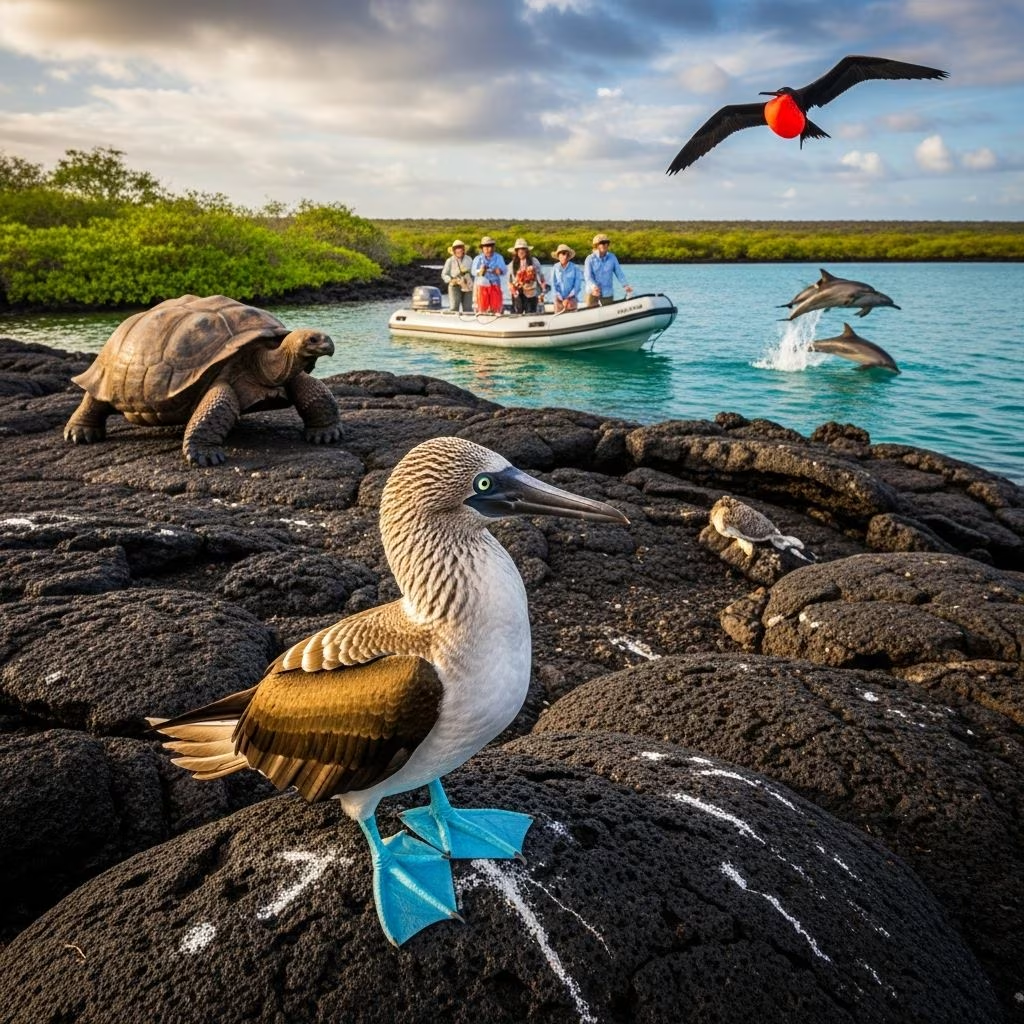
Additional Santa Cruz activities include bay tours circling Academy Bay, where visitors frequently observe marine iguanas, blue-footed boobies, and sea lions. Many bay tours incorporate snorkeling at Las Grietas, a distinctive freshwater fissure where opportunities exist to encounter white-tipped reef sharks. The Darwin Research Station provides educational context regarding conservation efforts and giant tortoise preservation programs.
San Cristóbal Island hosts the second major airport gateway, making it strategically advantageous for roundtrip journeys. Beginning your itinerary on San Cristóbal allows quick settlement into the destination, as airport proximity to town centers facilitates rapid hotel arrival.
Isabela Island presents wild and tranquil character, featuring unique volcanic topography including craters and calderas. While less developed than Santa Cruz, Isabela offers distinct advantages for travelers seeking intimate wildlife encounters and fewer crowds. Snorkeling at Concha y Perla lagoon provides opportunities to observe penguins and diverse marine species. Ferry connections between Isabela, Santa Cruz, and San Cristóbal facilitate multi-island exploration.
National park regulations mandate that all visitors remain accompanied by certified naturalist guides while traversing visitor sites, which encompass 97% of the archipelago’s landmass. This requirement ensures ecological protection while providing travelers with expert interpretation. Both cruise operators and reputable day-tour outfitters employ licensed guides meeting professional standards.
Most visitor trails measure less than a mile, typically passing over rough volcanic terrain and uneven boulder formations. Landing procedures vary between sites: certain locations feature “wet landings” where visitors wade from dinghies to shore, while others accommodate “dry landings” enabling direct arrival on solid ground. This variability requires appropriate footwear and preparation for diverse physical conditions.
Beyond accommodation and transportation expenses, visitors must budget for entrance fees and daily activities. Inter-island ferries cost approximately $30 per journey, while day excursions range from $30-40 depending on destination and inclusions. Cash availability remains crucial, as many local vendors and smaller operators operate on cash-only bases.
| Trip Duration | Ideal For | Primary Focus |
|---|---|---|
| 4-5 Days (Cruise) | Time-limited travelers | Essential highlights and wildlife |
| 6-7 Days (Cruise) | Comprehensive experience seekers | Multiple islands with diverse ecosystems |
| 5-7 Days (Land-Based) | Independent explorers | Island culture and flexible activities |
| 8+ Days (Land-Based) | Deep immersion travelers | Detailed ecosystem study and local engagement |
For travelers beginning on Santa Cruz, day one involves airport arrival and settling into Puerto Ayora. Spend this opening day visiting the Darwin Research Station to understand conservation initiatives. Day two dedicates to the iconic Bartolomé Island expedition, incorporating the legendary Pinnacle Rock hike and snorkeling. Day three involves a bay tour observing marine iguanas and seabirds, concluding with Las Grietas snorkeling. Days four and five enable either deeper exploration of Santa Cruz island interior via highland tours to observe wild giant tortoises, or ferry transit to Isabela for beach relaxation and additional wildlife encounters.
Visitors with extended timeframes benefit from multi-island immersion. Begin on San Cristóbal, exploring the island before ferrying to Santa Cruz. Following Santa Cruz attractions, travel to Isabela Island for volcanic landscape exploration and snorkeling at specialized lagoons. This extended timeline permits unhurried exploration of multiple ecosystems and wildlife habitats without the rushed sensation that abbreviated itineraries sometimes create.
Travelers prone to motion sickness should specifically request larger, more stable vessel assignments. Vessels like the Galapagos Legend offer superior stability compared to smaller yachts and sailboats, which experience greater water movement sensitivity.
While some activities permit last-minute booking through local operators, booking popular excursions like Bartolomé Island tours in advance prevents disappointment during peak seasons. Many visitors successfully book initial accommodations and key tours upon arrival, then arrange subsequent activities once understanding personal pace and preferences.
Successful Galápagos experiences require appropriate preparation. Waterproof bags protect electronics during wet landings and snorkeling activities. Sun protection proves essential given equatorial location and reflection from volcanic rocks. Reef-safe snorkeling gear either brought from home or rented locally ensures proper fit and comfort. Sturdy hiking shoes provide essential traction on uneven terrain.
Most travelers find 5-7 days sufficient for meaningful experience, whether by cruise or land-based exploration. This timeframe balances cost considerations against sufficient time for multiple island visits and varied wildlife encounters. Shorter 4-day cruises work for constrained schedules, while 10+ day voyages appeal to serious naturalists.
Beginning on San Cristóbal or Santa Cruz (which host major airports) proves most efficient. Flying into one island and departing from another eliminates backtracking. The typical sequence follows San Cristóbal → Santa Cruz → Isabela, or reverses this direction based on flight availability.
Budget cruises typically range from $100-200 daily, while luxury vessels exceed $500 nightly. Land-based exploration costs less for accommodation but requires independent activity booking, potentially yielding comparable total expenses depending on chosen activities and service levels.
Marine iguanas, boobies, and sea lions appear virtually everywhere. Giant tortoises appear reliably on specific islands. Penguin encounters occur with high probability on appropriate islands. However, wildlife viewing remains subject to natural conditions; guides cannot guarantee specific species observation.
The Galápagos Islands accommodate diverse travel personalities and preferences, ranging from structured luxury voyages to independent, self-directed explorations. Neither approach proves inherently superior; rather, alignment between travel methodology and personal preferences determines satisfaction. Whether you seek comprehensive guided experiences with predetermined itineraries or value independence with spontaneous discoveries, the archipelago delivers transformative encounters with Earth’s most remarkable ecosystems.
The key to successful Galápagos travel involves honest self-assessment regarding travel style preferences, realistic budgeting, and acceptance that no single itinerary suits everyone equally. By considering the options outlined in this guide—cruise versus land-based, island selections, activity preferences, and practical logistics—you position yourself to create a genuinely personalized Galápagos adventure that resonates with your individual travel aspirations and creates enduring memories of one of Earth’s most extraordinary destinations.
