

 Travel Essentials
 Travel Essentials

Essential guide for first-time visitors to the Galapagos: travel options, top islands, itineraries, wildlife encounters, costs, and conservation tips for an unforgettable trip.
 Travel Essentials
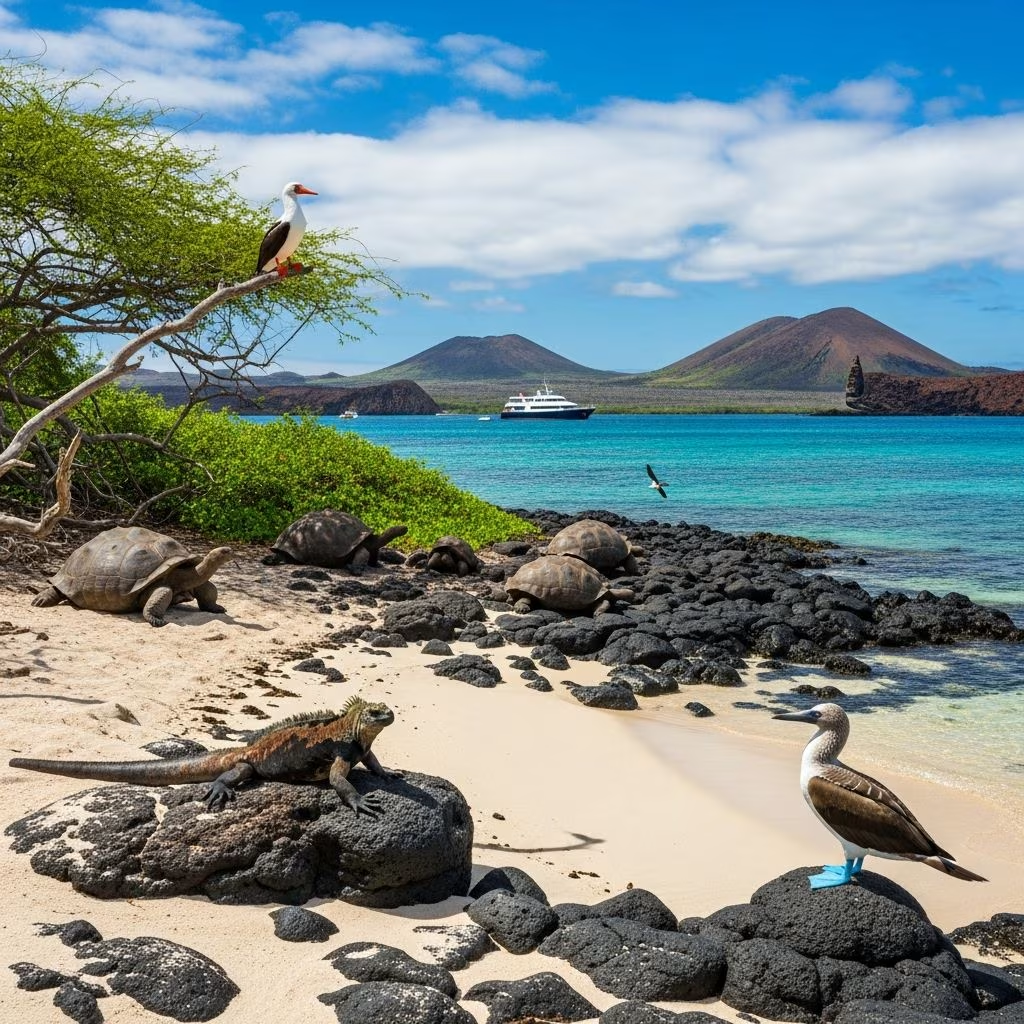
The Galapagos Islands, an Ecuadorian archipelago in the Pacific Ocean, captivate travelers with their extraordinary biodiversity and pristine volcanic landscapes. Home to species found nowhere else on Earth, such as giant tortoises and marine iguanas, this UNESCO World Heritage site offers unparalleled opportunities for wildlife observation and adventure.
Renowned for inspiring Charles Darwin’s theory of evolution, the Galapagos feature over 13 major islands and numerous islets, each with distinct ecosystems. Visitors can snorkel alongside playful sea lions, hike lava fields, and observe blue-footed boobies in their natural habitat. The islands’ isolation has preserved a fearless wildlife population that approaches humans curiously, creating intimate encounters.
Flights to the Galapagos depart from mainland Ecuador, primarily Quito or Guayaquil, landing at Baltra (near Santa Cruz) or San Cristóbal airports. A round-trip flight costs around $400–600 USD. Upon arrival, pay the Galapagos National Park entrance fee of $100–200 USD (cash only, depending on nationality), and present a Transit Control Card (TCT) obtained at the airport for $20 USD.
All visitors must adhere to strict biosecurity rules: declare and surrender fresh foods, seeds, or soil to prevent invasive species introduction. Pack reef-safe sunscreen and motion sickness remedies for boat travel.
Two primary ways to explore: multi-day live-aboard cruises or land-based island hopping. Cruises (4–12 days) cover remote sites efficiently, with nights spent sailing between islands. Boats range from economy (12 passengers) to luxury (110 passengers), offering snorkeling gear, kayaks, and naturalist guides.
Land-based trips focus on three main islands—Santa Cruz, Isabela, and San Cristóbal—with ferries ($30–50 USD one-way) and day tours. This flexible option suits independent travelers, allowing more time on beaches and in towns.
| Option | Pros | Cons | Best For |
|---|---|---|---|
| Cruise | Access to distant islands, all-inclusive meals/guides | Higher cost ($2,000+), fixed itinerary | Relaxed explorers |
| Island Hopping | Flexible schedule, cheaper lodging | Limited remote access, more logistics | Adventurous self-planners |
The most developed island with Puerto Ayora’s vibrant scene, including restaurants, shops, and the Charles Darwin Research Station. Highlights include Tortuga Bay beach for surfing, Las Grietas for snorkeling with sharks, and highland tortoise reserves. Day tours to Bartolomé’s Pinnacle Rock offer iconic views and penguin sightings.
Largest island with Sierra Negra volcano hikes, flamingo lagoons, and Concha de Perla snorkeling cove teeming with turtles. Ferries from Santa Cruz take 2 hours; accommodations are basic but immersive.
Airport proximity to town makes it ideal for arrivals. Visit Kicker Rock for snorkeling with hammerheads, Cerro Brujo beach, and the interpretation center.
Smaller gems like Floreana (black sand beaches), Española (albatrosses), and Bartolomé (lava pinnacles) are best via day trips or cruises.
Start on San Cristóbal (airport ease), ferry to Santa Cruz for bay tours and highlands, then Isabela for wild beaches and snorkeling. Include day trips to Seymour or Plaza for boobies and land iguanas.
Typical route: Baltra arrival, North Seymour birds, Santiago lava fields, Bartolomé snorkel, Genovesa birdwatching, Santa Cruz finish.
The Galapagos boast 97% national park land, requiring guided visits on marked trails (wet or dry landings). Expect sea lions begging for play, marine iguanas basking, and Galapagos penguins zipping underwater.
Cash reigns supreme—ATMs are scarce, cards rarely accepted. Bring USD bills ($10–50), water bottle (tap water unsafe), quick-dry clothes, rash guards, sturdy water shoes for wet landings, binoculars, and binoculars. Wi-Fi is spotty; download offline maps.
Book tours in person for deals, stick with licensed guides, and buy round-trip ferries to avoid sellouts. Cruises can be last-minute but confirm availability.
Year-round warmth (70–85°F), but cool/wet season (Dec–May) brings calm seas and breeding birds; hot/dry (Jun–Nov) offers clearer waters for diving. Budget: $1,500–4,000 USD/person for a week (flights, park fee, lodging/tours).
Maintain 2-meter distance from wildlife, no touching or feeding. Support conservation via park fees and eco-tours. Choose operators following Galapagos National Park protocols.
No visa for most nationalities (up to 90 days in Ecuador), but TCT and park fee required.
No—buy bottled or use purifiers.
No, mandatory at park sites (97% of islands).
Cruises $200+/day; hopping $100–150/day including ferries.
Yes, high-end yachts with scuba/kayaks.
