

 Travel Essentials
 Travel Essentials

Explore Gammarelli, Rome's historic family-run tailor shop crafting papal vestments since 1798. Learn about its rich heritage and accessibility to visitors.
 Travel Essentials
Nestled in the heart of Rome, just a short walk from the Pantheon and the Dominican church of Santa Maria sopra Minerva, stands a shop that has witnessed the pageantry and solemnity of the Catholic Church for more than two centuries. Ditta Annibale Gammarelli represents far more than a simple tailor’s establishment; it embodies centuries of European craftsmanship, religious tradition, and family dedication to an art form that remains largely unchanged since its inception.
The shop’s distinctive red storefront on Via Santa Chiara draws visitors from around the world who seek to understand the intersection of faith, fashion, and history. What many travelers discover upon entering is that this venerable institution welcomes not just cardinals and bishops, but anyone with an appreciation for fine ecclesiastical garments and curiosity about Vatican traditions.
The Gammarelli story began during the pontificate of Pope Pius VI, when Giovanni Antonio Gammarelli first established himself as a master tailor serving the Roman clergy. The year 1798 marks the official opening of what would become one of Rome’s oldest continuously family-operated businesses. Unlike many artisanal shops that vanished during the industrial revolution, Gammarelli adapted and thrived, maintaining its commitment to traditional methods while gradually expanding its clientele.
Giovanni Antonio’s successors—his son Filippo and grandson Annibale—each contributed to the shop’s growth and reputation. The most significant transformation came in 1874, when Annibale relocated the business from its original address on Via del Baulari to its present location on Via Santa Chiara 34. This move positioned the shop within a neighborhood that had organically developed into Rome’s ecclesiastical quarter, surrounded by other vendors specializing in church goods and liturgical items.
By the early nineteenth century, the shop had already caught the attention of papal leadership. When Pope Leo XII assumed the papacy, he specifically requested that Gammarelli craft his vestments, establishing a direct relationship between the family and the Vatican that would endure for generations. This papal endorsement cemented Gammarelli’s reputation as the premier source for ecclesiastical tailoring in Rome.
Over the past two centuries, Gammarelli has clothed an impressive succession of Church leaders. The shop has provided vestments and ceremonial garments to the last eight popes, a distinction that underscores its central role in Vatican life. Each pope brought personal preferences and stylistic inclinations to his relationship with the shop, yet the fundamental commitment to quality and precision remained unwavering.
The transition from Pope Benedict XVI to Pope Francis in 2013 offered a notable moment in Gammarelli’s recent history. While Francis became known for his more austere and humble approach to papal dress compared to some of his predecessors, both pontiffs sourced their elegant velvet mantles, woolen shawls, and other ceremonial vestments from the same family enterprise. This continuity across different papal philosophies demonstrates that Gammarelli’s appeal transcends personal style preferences—it rests on an uncompromising standard of craftsmanship.
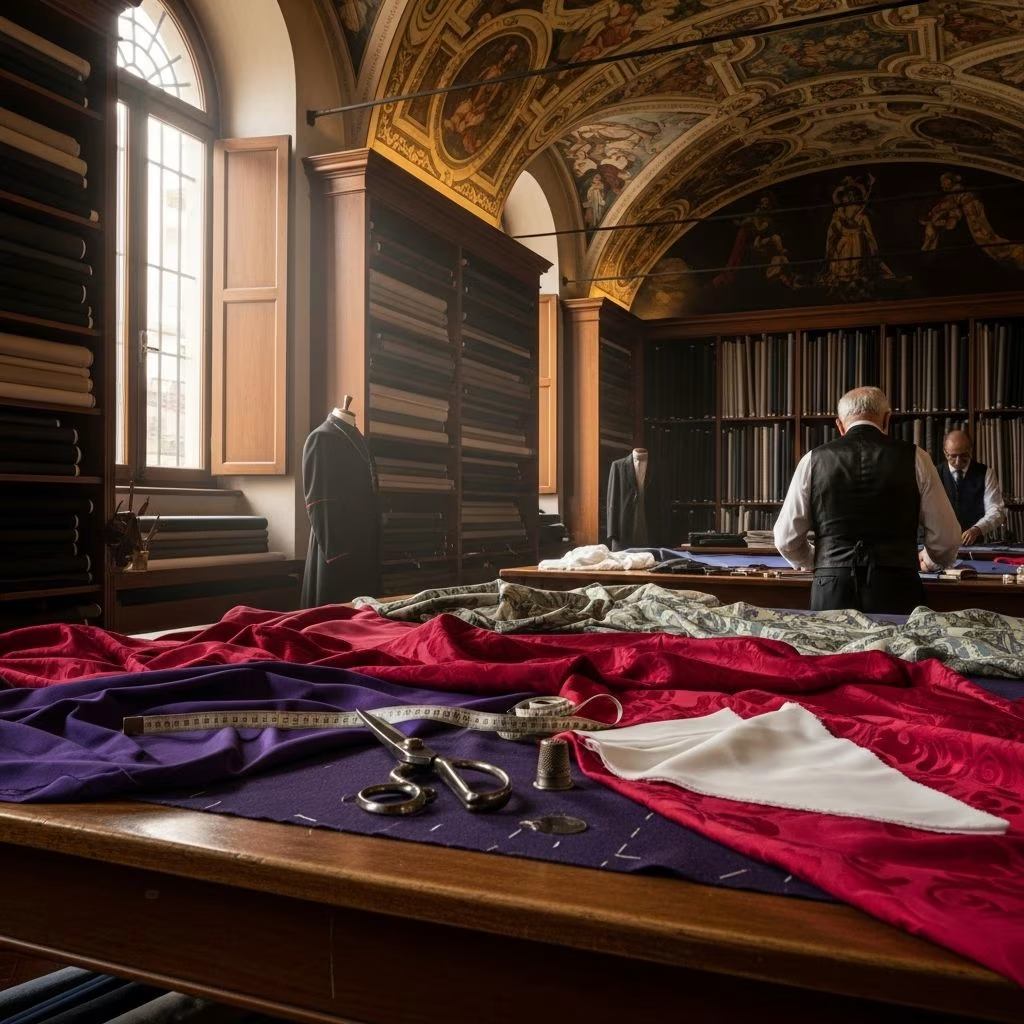
Walking into Gammarelli feels like stepping backward through time, yet the workshop operates with meticulous attention to contemporary standards of quality and precision. The shop specializes in crafting items central to Catholic liturgical practice, including cassocks, zuchettos (the small skullcaps worn by clergy), and birettas (the distinctive square caps with ridges worn by ecclesiastics).
Each piece produced by the Gammarelli atelier represents hours of skilled handiwork. Master tailors work with fine fabrics—velvets, woolens, silks, and linens—sourced to exacting specifications. The shop maintains patterns and measurements for numerous clients, allowing for precisely fitted garments that account for individual variations in body type and personal preference.
The window displays, which have remained relatively consistent since the shop’s founding, showcase the iconic red storefront filled with examples of ecclesiastical wear. These displays serve not merely as marketing tools but as visual celebrations of the liturgical tradition that has defined the Gammarelli mission since 1798.
Perhaps the most distinctive and closely guarded responsibility undertaken by Gammarelli involves papal conclaves. During periods when the College of Cardinals gathers to elect a new pope, the shop receives the honor of preparing three white cassocks in varying sizes—small, medium, and large. This curious tradition ensures that whichever cardinal emerges from the conclave as the newly elected pontiff can be immediately vested in proper papal attire.
This practice represents a unique convergence of practicality and symbolism. The Vatican’s advance preparation through Gammarelli ensures seamless transition to papal regalia the moment a pope is elected, while simultaneously affirming the shop’s integral position within Church protocol. Few private businesses anywhere in the world maintain such direct, ceremonial responsibility within the operations of an international religious institution.
The Gammarelli shop has remained under family management for over six generations, a remarkable achievement in an era marked by business consolidation and the disappearance of family enterprises. This multigenerational stewardship has proven essential to preserving the shop’s distinctive character and commitment to traditional methods.
In recent years, the business has entered a new chapter in its history. Alessia Gammarelli has become the first woman to lead the historic enterprise, working alongside her cousins Massimiliano and Lorenzo to guide the shop forward. This development represents both continuity—maintaining family control and traditional values—and evolution, as new perspectives and leadership approaches bring fresh energy to centuries-old practices.
The family’s commitment to passing knowledge down through generations has preserved techniques and standards that might otherwise have been lost. Master tailors train younger artisans in methods refined over two centuries, ensuring that the distinctive Gammarelli approach to ecclesiastical tailoring continues intact.
A common misconception surrounds Gammarelli, with many assuming the shop caters exclusively to Vatican officials and high Church dignitaries. In reality, the establishment maintains an open-door policy that welcomes any visitor interested in its offerings and history. The shop sells completed ecclesiastical garments as well as custom pieces, making it accessible to clergy at various levels of the Church hierarchy and to collectors and enthusiasts worldwide.
Visitors to Rome can browse the shop’s inventory, commission custom work, or simply absorb the atmosphere of this uniquely historic business. The willingness to serve customers beyond the ecclesiastical world reflects a modern business sensibility balanced with respect for tradition. Several sources document visits by tourists who purchased items ranging from simple liturgical accessories to more elaborate vestments.
Gammarelli’s location places it within a specific neighborhood ecosystem that has developed over centuries. The area surrounding Via Santa Chiara has been compared to London’s Savile Row, though with a decidedly ecclesiastical character. Other vendors of church goods cluster nearby, creating a concentration of religious merchandise and services that serves both the local clergy and pilgrims seeking liturgical items.
This neighborhood positioning proved fortuitous for the shop’s development. Being situated near the Pantheon, the Piazza della Minerva, and numerous other historical landmarks means that Gammarelli exists at the intersection of major tourist routes through Rome’s historic center. Many visitors discover the shop serendipitously while exploring the surrounding area, making it an unexpectedly rewarding find for those interested in traditional craftsmanship and Church history.
The proximity to the Dominican church of Santa Maria sopra Minerva connects Gammarelli to centuries of spiritual and intellectual history. This neighborhood embodies layers of Roman history spanning from classical antiquity through the medieval period to the modern age.
Operating a traditional tailor shop in twenty-first-century Rome presents distinct challenges. The shop has navigated changing fashion sensibilities, evolving technologies, and shifting patterns of religious practice. Yet Gammarelli has maintained its core mission without abandoning the fundamental techniques that have defined its work since 1798.
The modern iteration of Gammarelli represents a balance between preservation and pragmatism. While the shop continues employing hand-tailoring methods that emphasize precision and artistry, it operates within a contemporary business context. The establishment maintains an online presence, offers international shipping for custom commissions, and adapts to the logistical realities of operating in a major tourist city.
This adaptation proves essential for institutional survival. Many historic European craft businesses disappeared during the twentieth century because they refused to engage with modern realities. Gammarelli’s continued prominence results partly from its willingness to serve new clients and respond to changing circumstances while maintaining unwavering quality standards.
Ecclesiastical tailoring represents a specialized domain within the broader world of fine tailoring. The garments produced by shops like Gammarelli serve specific liturgical and ceremonial functions, requiring knowledge of Church protocol, liturgical traditions, and the symbolic meanings embedded in various vestments.
A cassock, for instance, is far more than a piece of clothing; it represents a commitment to religious life and carries centuries of symbolic weight. The precise cut, the quality of fabric, and the attention to detail all contribute to the garment’s ability to communicate status, tradition, and spiritual dedication. This understanding of vestments’ cultural and religious significance distinguishes ecclesiastical tailors from mainstream fashion professionals.
For travelers to Rome seeking to experience this historic establishment, several practical considerations apply. The shop maintains regular business hours and welcomes casual visitors, though those interested in custom commissions should plan for consultations and fitting appointments. The staff—many of whom carry generations of family knowledge—can explain the various items available and discuss the shop’s history with visitors.
The interior of the shop reflects its age and heritage, with displays showcasing completed items and materials available for future projects. Walking through Gammarelli provides tangible connection to centuries of ecclesiastical tradition and European craftsmanship. Many visitors report that spending time in the shop proves more rewarding than anticipated, offering unexpected insights into the intersection of fashion, religion, and European cultural history.
Yes, Gammarelli welcomes visitors and customers from all backgrounds. While historically focused on serving clergy and Church officials, the shop maintains an open-door policy and sells both completed ecclesiastical garments and custom pieces to interested buyers worldwide.
Gammarelli was established in 1798, making it over two hundred years old. The shop remains managed by direct descendants of its founder, making it among Rome’s oldest continuously family-operated businesses.
The shop specializes in ecclesiastical vestments including cassocks, zuchettos, birettas, mantles, and other ceremonial garments used within the Catholic Church. Custom commissions allow for tailored pieces meeting specific requirements.
Gammarelli is located on Via Santa Chiara 34 in Rome, near the Pantheon and the Piazza della Minerva. Its distinctive red storefront makes it recognizable to visitors exploring the neighborhood.
Yes, Gammarelli has clothed the last eight popes, including both Pope Benedict XVI and Pope Francis. The shop maintains an ongoing relationship with the Vatican and papal leadership.
