

 Travel Essentials
 Travel Essentials

Explore the history of General MacArthur's headquarters in Tokyo's Dai-ichi Building, its role in Japan's occupation, and how visitors can experience this pivotal site today.
 Travel Essentials
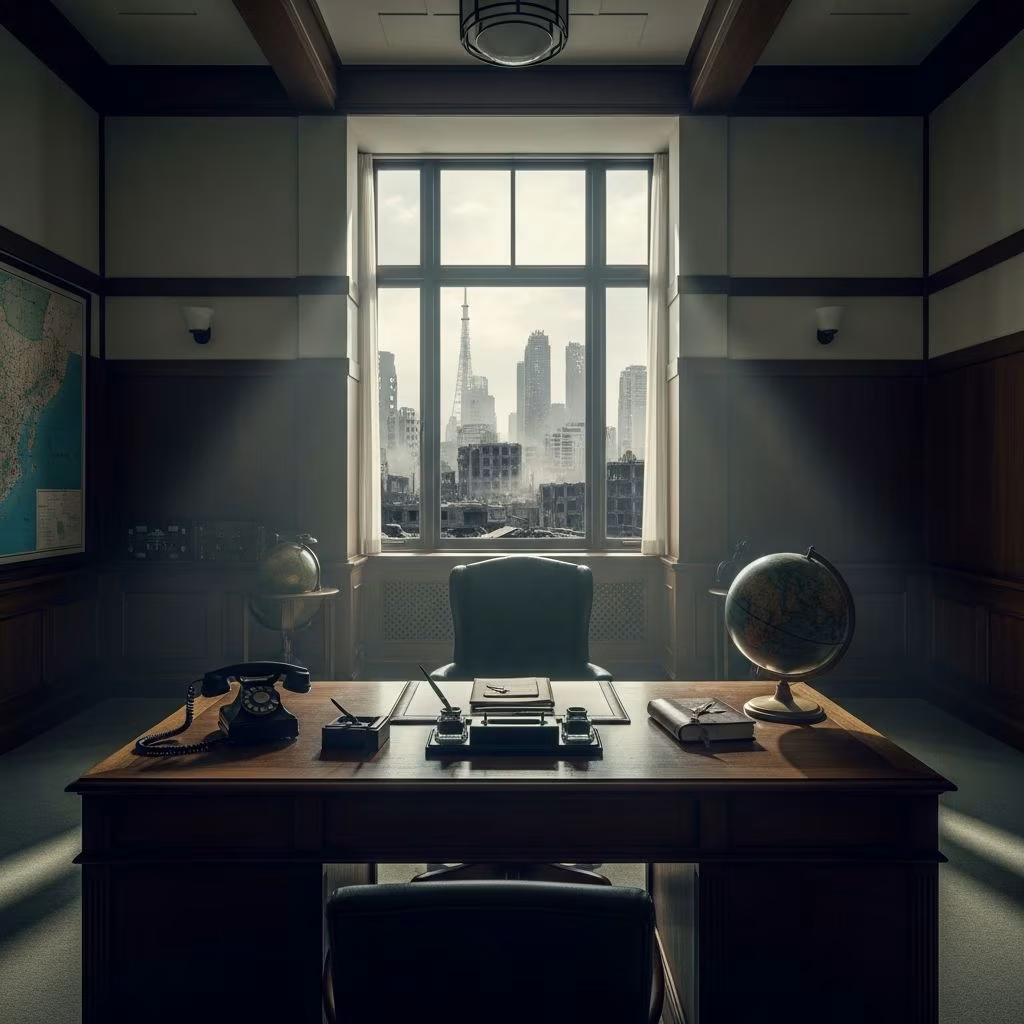
General Douglas MacArthur’s office in Tokyo stands as a tangible link to one of the most transformative periods in modern Japanese history. Perched on the sixth floor of the Dai-ichi Life Insurance Building, this space served as the nerve center for the Allied occupation following World War II. From here, MacArthur orchestrated sweeping reforms that dismantled militarism and laid the foundations for Japan’s democratic future.
Douglas MacArthur, a seasoned American general, emerged as the Supreme Commander for the Allied Powers (SCAP) after Japan’s surrender in 1945. His leadership began dramatically aboard the USS Missouri in Tokyo Bay on September 2, 1945, where he signed the instrument of surrender, marking the official end of hostilities. This moment symbolized not just military capitulation but the dawn of a new era for Japan under Allied oversight.
MacArthur’s appointment was no accident. With his extensive experience in the Pacific theater, including the Philippines campaign, he was uniquely positioned to guide Japan’s reconstruction. His Tokyo headquarters became operational soon after, transforming a surviving insurance company edifice into a command post amid the ruins of war-torn Tokyo.
The Dai-ichi Building’s prime position along Hibiya Dori, directly across from the Imperial Palace moat, offered unparalleled strategic and symbolic advantages. From his sixth-floor presidential office, MacArthur enjoyed a clear view into the palace grounds, a constant reminder of the emperor’s centrality to Japanese identity.
This location was fortuitous; the building endured the intense firebombings that devastated much of Tokyo, making it one of the few modern structures available for immediate use. Street-level perspectives reveal the moat’s serene expanse, contrasting sharply with the occupation’s turbulent backdrop.
For nearly six years, from 1945 to 1951, MacArthur directed operations from this office. It housed meetings with Japanese officials, policy deliberations, and oversight of demilitarization efforts. Staff photographs and accounts depict a bustling environment, with crowds often gathering outside to catch a glimpse of the general departing the building.
The office itself, originally the presidential suite of Dai-ichi Life, was repurposed without major alterations. Simple furnishings, large windows, and functional decor reflected the no-nonsense approach to governance during reconstruction.
| Aspect | Details |
|---|---|
| Occupation Duration | 1945-1951 (approx. 6 years) |
| Floor Level | 6th Floor, Presidential Office |
| View | Imperial Palace moat and grounds |
| Building Survivor | Withstood Tokyo firebombings |
MacArthur’s tenure produced profound changes. He championed land reforms redistributing power from feudal landlords, women’s suffrage expanding democratic participation, and a new constitution renouncing war while emphasizing pacifism. These policies, debated and drafted in the Tokyo office, dismantled the pre-war imperial system.
Emperor Hirohito’s renunciation of divinity, a pivotal moment, aligned with broader efforts to instill democratic values. Educational reforms promoted equality, while economic stabilization prevented famine, fostering growth that propelled Japan’s post-war miracle.
When Dai-ichi Life reclaimed the building, they chose to preserve MacArthur’s office as a memorial. This decision culminated in public openings, such as the 2012 event at the General Headquarters of the Allied Powers site, where historical exhibits complemented the room’s original setup. Visitor limits ensured artifact protection, with daily caps at 200 people during special periods.
Today, the MacArthur Memorial Room offers immersive insights. Original desks, maps, and photographs transport visitors back to the occupation era, highlighting the blend of American oversight and Japanese resilience.
Located in Chiyoda-ku, near Hirakawacho, the Dai-ichi Building is accessible via Tokyo’s efficient metro system. Approach from Hibiya Dori for the classic moat view. Entry may require advance booking, especially for guided tours detailing occupation history.
Photography restrictions protect the space, but the atmosphere evokes MacArthur’s commanding presence.
MacArthur’s ousting in 1951 by President Truman amid Korean War tensions ended his Japanese chapter, but his Tokyo office endures as a testament to visionary governance. Critics note authoritarian tendencies, yet achievements like the 1947 Constitution remain foundational.
The site’s preservation underscores Japan’s commitment to remembering this collaborative rebirth, where occupation evolved into alliance.
The Dai-ichi Building integrates into Tokyo’s landscape, symbolizing continuity amid change. Nearby, the Imperial Palace stands serene, its moat a timeless barrier now overlooked by skyscrapers. MacArthur’s reforms echo in Japan’s parliamentary democracy and economic prowess.
Documentaries like 1949’s “MacArthur’s Japan” capture this transition, showing traffic resuming, marine studies resuming, and society embracing new norms under SCAP guidance.
Sixth floor of the Dai-ichi Life Insurance Building, facing the Imperial Palace moat in Chiyoda-ku, Tokyo.
Approximately six years, from 1945 to 1951.
Yes, periodically with limits; check Dai-ichi Life for events like the 2012 opening.
The Japanese surrender signing on USS Missouri in Tokyo Bay, September 2, 1945.
It survived wartime bombings and offered a strategic palace view.
