

 Travel Essentials
 Travel Essentials

Discover vital tips for exploring Georgia: from navigating mountains and savoring ancient wines to understanding local customs and staying safe in this diverse destination.
 Travel Essentials
Georgia, nestled at the crossroads of Europe and Asia in the Caucasus region, captivates with its towering mountains, ancient winemaking traditions, and vibrant culture. This small nation packs diverse landscapes—from Black Sea coasts to high-altitude plateaus—into a compact area, making it ideal for immersive travel. Whether hiking rugged trails, indulging in sulfur baths, or tracing Soviet-era relics, preparation is key to maximizing your experience.
Georgia’s compact size belies its travel challenges; mountainous terrain and winding roads extend journey times significantly. Allocate at least a week for a balanced trip, including three days in Tbilisi to wander its old town, fortress, and sulfur bath districts. Extend to Kakheti for wine tours or Svaneti for medieval towers and hikes. Summer (June-August) brings heat in lowlands and mild mountain weather, but spring (April-May) and fall (September-October) offer fewer crowds and vibrant foliage.
Avoid rushing; internal flights from Tbilisi to Mestia or Kutaisi shave hours off drives. Winter suits ski enthusiasts in Gudauri, where resorts rival European Alps at lower costs. Monitor weather apps, as sudden snowfalls can close high passes.
Most visitors enjoy visa-free entry for up to one year, provided passports remain valid upon arrival with at least one blank page for stamps. U.S., EU, and many other nationalities qualify, but confirm via official advisories. No vaccinations are routinely required beyond standard travel shots like MMR, though hepatitis A and typhoid are advisable for rural areas.
Georgia’s infrastructure has modernized, with sealed highways linking major cities, yet potholes, narrow lanes, and absent nighttime markings persist. Renting a car suits independent explorers, but opt for 4WD in Tusheti or Svaneti’s gravel tracks. Confident drivers handle most routes; Tusheti’s infamous path demands experience.
| Route | Distance | Drive Time | Tips |
|---|---|---|---|
| Tbilisi to Kakheti | 100 km | 1.5-2 hrs | Smooth highway; wine stops galore. |
| Tbilisi to Mestia | 230 km | 7-8 hrs | Zigzag mountains; marshrutka alternative. |
| Kutaisi to Batumi | 150 km | 3 hrs | Coastal views; toll-free. |
Public options include marshrutkas (minibuses) for affordability and frequency, trains for scenic Black Sea runs, and Bolt/Uber in cities. Taxis from airports cost 20-50 GEL; negotiate upfront.
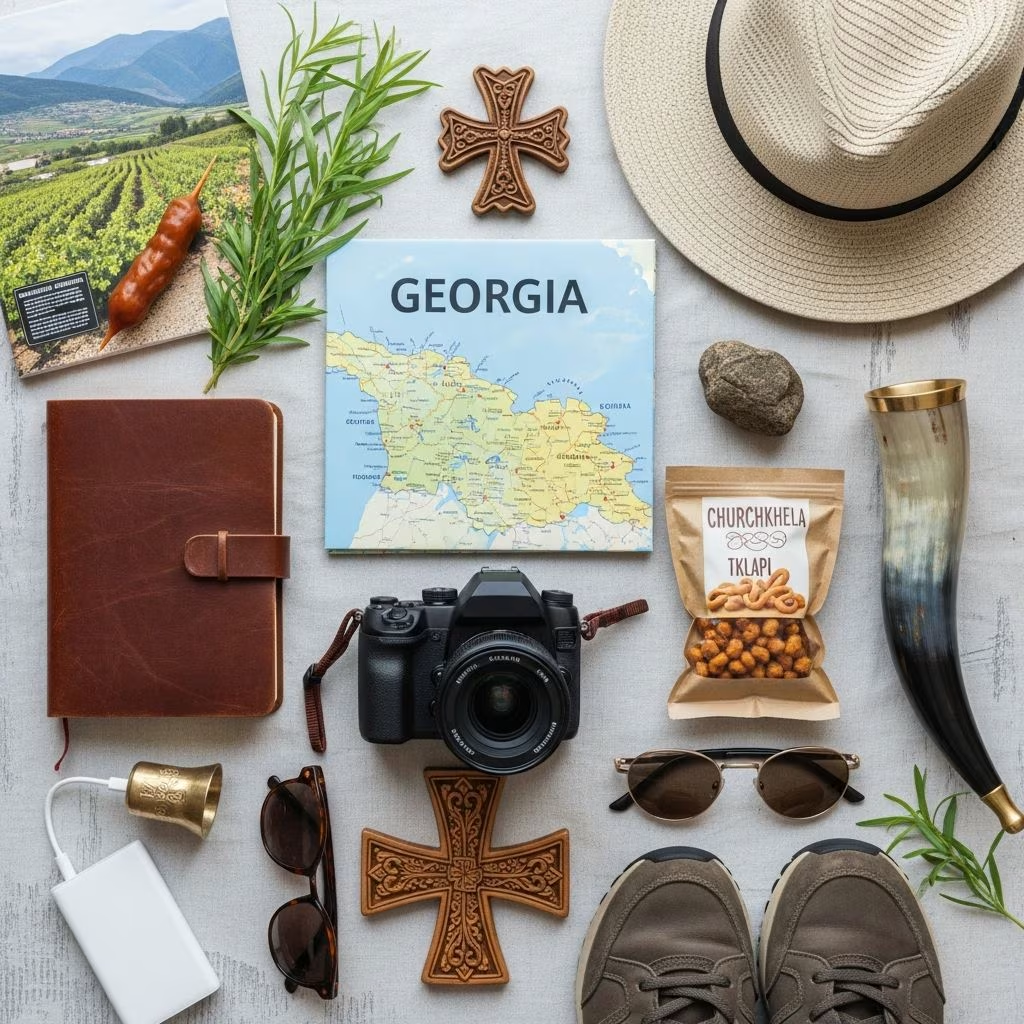
Georgia’s microclimates demand versatility: pack layers for Tbilisi’s 40°C summers dropping to 0°C nights, waterproof gear for mountain rains, and sturdy boots for hikes. Sun protection is essential at high altitudes, where UV intensifies. Include adapters for Type C/F plugs (220V) and a power bank for remote areas lacking outlets.
Georgian food blends bold flavors from Persian, Turkish, and Eastern European influences, emphasizing fresh herbs, walnuts, and fermented dairy. Khinkali (juicy meat dumplings) require slurping without biting the knot; khachapuri (cheese boat bread) varies regionally—Adjarian with runny egg, Imeretian plain. Pair with qvevri wines from 8,000-year-old traditions, UNESCO-recognized for clay-jar fermentation.
Vegetarian options abound: lobio (spiced beans), badrijani (walnut-eggplant rolls). Supra feasts feature tamada toasts; join locals for authenticity. Street eats like churchkhela (nut-honey strings) are cheap snacks. Water is safe in cities; bottled elsewhere.
Georgians embody supra hospitality—guests are sacred. Refrain from toasting with water (bad luck); women may drink wine diluted. The unique Mkhedruli script adorns signs; learn basics like “gamarjoba” (hello). Orthodox Christianity dominates (84%), so respect churches: no shorts, silence inside.
Supras last hours with polyphonic singing; participate if invited. Tipping is emerging (10% optional). Haggling suits markets, not restaurants. Pride in independence post-Soviet era fosters warmth toward respectful visitors.
Georgia ranks among Europe’s safest, with low corruption and street crime. Avoid Russian-occupied Abkhazia and South Ossetia; stick to controlled borders. Petty theft occurs in tourist hubs—use hotel safes. Women travel solo confidently; standard precautions apply.
Altitude sickness hits above 2,500m; acclimatize gradually, hydrate. Tap water potable in Tbilisi; boil rural sources. Medical facilities good in cities; travel insurance mandatory for evacuations. Earthquakes occasional; know exits.
Home to Europe’s highest summits (over 5,000m), Georgia’s Caucasus offer raw trekking. Kazbegi (Stepantsminda) features Gergeti Trinity Church hikes; Svaneti’s UNESCO towers guard ancient villages. Gudauri skiing accesses freeride terrain. Less crowded than Alps, with heli-drops available.
Kakheti’s vineyards yield 500+ grape varieties; tour Sighnaghi’s walls and qvevri cellars. Twins Wine Cellar hosts underground tastings. Affordable: $10 bottles rival Bordeaux.
Tbilisi’s Abanotubani quarter bubbles with thermal pools; private rooms cost 50-100 GEL/hour. Legend ties the city’s founding to these springs. Similar sites dot the country.
Tskaltubo’s abandoned sanatoriums evoke eerie nostalgia; Gori’s Stalin museum contextualizes history. Uplistsikhe cave city and Mtskheta’s Svetitskhoveli Cathedral reveal millennia.
Daily costs: $30-60 budget, $80-150 mid-range. GEL (1 USD ≈ 2.7 GEL). Cards accepted in cities; ATMs widespread. Markets cheaper than supermarkets.
| Item | Budget (GEL) | Mid-Range (GEL) |
|---|---|---|
| Meal | 10-20 | 30-50 |
| Hostel/Night | 30-50 | 100-200 |
| Marshrutka | 5-20 | – |
| Wine Tasting | 20 | 50+ |
Yes, with low crime rates and hospitable locals; use common sense at night.
May-October for most activities; winter for skiing.
Visa-free for many nationalities up to 1 year.
Safe in Tbilisi; bottled elsewhere.
Marshrutkas, trains, and Bolt suffice for most.
