

 Travel Essentials
 Travel Essentials

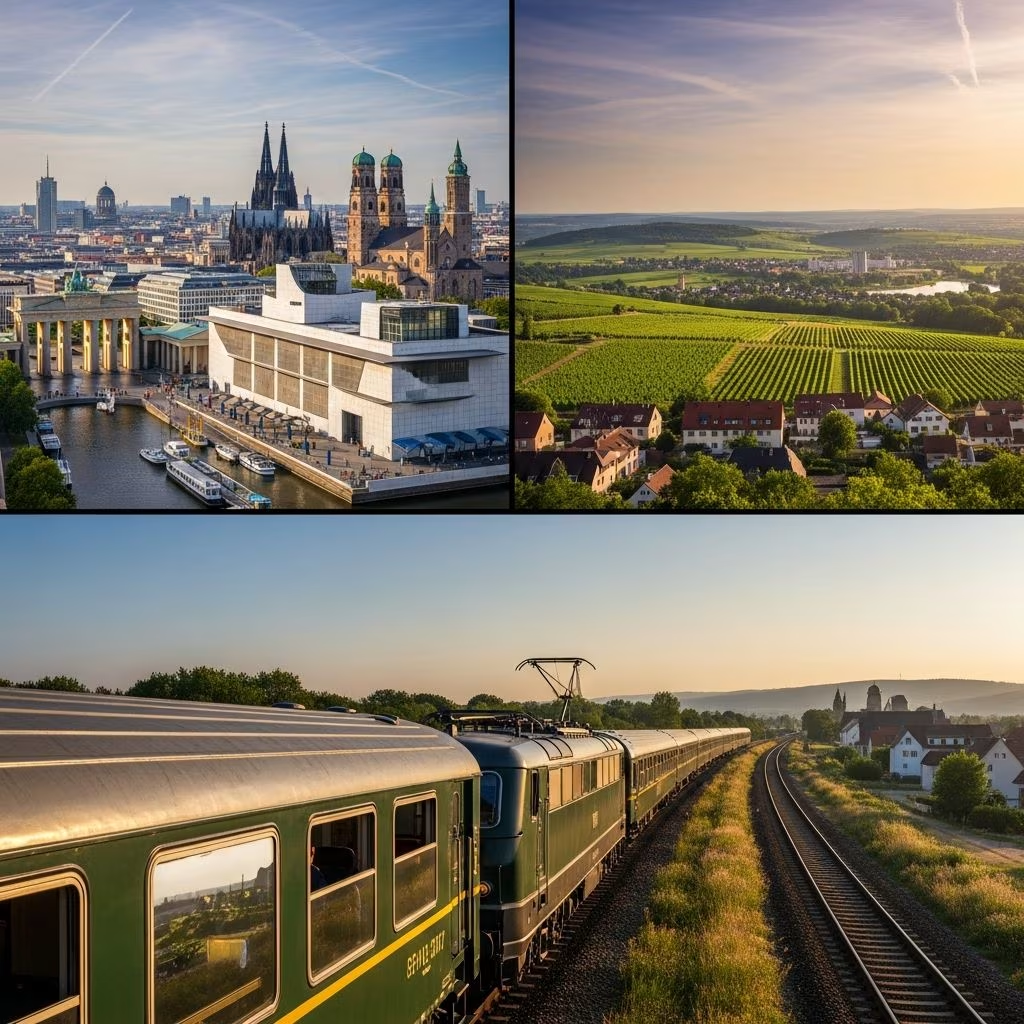
Explore Germany's premier art destinations across Frankfurt, Wiesbaden, Cologne, Düsseldorf, Leipzig, and Berlin via an efficient rail network connecting world-class museums.
 Travel Essentials
Germany’s reputation as a cultural powerhouse extends far beyond its historical significance. The country boasts some of Europe’s most exceptional art collections, housed within prestigious institutions spread across major metropolitan centers. Traveling by train offers an ideal solution for art enthusiasts seeking to maximize their cultural exposure while minimizing logistical complications. This comprehensive guide outlines a methodical approach to experiencing Germany’s most celebrated galleries and museums through an interconnected rail network that prioritizes accessibility and cultural immersion.
The German railway system represents one of Europe’s most efficient transportation networks, making it particularly suited for cultural tourism. Unlike automobile travel, which demands attention to road conditions and parking arrangements, train journeys allow passengers to relax, observe changing landscapes, and transition seamlessly between destinations. This mode of transportation proves especially advantageous for art-focused itineraries, as it enables travelers to arrive refreshed at each new gallery and museum without the fatigue associated with driving.
The convenience of inter-city rail connections means you can structure your days around museum hours and opening times rather than accommodating transportation schedules. Regional and express trains connect major art centers within timeframes ranging from 40 minutes to three hours, providing sufficient travel intervals for reflection on newly encountered artworks and cultural experiences.
Beginning your expedition in Frankfurt establishes a cultural baseline before venturing into specialized art collections. The city functions as Germany’s primary international gateway and cultural crossroads, offering multiple entry points for visitors arriving from abroad. Frankfurt’s museum landscape encompasses diverse artistic periods and movements, with institutions concentrated along the Main riverbanks, creating an easily navigable cultural corridor.
The Museum Embankment district represents the city’s primary artistic hub, where visitors can structure their time according to personal interests and energy levels. Whether focusing on classical European masters, contemporary installations, or decorative arts, Frankfurt’s institutions provide foundational context for understanding Germany’s broader artistic heritage. Allocating your first day to this city allows for acclimation to local transportation systems and museum navigation before embarking on more ambitious day trips.
A brief suburban train journey north transports visitors to Wiesbaden, a city distinguished by its dual significance in both modern art and historical architecture. The Museum Reinhard Ernst represents a specialized collection focused exclusively on abstract expressionism, particularly works by American artists who dominated this twentieth-century movement. The institution houses the world’s most comprehensive private assemblage of Helen Frankenthaler paintings, alongside significant works by Frank Stella, Lee Krasner, and Kenneth Noland.
This concentration on abstract expressionism creates a distinctive curatorial experience, enabling visitors to trace thematic developments and artistic dialogues across a single collection rather than fragmenting attention across multiple institutions. The museum’s thematic organization allows for deeper engagement with the conceptual underpinnings of abstract art movements.
Wiesbaden’s secondary cultural significance derives from its status as a principal European art nouveau center. The early twentieth-century architectural revival movement, known locally as Jugendstil, transformed the Rheingauviertel neighborhood into a living museum of decorative modernism. Curated walking tours guide visitors through districts where architectural details—ornamental facades, sculptural embellishments, and innovative structural solutions—demonstrate the period’s aesthetic philosophy.
The Museum Wiesbaden’s south wing contains an extensive collection of nineteenth-century Jugendstil artworks, providing theoretical and historical context for understanding the architectural examples encountered throughout the neighborhood. This integrated approach to cultural exploration—combining architectural observation with museum-based learning—creates comprehensive understanding of historical art movements.
Culture Route 65 offers an alternative exploration strategy, connecting multiple cultural institutions throughout Wiesbaden and enabling visitors to customize their itinerary based on specific interests. This flexibility accommodates varying energy levels and attention spans throughout the day.
An evening train journey deposits visitors in Cologne, a city balancing medieval historical significance with vibrant contemporary art expressions. The Ehrenfeld district has emerged as a creative nucleus where street art, independent galleries, and artist studios coexist with residential neighborhoods. Walking tours through this quarter reveal how contemporary artists engage with urban spaces, transforming ordinary architectural surfaces into dynamic visual narratives.
This contrast between institutional museum settings and grassroots artistic expression provides valuable perspective on how art functions across different social and economic contexts. Street art tours typically illuminate the conceptual frameworks driving contemporary works, the technical approaches employed by muralists, and the community engagement strategies supporting artistic initiatives beyond traditional gallery systems.
Cologne Cathedral, a UNESCO World Heritage site, provides an appropriate counterpoint to contemporary artistic exploration. This gothic masterpiece represents medieval architectural achievement and spiritual expression, offering contemplative space for processing accumulated artistic impressions. The structural sophistication and decorative elements within this cathedral demonstrate how historical artistic traditions established foundations for subsequent creative movements.
Local dining traditions merit attention, as they provide cultural context extending beyond visual arts into broader lifestyle and aesthetic expression. Traditional Kölsch beer service and regional delicacies reflect specific cultural practices and community identity, enriching overall cultural understanding of destination cities.
A regional rail connection of approximately forty minutes transports visitors to Düsseldorf, home to substantial museums devoted to contemporary and modern artistic practice. The Kunstsammlung NRW operates two primary venues—the K20 and K21—housed in separate locations yet functioning as integrated curatorial projects exploring twentieth and twenty-first century art development.
The K20 emphasizes early to mid-twentieth century modernism, enabling visitors to trace artistic responses to industrialization, warfare, and social transformation during that era. The K21 focuses on contemporary practice from the 1980s onward, examining how artists address current technological, environmental, and social challenges. Visiting both venues provides chronological perspective on how artistic concerns evolve across generational cohorts.
The Kö-Bogen shopping complex, designed by acclaimed architect Daniel Libeskind, demonstrates how contemporary architectural practice intersects with commercial development. The structure’s innovative design provides visual interest during the pedestrian journey connecting the two museum locations. This architectural integration within urban commercial zones illustrates how modern cities blend cultural, commercial, and residential functions.
The Immermann Strasse neighborhood, characterized by its substantial Japanese community, offers authentic dining experiences reflecting Düsseldorf’s international character. This cultural diversity enriches the broader travel experience by demonstrating how cities function as cosmopolitan centers attracting diaspora communities who maintain distinct cultural practices.
Travelers with additional time might consider a thirty-minute northern rail journey to Essen, where the Folkwang Museum houses significant classical modern art collections. Recently redesigned by celebrated architect David Chipperfield, this institution combines architectural innovation with curatorial excellence. The museum’s commitment to free admission reflects institutional philosophy prioritizing public access over revenue maximization, enabling broader demographic engagement with art historical material.
The rail journey from Düsseldorf to Leipzig encompasses several hours, providing extended opportunity for reflection on accumulated artistic experiences. Leipzig’s historical importance as a cultural center predates contemporary art movements, yet the city has undergone significant artistic revitalization in recent decades. Museums within Leipzig maintain collections spanning multiple centuries, enabling visitors to observe how artistic traditions evolve across historical periods.
The transition from industrial manufacturing to post-industrial cultural production characterizes Leipzig’s recent trajectory. Contemporary galleries and artist initiatives flourish within converted industrial structures, demonstrating how cities repurpose infrastructure following economic restructuring. This transformation provides substantive context for understanding how cultural production functions within broader economic systems.
An hour-long train journey concludes your artistic expedition in Berlin, a city where contemporary art thrives alongside historically significant collections. Berlin’s gallery district in Mitte contains numerous independent galleries and artist-run spaces reflecting diverse aesthetic approaches and curatorial philosophies. Wandering through this neighborhood reveals how contemporary art functions within market systems, institutional frameworks, and grassroots communities simultaneously.
The Sammlung Boros occupies a converted high-rise bunker, transforming a structure with troubling historical associations into a contemporary art center. This institutional strategy—converting challenging historical sites into cultural spaces—raises important questions about memory, repurposing, and reconciliation with difficult pasts. The collection emphasizes sculptures, spatial installations, and light-based artworks requiring architectural engagement beyond traditional wall-mounted paintings or sculptures on pedestals.
Berlin offers alternative routes for concluding your journey according to personal interests and aesthetic preferences. Charlottenburg Palace provides baroque masterpieces within grand architectural settings, appealing to visitors prioritizing historical grandeur and courtly artistic traditions. Alternatively, Potsdam, located within Berlin’s metropolitan periphery, offers the New Palace and additional palace collections, along with newly restored works by Renaissance painter Artemisia Gentileschi. These alternatives accommodate varying curatorial interests and historical periods.
German rail passes offer economical solutions for multi-city travel, with various configurations accommodating different journey patterns and travel intensities. Regional passes cover specific geographic areas, while national passes provide flexibility across Germany’s entire network. Researching pass options before travel enables informed purchasing decisions that optimize transportation expenses.
Most museums maintain extended evening hours on specific weekdays, enabling flexible scheduling that accommodates travel timing. Planning your departure times around museum closing times maximizes cultural engagement without rushing through collections or compromising artistic experience quality.
Choosing accommodations near major train stations simplifies transportation logistics while typically offering better accessibility to public transit systems. Central locations reduce transfer times between stations and hotels, allowing additional hours for cultural activities rather than navigating peripheral neighborhoods.
German museums typically observe consistent weekday and weekend hour schedules, with many offering free admission during specified evening hours. Planning your itinerary around these free-admission windows reduces overall expedition expenses while increasing accessibility for budget-conscious travelers.
| City | Primary Institution | Artistic Focus | Key Characteristics |
|---|---|---|---|
| Frankfurt | Museum Embankment District | Multi-disciplinary | Foundational exposure, diverse periods |
| Wiesbaden | Museum Reinhard Ernst | Abstract Expressionism | Specialized focus, architectural heritage |
| Cologne | Street Art Tours (Ehrenfeld) | Contemporary Expression | Community-engaged, informal settings |
| Düsseldorf | K20 and K21 | Modern and Contemporary | Chronological progression, architectural integration |
| Berlin | Sammlung Boros | Contemporary Installation | Unconventional spaces, immersive experiences |
Most major German museums provide English-language interpretive materials, audio guides, and staff assistance. Contemporary art museums typically employ multilingual signage reflecting international visitor demographics. Language proficiency primarily enhances informal interactions with gallery staff and fellow travelers rather than limiting core museum experiences.
Begin mornings with travel to destinations, allowing early afternoon museum engagement following hotel checkout. Many institutions close during midday hours, making this natural transition point for lunch and reflection. Evening museum hours accommodate travelers arriving late afternoon, extending your daily engagement window with collections.
Frankfurt and Berlin merit full-day engagement given their comprehensive museum offerings and gallery districts. Wiesbaden and Cologne accommodate half-day visits combined with architectural exploration. Düsseldorf rewards full-day investment through its two major museums and neighborhood characteristics.
Major institutions accept advance online reservations, eliminating entrance delays and guaranteeing admission during peak travel seasons. Smaller galleries typically maintain open-door policies without advance booking requirements. Online reservations often provide modest pricing discounts, offsetting transaction fees.
Museum navigation requires extended standing and walking; visitors with mobility limitations should prioritize elevator-accessible institutions and request accessibility assistance. Train travel itself involves minimal physical demands beyond carrying luggage, with porter and assistance services available at major stations.
Spring and autumn months provide optimal travel conditions, with moderate temperatures and fewer crowds than summer peak season. These shoulder seasons also offer superior lighting conditions for appreciating artworks, as galleries maintain climate controls throughout the year while natural light transitions become more predictable.
Scheduling your journey during museum temporary exhibitions enhances contextual richness, as special displays often include supplementary programming, curator talks, and educational materials. Research exhibition calendars months in advance to coordinate your travel dates with exhibitions aligned with your curatorial interests.
This itinerary provides foundational structure accommodating personal customization based on specific artistic preferences. Museum collections rarely demand complete engagement; curating your own micro-exhibitions around preferred periods, styles, or media maintains engagement quality while preventing aesthetic fatigue. Photography policies, rest spaces, and café facilities support sustainable pacing throughout each day.
Consider allocating unscheduled time within your itinerary for spontaneous discoveries—unexpected gallery finds, serendipitous artist studio visits, or recommendations emerging from local interactions. These unplanned experiences often provide the most memorable encounters and authentic cultural engagement.
