

 Travel Essentials
 Travel Essentials

Comprehensive guide to Austria's public transport: high-speed trains, extensive buses, Vienna's U-Bahn, tickets, passes, and tips for tourists and locals alike.
 Travel Essentials
Austria’s transportation infrastructure stands out for its reliability, coverage, and affordability, connecting bustling cities like Vienna and Salzburg to remote Alpine villages. Whether you’re a first-time visitor or a daily commuter, understanding the options—from high-speed trains to local trams—ensures smooth journeys across this scenic nation.
The backbone of movement in Austria is a well-integrated system dominated by rail and bus services. ÖBB, the national railway operator, manages over 5,000 kilometers of tracks linking all nine federal states, offering everything from ultra-fast intercity services to regional lines. Complementing this are extensive bus routes operated by Postbus and regional providers, which reach areas inaccessible by train, such as mountain passes and lakeside trails. Urban centers boast trams, metros, and buses, with Vienna leading as Europe’s most livable city thanks to its vast network serving 2.5 million passengers daily.
Public transport emphasizes sustainability, punctuality, and accessibility. Night services, free Wi-Fi on many vehicles, and multilingual support make it ideal for tourists. Driving is viable on excellent motorways, but trains and buses often prove faster and cheaper, especially with advance bookings.
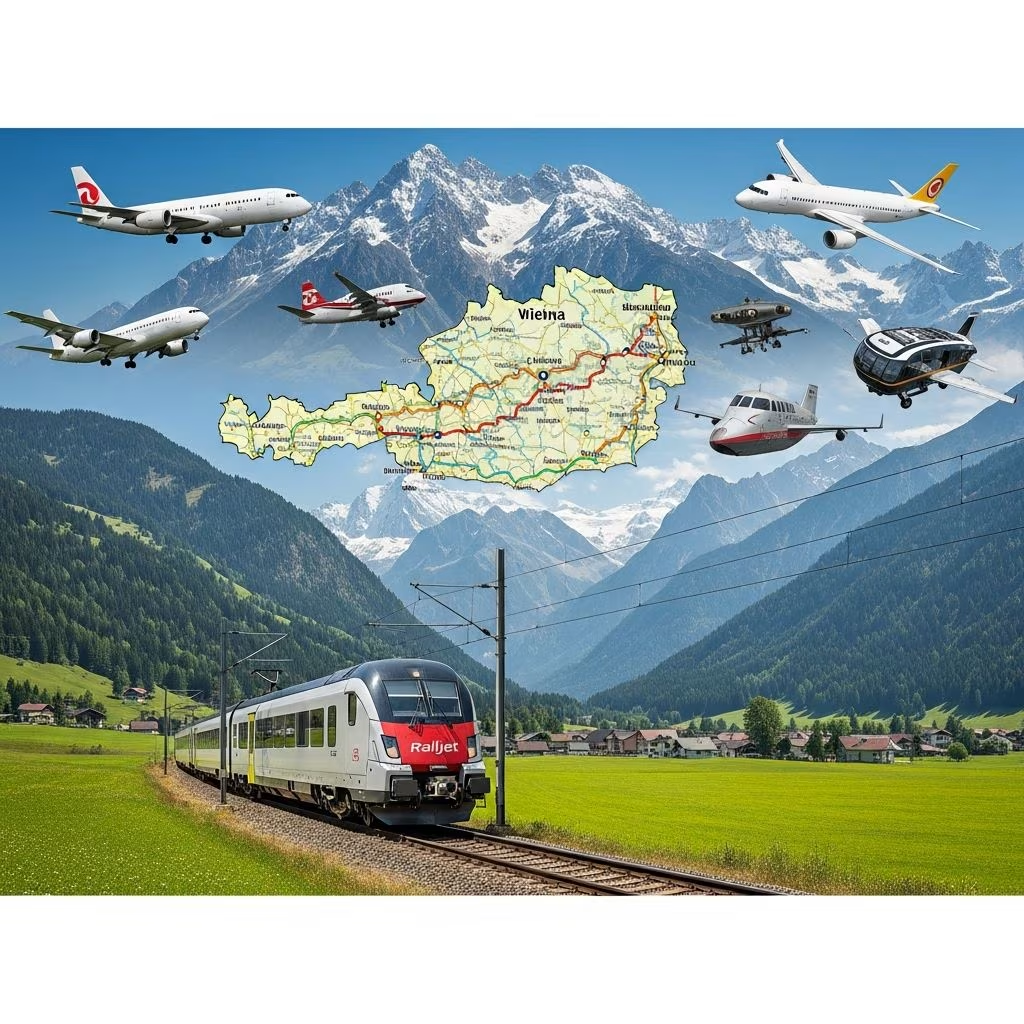
ÖBB’s Railjet (RJ) trains are the stars of long-distance travel, zipping between major hubs at speeds up to 230 km/h. These modern trains feature free Wi-Fi, power outlets, spacious luggage areas, restaurant cars, and zones for families or quiet travel. Key routes include Vienna to Salzburg (2.5 hours, two per hour), Linz (1 hour 15 minutes), Graz (2 hours 35 minutes), and Klagenfurt (3 hours 55 minutes). For even quicker trips on select routes, Railjet Xpress (RJX) skips minor stops.
Nightjets (NJ) offer overnight options, departing Vienna evenings to arrive in Innsbruck by morning, combining transport with savings on lodging. Slower but scenic are Intercity (IC), Regional Express (REX), and Cityjet (CJ) trains for smaller towns, plus S-Bahn for suburban links.
Private operator Westbahn provides competitive alternatives on Vienna-Salzburg-Innsbruck-Bregenz routes from Vienna’s Westbahnhof. Double-decker trains boast similar amenities, often at lower fares via supersaver tickets. Both ÖBB and Westbahn apps allow easy booking, with dynamic pricing favoring early purchases.
| Route | Operator | Duration | Frequency |
|---|---|---|---|
| Vienna-Salzburg | ÖBB Railjet / Westbahn | 2.5 hours | 2 per hour |
| Vienna-Linz | ÖBB Railjet | 1h 15m | 2 per hour |
| Vienna-Innsbruck (Nightjet) | ÖBB Nightjet | ~9 hours overnight | Daily |
Vienna’s Wiener Linien operates an exemplary network: U-Bahn metro, trams (called “bims”), buses, and S-Bahn, spanning 171 km of tram tracks—the world’s sixth-largest. The U-Bahn, Austria’s only underground system, comprises five lines (a sixth under construction) running 5am-midnight weekdays, 24/7 on weekends. Stations offer English announcements, maps, and full wheelchair access. Trams and buses fill gaps, with night lines ensuring round-the-clock service.
Annual passes (Jahreskarte) at €467 for full price outnumber car ownership, with discounts for under-26s (€300 semester ticket), kids (€86 elementary annual), and seniors (€300 from age 65). Single tickets start low, but multi-day options suit visitors. The honesty system prevails—no barriers, just occasional checks.
Postbus, an ÖBB subsidiary, handles 123 million passengers yearly, excelling in rural connectivity to hiking trails, lakes, and Alps. Comfortable coaches include AC, Wi-Fi, toilets, and outlets; drivers often speak English. ÖBB Intercitybuses link cities like Graz-Klagenfurt or Villach-Venice.
Regional operators vary: VOR for Lower Austria/Vienna/Burgenland, ÖOVV for Upper Austria, Salzburg Verkehr for Salzburgerland, Verbund Linien for Styria, and Kärntner Linien for Carinthia. For example, from Salzburg, bus 150 to Bad Ischl, then 541/543 to Hallstatt, showcases seamless transfers. International routes use FlixBus.
Austria’s ticketing is flexible. Single ÖBB tickets vary by demand; supersavers lock low rates. Eurail Austria Pass starts at €130 for 3 days in a month (youth cheaper), though point-to-point may undercut for short trips. City cards like Vienna Pass bundle transport with attractions.
| Ticket/Pass | Price (Adult) | Discounts |
|---|---|---|
| Vienna Jahreskarte | €467 | Seniors €300, Students €300 |
| ÖBB Sparschiene (Advance) | From €9.90 | Family, Youth |
| Eurail Austria 3-day | €130 | Under-25s lower |
| Postbus Regional Day | €10-30 | Groups, Seniors |
Apps from ÖBB, Westbahn, Wiener Linien, and Postbus enable mobile tickets, route planning, and real-time updates. Credit cards accepted widely.
Bike-sharing thrives in cities; Vienna’s Citybike offers 24/7 rentals. Cable cars and funiculars access peaks like in Salzburg or Innsbruck. Taxis and ride-hailing (e.g., Uber in Vienna) supplement, but public options suffice for most. Driving shines for road trips on vignette-required motorways (digital sticker €9.20/10 days), with winter tires mandatory October-April.
Stations feature lockers, elevators, and info desks. Punctuality reigns—arrive early. English signage aids non-German speakers. For Alps itineraries, combine ÖBB trains with Postbus for 10-day loops: Vienna-Salzburg-Hallstatt-Innsbruck. Peak summer/winter books fast; Sparschiene for deals.
Railjet or Westbahn, 2.5 hours, frequent departures.
U-Bahn yes on weekends; night trams/buses otherwise.
Often no—advance singles cheaper.
Train to Bad Ischl, then buses 541/543.
No, only for private vehicles on motorways.
