

 Travel Essentials
 Travel Essentials

Explore comprehensive transportation options in Bolivia, from affordable buses to cable cars, trains, and domestic flights for seamless travel.
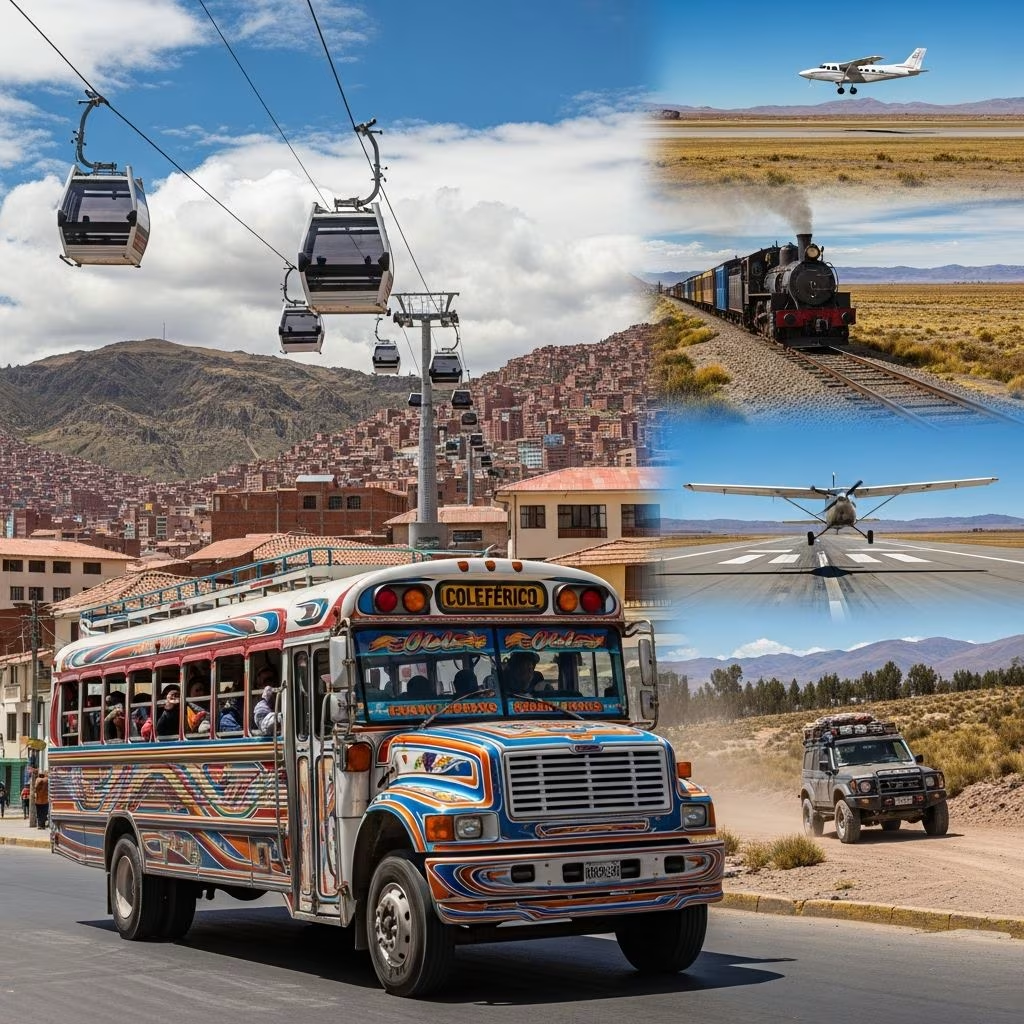 Travel Essentials
Bolivia presents a unique transportation landscape that reflects the country’s diverse geography, from high-altitude plateaus to Amazon lowlands. Understanding the various transit options available helps travelers move efficiently through this vast South American nation while managing costs and maximizing comfort. Whether you’re heading between major cities or exploring remote regions, Bolivia offers multiple transportation methods suited to different budgets and travel styles.
Buses form the primary transportation network connecting Bolivia’s cities and towns, serving as the most economical option for covering long distances. These vehicles, operated by numerous private companies known as flotas, navigate challenging terrain and remote routes that few other transport methods can reach. The extensive bus network demonstrates why most Bolivians depend on this mode for intercity movement.
The Bolivian bus market offers several service tiers to accommodate different preferences and budgets. Standard buses provide basic seating arrangements and represent the most budget-friendly option for long-distance travel. Semi-cama buses feature partially reclining seats, offering improved comfort during extended journeys. For travelers prioritizing rest on overnight routes, cama-class buses or bus-camas provide fully horizontal seating similar to sleeping berths, commanding premium pricing but justifying the investment through superior comfort.
Pricing for intercity bus travel reflects these comfort distinctions. Standard buses typically cost between USD 10-15 for long-distance routes, while semi-cama services range from USD 15-25. Fully reclining cama options command USD 25-40, making them approximately 50% more expensive than standard service. Despite these price differences, all Bolivian buses remain exceptionally affordable compared to similar services in developed nations.
Most Bolivian cities maintain centralized bus terminals, locally called terminales terrestres or terminales de buses, where intercity buses congregate. These facilities coordinate departures to major destinations, though some regional buses may depart from alternative locations. Travelers typically pay a modest terminal fee of 1-3 bolivianos for facility access. Multiple bus companies often service the same routes, requiring travelers to compare options or seek assistance from terminal information offices.
Booking strategy depends on travel season and route popularity. During peak travel periods (June through August), advance ticket purchase becomes essential as popular routes fill quickly. Less-frequented routes warrant advance booking to ensure availability, while regularly-served routes typically accommodate walk-up passengers without reservation requirements. Online platforms like TicketsBolivia and EnBus facilitate advance bookings with English-language interfaces, streamlining the reservation process for international travelers.
Many Bolivian long-distance routes operate exclusively during nighttime hours, allowing passengers to sleep while covering ground toward their destinations. This scheduling innovation effectively eliminates accommodation costs for transit days while enabling travelers to visit multiple cities. Night routes typically connect major cities such as La Paz, Sucre, Uyuni, and Lake Titicaca regions, maximizing coverage of popular tourist destinations.
Micros have replaced larger buses as Bolivia’s primary urban transport, operating as small minibuses that efficiently move populations through city streets. These vehicles run frequent service along fixed routes, with destinations displayed on windscreen placards and announced by passenger attendants. Urban micro rides cost mere bolivianos, making them extraordinarily affordable for short-distance city travel.
Minis, distinct from micros, operate as fifteen-passenger vans providing slightly longer routes than standard micros. These vehicles cost between 2-2.60 bolivianos (approximately USD 0.30) depending on distance, though some minis travel to nearby cities for 15-25 bolivianos (USD 2-4), positioning them as economical alternatives to tourist-oriented transportation. Trufis represent another variant of shared minibus transport, similarly operating on established routes and accepting passengers at any street location.
Urban shared transport operates with remarkable flexibility compared to Western transit systems. Passengers may board micros, minis, and trufis at any point along established routes simply by waving them down; formal bus stops are unnecessary. This flexible boarding system accelerates boarding and alighting for scattered stop patterns. The same flexibility applies to destination exits—passengers communicate their desired alighting point to the driver or assistant, who will accommodate requests across the entire service area.
La Paz has pioneered a distinctive urban solution through aerial cable car systems, providing rapid transit between the city’s dramatically elevated neighborhoods. These cable car rides cost USD 0.40-0.50 per journey, matching the affordability of ground-level transport while dramatically reducing travel times across steep topography. This innovative infrastructure exemplifies Bolivia’s adaptation to challenging geography through creative transportation solutions.
Bolivian taxi services accommodate urban travelers seeking point-to-point transportation without using shared vehicles. The informal taxi system permits private vehicle owners to convert their cars into taxis simply by displaying identification signs—a practice enabling many residents to generate supplementary income through part-time driving. These independent taxis offer cheap, safe transportation throughout urban areas, though they lack formal regulation or centralized dispatch systems.
Radio taxis provide a more formalized alternative, dispatched through phone systems and clearly marked as official services. Though commanding slightly higher fares than independent taxis, radio taxis theoretically offer enhanced safety through formal accountability and professional driver standards. For travelers concerned about safety or seeking transportation during late hours, radio taxi services provide reassuring structure.
When conventional buses prove unavailable, heavy-goods lorries serve as alternative transport in remote or rarely-visited regions. These vehicles supplement commercial cargo operations with passenger service, creating income opportunities for owners. Lorry travel involves trade-offs: passengers gain access to previously unreachable destinations while accepting reduced comfort, slower speeds, and more frequent stops compared to buses.
Lorry passengers typically sit in vehicle cabs alongside drivers or in exterior compartments, experiencing direct exposure to Bolivia’s landscape and weather. Travelers locate lorries around market areas, police checkpoints at town perimeters, and roadside flag-down points. Smaller pick-up trucks called camionetas similarly transport passengers on shorter rural journeys, creating quasi-hitchhiking opportunities where payment remains expected despite informal arrangements.
Car rental presents limited appeal for most international visitors due to Bolivia’s unpredictable road conditions and complex driving culture. However, vehicle rental becomes viable for localized trips in established cities like Santa Cruz, Cochabamba, and Sucre, where street layouts remain manageable for unfamiliar drivers. Motorcycle and moto-taxi rentals suit day excursions in warm lowland regions, offering cost-effective exploration of immediate surroundings.
Amazon Basin driving requires proficiency in Spanish and capability managing extreme conditions including flash floods, mud-covered roads, and massive potholes—factors disqualifying most international tourists from this option. The combination of challenging infrastructure and sparse traffic regulations makes extensive road travel inadvisable for most visitors.
For travelers unwilling to endure extended bus journeys or connecting remote destinations, domestic flights offer time-efficient alternatives despite higher costs than surface transport. Bolivia’s aviation network connects major cities including La Paz, Santa Cruz, and regional hubs, enabling rapid intercity movement when schedules permit flight availability.
Booking platforms facilitate flight comparison and reservations similarly to bus services, with options including international travel websites and local Bolivian carriers. Flight costs vary seasonally, with peak travel periods commanding premium pricing. Despite affordability advantages compared to international flight standards, domestic aviation remains substantially more expensive than equivalent bus travel, limiting adoption among budget-conscious travelers.
Bolivia’s railway network represents a diminished remnant of historical grandeur, no longer dominating transportation as it did during the tin-mining era. The Ferrocarril Andino (also called Occidental) operates limited passenger service from Oruro southward across the Altiplano through Uyuni and Tupiza, terminating at Villazón on the Argentine border. Though offering more comfortable and unhurried travel compared to buses, rail service cannot claim speed advantages or superior reliability.
Railway travel appeals primarily to travelers prioritizing comfort and distinctive experiences over efficiency, with limited schedule flexibility and restricted route options compared to bus networks. Modern travelers considering rail should verify current service status, as operational reliability fluctuates based on maintenance resources and passenger demand.
Within Amazonian lowland areas, river boats maintain primary transportation importance where roads prove impractical or nonexistent. These vessels navigate waterways connecting remote communities inaccessible by surface routes, serving both commercial and passenger functions. River travel requires specific knowledge about water conditions, seasonal navigability, and departure schedules—information best obtained locally rather than through standard travel booking platforms.
Private companies including Bolivia Hop offer multi-day hop-on, hop-off bus services targeting international travelers, particularly those departing La Paz for Peru. These curated journeys combine transportation with planned stops at significant sites like Lake Titicaca, reducing logistical complexity while simplifying Peru transit toward Cusco or Machu Picchu. This option suits travelers prioritizing simplicity and social travel experiences over independent scheduling.
While Bolivia’s public transportation network remains extensive and affordable, travelers should exercise caution regarding petty theft on standard buses and potential service delays. Choosing reputable bus companies including Todo Turismo, Trans Salvador, and Trans Copacabana reduces exposure to substandard service or security concerns. Keeping valuables secure and avoiding overnight display of cash protects against opportunistic theft common on longer routes.
Mountain routes experience weather-related challenges during rainy season (November through March), causing unpredictable delays requiring travelers to allow substantial buffer time in transit schedules. Conversely, peak travel season (June through August) creates congestion necessitating advance booking for popular routes. Planning travel timing around these seasonal patterns optimizes both comfort and scheduling predictability.
Successful Bolivian transportation requires minimal preparation beyond typical travel planning. Carrying small denomination boliviano notes facilitates straightforward payment on local buses and micros where drivers typically cannot make change. Downloading offline maps before intercity travel accommodates unreliable mobile coverage in rural transit zones. These simple preparations prevent frustration and ensure smooth progress through Bolivia’s diverse regions.
| Transport Mode | Cost Range (USD) | Best Use Case |
|---|---|---|
| Local Micro/Minibus | 0.30-0.50 | Urban city travel |
| Cable Car (La Paz) | 0.40-0.50 | Elevation changes within La Paz |
| Standard Long-Distance Bus | 10-15 | Basic intercity routes |
| Semi-Cama Bus | 15-25 | Medium comfort intercity |
| Cama (Sleeper Bus) | 25-40 | Premium overnight routes |
| Domestic Flight | 50-150+ | Rapid intercity connections |
Todo Turismo, Trans Salvador, and Trans Copacabana maintain strong reputations for service reliability and safety standards. Online platforms like TicketsBolivia and EnBus facilitate direct comparisons allowing travelers to select from multiple providers.
During peak season (June-August), advance booking remains essential due to rapid route saturation. Off-season travel permits flexible scheduling with same-day or day-ahead purchases, though booking 2-3 days ahead reduces destination pressure.
Overnight buses accommodate thousands of solo travelers annually. Selecting reputable companies, storing valuables securely, and keeping money distributed across locations reduces security risks to acceptable levels.
Domestic flights offer alternatives for travelers avoiding extended bus travel, though costs substantially exceed bus fares. Organized tour companies provide curated transportation combining multiple cities into structured itineraries.
Local transport requires boliviano cash, as card payments remain unavailable on most buses and minibuses. ATMs distribute currency in major cities; obtaining sufficient cash prevents transit payment complications.
