

 Travel Essentials
 Travel Essentials

Discover efficient ways to travel in Brisbane via public transport, airport links, rideshares, driving tips, and active options like walking and cycling.
 Travel Essentials
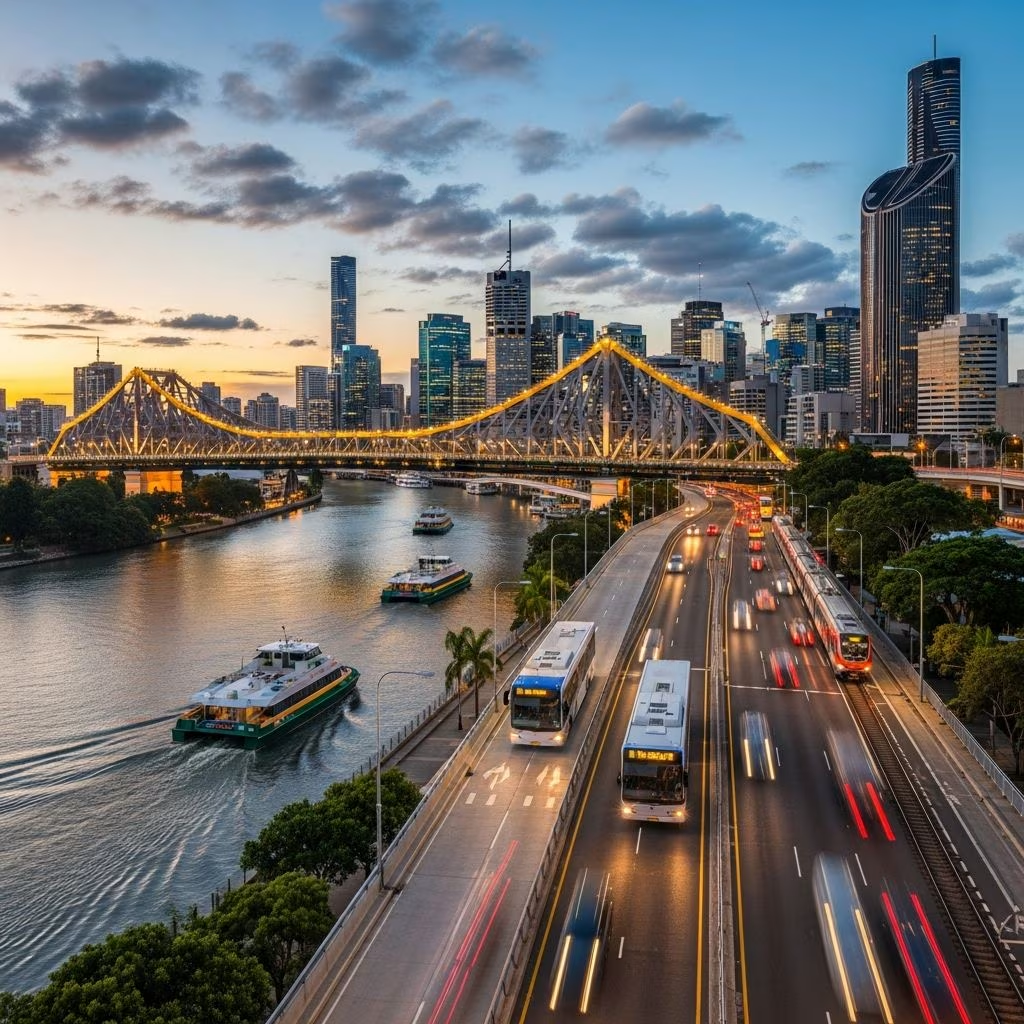
Brisbane offers a visitor-friendly transport ecosystem that blends affordability, reliability, and variety. Whether arriving by air or exploring neighborhoods, options like integrated public systems, scenic ferries, and modern rideshares ensure smooth mobility across this vibrant Queensland hub.
Brisbane Airport serves as the primary gateway, with seamless connections to the city core. The Airtrain provides a swift 20-minute direct link from both domestic and international terminals to central stations, featuring full accessibility with lifts, level boarding, and support for wheelchairs and prams.
Alternative arrivals include door-to-door shuttles, rideshares like Uber, or traditional taxis available at dedicated ranks. For budget travelers, public buses integrate into the Translink network, offering a cost-effective start to your journey.
At the heart of Brisbane’s mobility is Translink, a cohesive system uniting buses, trains, and ferries under one fare structure. A flat 50-cent rate applies across zones and modes, making intra-city travel exceptionally affordable. The go card, a reloadable smartcard, streamlines payments and extends usability to surrounding regions like Ipswich, Moreton Bay, and the Gold Coast.
Download the Translink app or use the Journey Planner for real-time routes, ensuring efficient navigation to attractions, shopping, and suburbs.
Brisbane’s bus fleet delivers frequent services to suburbs, malls, entertainment zones, and interchanges. Air-conditioned vehicles with low-floor access and ramps cater to all passengers. Standouts include the Brisbane Metro, a high-frequency rapid line from Eight Mile Plains to Roma Street.
Free inner-city loops enhance accessibility: Purple routes 40 (clockwise) and 50 (anticlockwise) circle the CBD every 10 minutes weekdays, hitting Central Station, Riverside, Botanic Gardens, QUT, City Hall, and Treasury Casino. Spring Hill Loop (30) connects the city to uphill areas, while South Brisbane Loop (86) serves South Bank and West End.
CityGlider services offer high-speed links like West End to Teneriffe or Ashgrove to Coorparoo, running every 5-15 minutes.
Trains excel for broader exploration, linking the CBD to bayside areas, Ipswich, Sunshine Coast, and Gold Coast. Key stations—Central and Roma Street—handle inbound services with accessibility features like lifts, ramps, tactile guides, and audio announcements.
Lines stop at Fortitude Valley and Bowen Hills, ideal for cultural spots. Queensland Rail extends to intercity destinations, perfect for day trips.
Brisbane’s Brisbane River comes alive with ferries. CityCats ferry larger groups swiftly between terminals, while smaller CityHopper (red) and Cross River services are free, looping from New Farm to North Quay via Eagle Street Pier, Kangaroo Point, and South Bank.
KittyCat ferries carry up to 60 passengers, with dog-friendly policies on select routes. All vessels prioritize accessibility.
For direct, flexible travel, taxis and rideshares abound. Ranks dot airports, CBD, hotels, and attractions. Standard cabs fit four; multi-passenger options handle up to 10 or wheelchairs. Book via Black & White Cabs (133 222) or 13cabs (13 22 27).
Rideshare apps provide convenience, especially post-midnight when buses thin out (though late services run Fridays and Saturdays).
Self-driving suits outskirts or groups, but CBD congestion favors public options. Rent from airport providers; note busways are transit-only. Parking apps help locate spots; secure underground garages serve malls and offices.
| Area | Parking Tips | Avg Cost/Hour |
|---|---|---|
| CBD Core | Multi-level garages | $3-5 |
| South Bank | Event parking | $4-6 |
| Suburbs | Street metered | $2-3 |
Brisbane’s compact CBD and green bridges encourage walking. Riverfront paths link Botanic Gardens to South Bank. E-scooters and e-bikes via apps like Lime dot key areas for short hops.
Cycling networks expand with protected lanes; bike-sharing stations support eco-friendly jaunts. Pedestrian bridges enhance cross-river access.
Translink commits to universal design: low-entry buses, wheelchair spaces on trains/ferries, audio-visual aids, and staff assistance. Brisbane Metro and Airtrain exemplify this.
| Option | Single Trip Cost | Best For |
|---|---|---|
| Translink (go card) | $0.50 flat | Daily city use |
| Airtrain | $20 city return | Airport |
| Free Loops/Ferries | Free | CBD sightseeing |
| Taxi/Rideshare | $20-40 CBD | Night/groups |
| E-Scooter | $1 unlock + $0.40/min | Short distances |
Go card yields savings for multi-mode days; free services maximize value.
The Translink network with a go card at 50 cents per trip, plus free loops and CityHopper ferries, keeps costs minimal.
CityHopper and Cross River ferries are free; full CityCats require a go card.
About 20 minutes to central stations.
Yes, with ramps, lifts, and dedicated spaces across buses, trains, ferries, and Airtrain.
No, extensive public options suffice for most; driving aids regional trips.
Cross River Rail will boost train capacity, linking north-south corridors underground. Brisbane Metro expansions promise faster suburb connections, solidifying the city’s transit lead.
