

 Travel Essentials
 Travel Essentials

Discover efficient ways to get around Lagos using modern rail lines, BRT buses, ferries, taxis, and more. Essential guide for visitors and residents tackling traffic and congestion.
 Travel Essentials
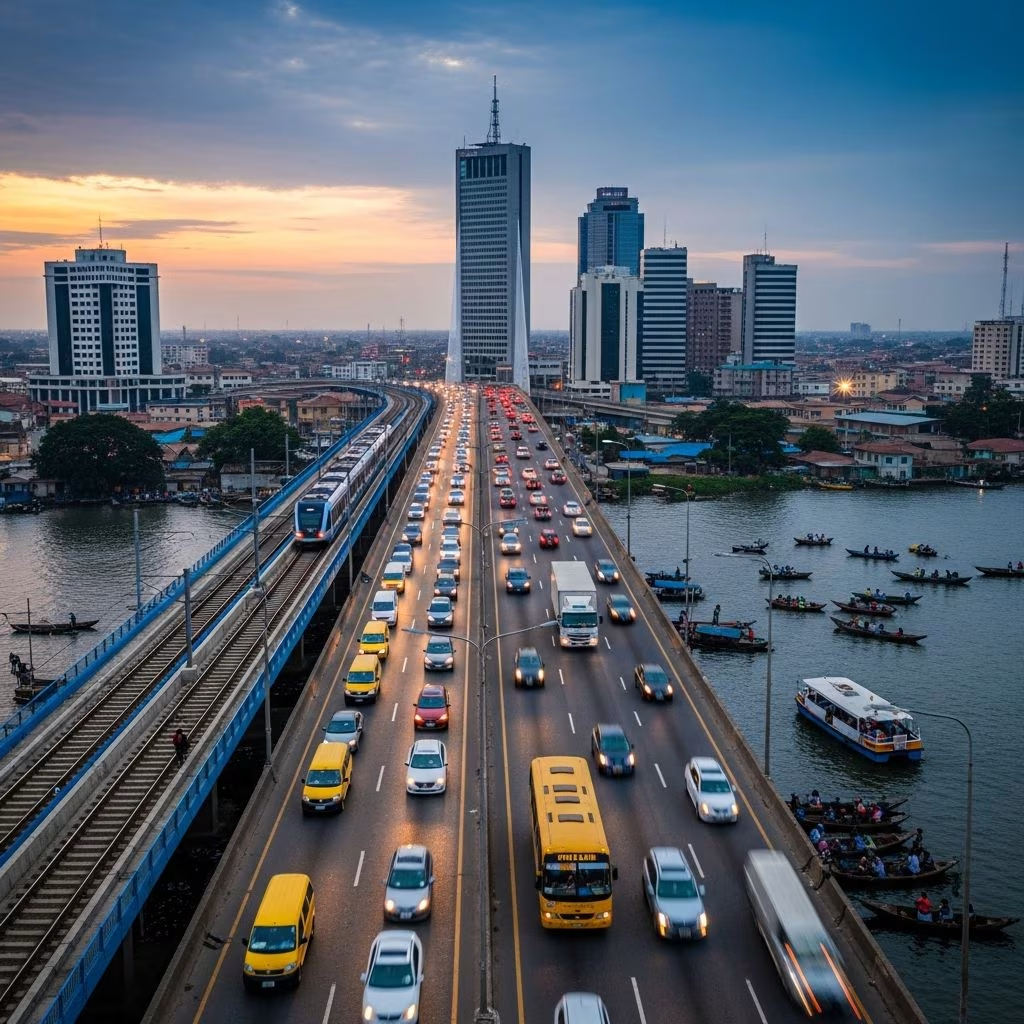
Lagos, Nigeria’s economic powerhouse and one of Africa’s fastest-growing megacities with over 22 million residents, demands smart navigation strategies for its sprawling infrastructure and intense traffic. This guide details public transit innovations like rail and bus rapid transit (BRT), alongside traditional options such as ferries, taxis, and walking paths, empowering travelers to move efficiently.
The Lagos Rail Mass Transit (LRMT), overseen by the Lagos Metropolitan Area Transport Authority (LAMATA), marks a pivotal shift from road dependency to reliable rail services. Launched in recent years, these lines alleviate congestion on key corridors.
Future expansions include Green and Purple lines, aiming for a seven-line network to serve the expanding urban area. Fares are affordable, with ticketing via smart cards, and operations emphasize high capacity for peak-hour crowds.
The BRT system, Africa’s first in Sub-Saharan Africa outside South Africa, revolutionized Lagos transport since its 2008 debut with World Bank support. Operating on dedicated lanes, it connects mainland to Lagos Island over 22 km, serving over 200,000 passengers daily with 220 buses running 16 hours.
| Route Highlights | Daily Capacity | Impact |
|---|---|---|
| Mainland to Island (22 km) | 200,000+ passengers | 25-min time savings; fares dropped from 230 to 100 Naira |
| Peak Hour | 10,000 per direction | 25% of corridor trips with 4% vehicles |
Operated under LAMATA, BRT displaced chaotic minibuses (danfos), creating 2,000 direct jobs and 10,000 indirect ones. It now integrates with rail for multimodal travel.
Lagos’s natural lagoons and waterways support ferries as a scenic, traffic-free alternative, managed by agencies like NIWA alongside state efforts. Key jetties at CMS, Falomo, and Apapa handle routes to Ikoyi, Victoria Island, and Lekki.
Recent rehabilitations improve safety and capacity, with plans for more jetties to boost water transport’s role in the 90% road-dominated network.
Roads carry 90% of passengers and goods, featuring yellow taxis, danfos (minibuses), and app-based services like Uber, Bolt, and Gokada.
Tips for Road Users:
Lagos State Traffic Management Authority (LASTMA) enforces rules, reducing travel times on major corridors. Park-and-ride facilities support BRT integration.
Murtala Muhammed International Airport handles domestic and global flights, with terminals for Arik Air, Air Peace, and international carriers. Taxis and BRT connect to the city center (30-60 minutes, 2,000-5,000 Naira). Domestic airports like MMA2 streamline intra-Nigeria travel.
Traffic peaks strain all modes; use Google Maps or LAMATA apps for real-time updates. Cowry Cards unify payments across BRT, rail, and ferries.
| Mode | Cost (Naira) | Speed | Best For |
|---|---|---|---|
| Rail (Blue/Red) | 500-1,000 | High (35 min end-to-end) | Long corridors |
| BRT | 100-500 | Medium | Mainland-Island |
| Ferry | 500-1,500 | Fast across water | Island hops |
| Ride-Hail | 1,000-5,000 | Variable | Door-to-door |
Petty crime risks persist; travel in groups, avoid night solos, and use registered services. BRT and rail cut emissions, with e-bus pilots eyed for greener futures. LAMATA’s reforms address fragmentation, promoting regulated, efficient systems.
Rail: 6 AM-10 PM; BRT: 16-hour daily operations, typically 5 AM-9 PM.
Available at stations, kiosks; load via app or cash for seamless multi-modal use.
State-regulated ones are reliable; check life jackets and weather.
LAMATA app, Google Maps, or Bolt/Uber for updates and bookings.
Green/Purple rail lines, BRT expansions, and inland waterway upgrades.
