

 Travel Essentials
 Travel Essentials

Comprehensive guide to navigating Norway's efficient public transport system including trains, buses, ferries, and regional travel options for visitors and residents.
 Travel Essentials
Norway presents travelers with a sophisticated and well-integrated transportation infrastructure that spans the country from its southern cities to the Arctic north. Whether you’re navigating urban centers like Oslo and Bergen or venturing into remote mountain valleys and coastal regions, understanding your transport options is essential for making the most of your Norwegian adventure. The nation’s commitment to connectivity, sustainability, and passenger comfort has created a system that rivals the best in Europe.
Norway’s transportation network operates as a unified system combining multiple transport modes managed by various state-owned, municipal, and private operators. This multi-layered approach ensures comprehensive coverage across all regions, from densely populated metropolitan areas to sparsely populated territories in the north. The system’s strength lies not in its individual components but in how seamlessly they connect, allowing travelers to move between different transport modes using integrated ticketing systems and coordinated schedules.
The backbone of Norway’s transport infrastructure relies on government-owned and private companies working in tandem. Vy, Norway’s primary state-owned railway operator, manages extensive rail networks alongside express bus services. Private operators like Nor-Way Bussekspress supplement these offerings, particularly on long-distance routes and specialized services. This combination creates redundancy in the system while maintaining competitive pricing and service quality.
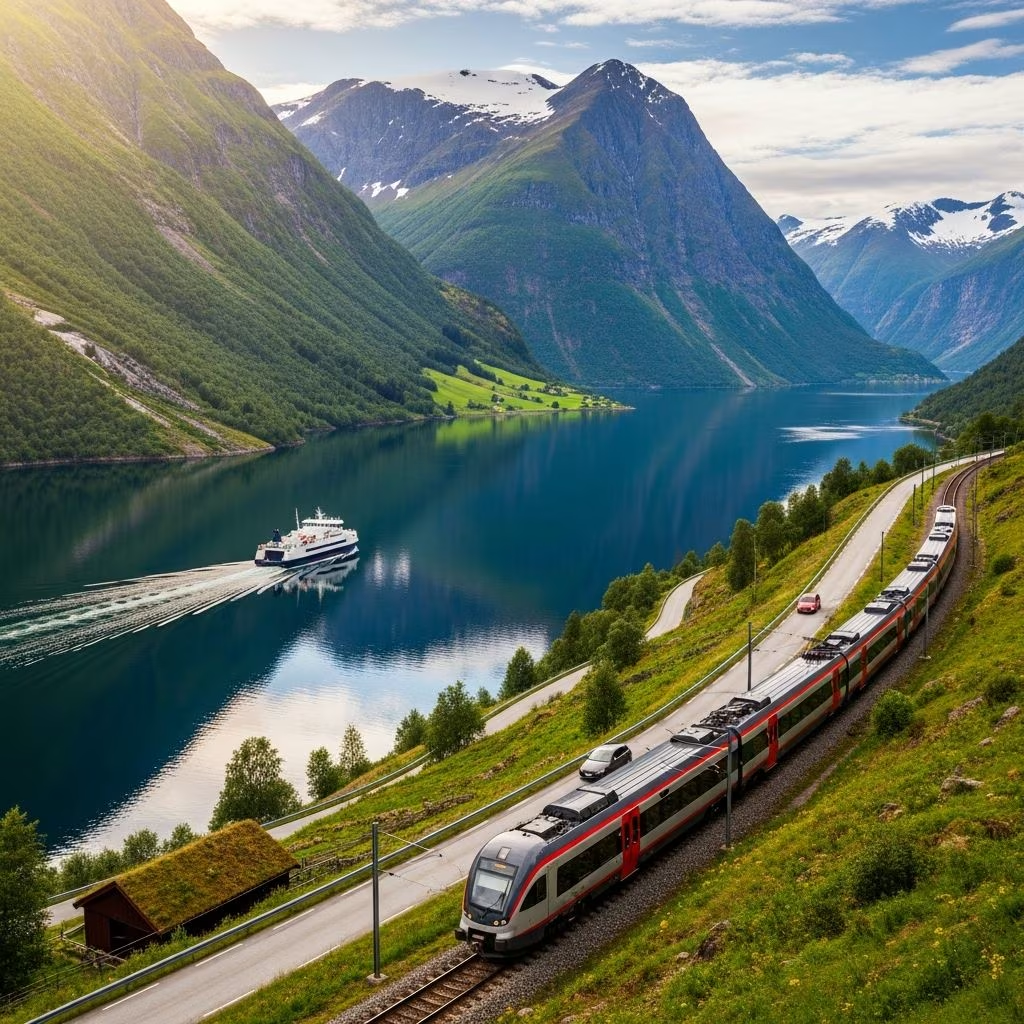
Norway’s railway system represents one of the world’s most spectacular train networks, offering journeys through dramatic mountain landscapes, alongside fjords, and through dense forests. The rail infrastructure connects major population centers including Oslo, Bergen, Trondheim, and Bodø, with branch lines extending to smaller communities. Trains consistently rank among travelers’ most memorable experiences in Norway, combining practical transportation with unparalleled natural scenery.
The railway system operates on clearly defined routes. The primary north-south corridor runs from Oslo to Stavanger in the southwest, while western connections link Oslo to Bergen through stunning mountain passes. Northern routes extend from Oslo through Trondheim and continue to Bodø, providing access to Arctic regions. Most services operate year-round, though winter schedules may see reduced frequencies in northern areas.
Norwegian trains fall into two primary categories: Lokaltog (local trains) and Regiontog (regional trains). Local trains typically serve shorter distances with frequent stops, making them ideal for intermediate travel and regional exploration. Regional trains provide faster service between major cities with fewer stops, covering greater distances in less time.
Both train types feature standard class seating, but select regional services offer upgraded Komfort carriages. These enhanced sections provide additional legroom, electrical outlets for device charging, and a more spacious layout. Passengers selecting Komfort accommodations pay a modest supplement beyond their base fare. Additionally, certain longer routes feature sleeper train accommodations, offering a unique alternative to flights or day travel. Sleeper compartments, while compact, provide comfortable overnight rest with panoramic windows framing the passing landscape.
Where railways end, buses continue, creating a comprehensive land-based transportation network reaching nearly every inhabited area in Norway. The bus system encompasses both long-distance services connecting major cities and local buses serving regional communities. This extensive network makes buses indispensable for travelers exploring areas beyond main rail corridors, particularly in rural districts and mountain regions.
Long-distance bus operators maintain regular schedules between primary cities including Oslo, Bergen, Stavanger, Haugesund, and Trondheim, with connections to popular fjord and mountain destinations. These services utilize modern, comfortable coaches with amenities comparable to train travel. Journey times may exceed rail alternatives due to road-based routing, but fares typically cost significantly less than equivalent train tickets, making buses an economical choice for budget-conscious travelers.
Bus service frequencies fluctuate seasonally, with peak operations during summer months (June through August) when tourism reaches its height. Outside this window, services reduce substantially, particularly in mountainous regions and remote areas where winter conditions restrict accessibility. Weekend services operate with notably fewer departures than weekday schedules year-round, requiring advance planning for weekend travel in less populated areas.
Travelers should book seats in advance during peak season to guarantee availability, especially on popular routes. However, the system’s flexibility allows passengers to board without advance reservations on many services, paying fares directly to operators. This casual booking option provides spontaneity for flexible itineraries while advance bookings offer security during high-demand periods.
As a nation defined by water, Norway integrates maritime transportation into its transport fabric as an essential rather than optional service. Ferries operate across multiple contexts: connecting car and foot passengers across fjords, providing essential links to island communities, and serving as scenic tourism experiences. These services range from brief five-minute crossings to multi-hour coastal journeys offering spectacular coastal perspectives.
Ferry economics operate on straightforward principles. Vehicle ferries carrying cars, motorcycles, bicycles, and foot passengers charge based on transportation category. Foot passengers typically pay the lowest fares, while vehicles incur charges scaled to size and weight. Payment occurs directly with ferry attendants on board, eliminating advance booking requirements for most services. During summer months, some popular routes experience significant queuing, particularly for vehicle-carrying ferries on peak weekends.
The Hurtigruten represents Norway’s iconic maritime experience, a historic coastal ferry service connecting 34 ports from Bergen in the southwest to Kirkenes in the Arctic north. Originally established as a mail and supply service, Hurtigruten now primarily operates as a premium cruise offering with individual passage options. Travelers interested in this route should explore “port to port” ticketing options, allowing single-leg journeys rather than complete itineraries.
Hurtigruten service frequency and port accessibility vary seasonally. Summer months feature expanded schedules with all ports operational, while winter services eliminate certain stops where passengers cannot efficiently board. Popular fjord ports like Geiranger become entirely inaccessible during low seasons, limiting coastal exploration during winter months for travelers relying on Hurtigruten connections.
Norwegian cities maintain sophisticated local transport networks managed by municipal authorities rather than national operators. Each major city operates independently designed systems tailored to local geography and population distribution. Understanding these municipal systems is crucial for efficient city exploration.
Oslo’s Ruter system coordinates all metropolitan transport including T-bane (metro), buses, trams, and local ferries. The system divides the city into zones, with most tourist attractions concentrated in zones 1 and 2. Single tickets in these central zones cost approximately 69 Norwegian kroner, while 24-hour passes cost 209 kroner and weekly passes cost 615 kroner. Tickets purchased through the Ruter app frequently offer discounts compared to kiosk purchases, incentivizing digital adoption.
Ruter’s integrated ticketing means passengers can transfer between metros, trams, buses, and ferries using single tickets valid for designated time periods. This seamless integration eliminates the need for multiple ticket purchases when combining transport modes. The system’s user-friendly app provides real-time schedule information, journey planning tools, and mobile ticket purchasing.
Bergen operates through the Skyss system, while Trondheim uses AtB. Each system provides integrated ticketing across local transport modes, though pricing structures and service areas differ from Oslo’s model. Stavanger and other major cities maintain their own municipal systems with comparable features. Visitors should download relevant city apps before arrival to access schedules and purchase tickets efficiently.
Norway’s transport complexity could overwhelm travelers, but centralized booking platforms simplify journey planning. EnTur represents the primary national resource, aggregating routes across all transport modes into a unified planning interface. Available both as a website and mobile application, EnTur searches all available options—trains, buses, ferries, and local transit—providing comprehensive journey suggestions with estimated travel times and connection information.
While EnTur facilitates route planning and often displays ticket pricing, actual ticket purchases frequently require visiting individual operator websites or apps. This system design, though requiring multiple steps, ensures competitive pricing and allows operators to offer service-specific promotions and discounts unavailable through centralized booking platforms.
| Journey Type | Recommended Transport | Key Advantages | Considerations |
|---|---|---|---|
| Long-distance urban connections (Oslo-Bergen) | Train or express bus | Scenic views, comfortable seating, reasonable pricing | Book advance for best rates; trains slightly more expensive |
| Rural exploration | Bus or personal vehicle | Access to remote areas, flexible scheduling | Fewer services outside peak season; buses cheaper than rentals |
| Fjord navigation | Ferry services | Essential connectivity, scenic experience, affordable | Plan for queuing in summer; some ports close in winter |
| Urban sightseeing | Local public transit | Affordable, comprehensive coverage, easy navigation | Requires understanding of local zone systems |
Savvy travelers can significantly reduce transportation expenses through strategic booking approaches. Purchasing tickets online or through mobile applications typically provides discounts compared to station or onboard purchases. Planning journeys during off-peak seasons (September through May) reduces prices substantially compared to peak summer rates. Booking longer journeys further in advance—ideally several weeks—secures better pricing than last-minute reservations.
Multi-journey passes occasionally offer value for intensive travel periods. Oslo’s seven-day pass, for instance, costs 615 kroner compared to individual tickets totaling considerably more for equivalent trips. However, pass value depends on travel intensity; occasional users benefit more from single tickets than unlimited passes.
Norway’s climate dramatically impacts transportation scheduling and availability. Winter months see reduced services in northern regions and mountainous areas where snow creates operational challenges. Ferry routes to Arctic regions may face occasional disruptions. Conversely, summer brings expanded schedules, additional services, and reliable operation of all routes year-round.
Travelers planning winter visits should expect reduced flexibility and should book transportation well in advance. Summer visitors benefit from maximum service availability but should anticipate crowding on popular routes and may need advance reservations to guarantee seats.
EnTur serves as Norway’s primary unified planning resource, aggregating all transport modes into searchable routes. However, individual operators’ apps (Vy for trains, Ruter for Oslo transit) often provide more detailed information and pricing options for specific services.
Within cities, integrated ticketing allows transfers between buses, trams, ferries, and metro systems using single tickets valid for specified time periods. Between cities, separate tickets typically apply to different operators, though journey planners often identify connected options.
Sleeper trains provide comfortable overnight accommodation while traveling, eliminating hotel expenses and maximizing sightseeing time. They represent viable alternatives to flights on longer routes, offering superior comfort for many travelers despite premium pricing.
Booking 3-4 weeks in advance typically secures favorable pricing and seat availability during summer months. Last-minute bookings carry risks of unavailability or significantly elevated fares, particularly on popular routes.
Frequency reductions and selective route closures occur in northern and mountainous regions during winter. Major routes remain operational but with reduced schedules. Coastal regions and southern areas maintain relatively consistent year-round service.
