

 Travel Essentials
 Travel Essentials

Comprehensive guide to transportation in the Faroe Islands: public buses, ferries, car rentals, tunnels, and tips for seamless island hopping amid dramatic landscapes.
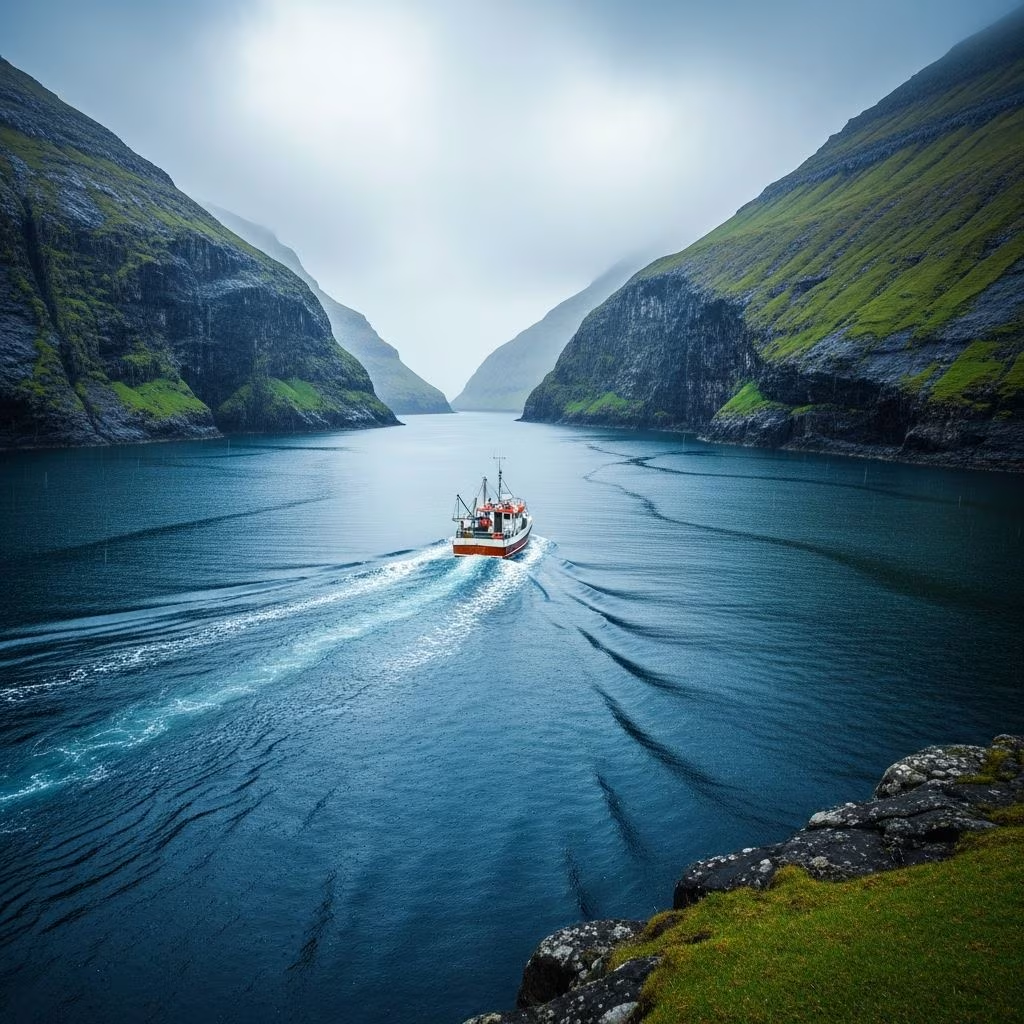 Travel Essentials
The Faroe Islands, an archipelago of 18 rugged isles in the North Atlantic, offer breathtaking landscapes but unique travel challenges due to their dispersed geography and unpredictable weather. Well-developed transport links make exploration accessible, from reliable public buses and ferries to innovative subsea tunnels and rental options. This guide details every mode of transport, helping you choose the best way to traverse these dramatic islands.
Public buses, known as Bygdaleiðir or village routes, form the backbone of inter-island travel, operated by Strandfaraskip Landsins with their iconic blue fleet. Large buses link Vágar Airport, Tórshavn (the capital), and major towns, while smaller vehicles serve remote villages. Schedules are generally punctual, though weather can cause delays.
Tickets are affordable, with single fares starting low, but multi-day cards offer the best value. A four-day pass for around DKK 500 covers unlimited bus and ferry travel (excluding Mykines), ideal for budget travelers. Buses accommodate bicycles, promoting eco-friendly combos of riding and pedaling.
In Tórshavn, free city buses circle the capital, making sightseeing effortless without extra costs.
Ferries connect islands where roads end, with Smyril Line offering key routes like the two-hour trip from Tórshavn to southern villages such as Vágur. From Vágur, hike to Fámjin to see the first Faroese flag or visit the SALT culture house before returning.
Summer ferries link Vágar to Mykines, famous for puffins; book via mykines.fo. These services allow scenic coastal views impossible by road.
| Route | Duration | Frequency | Highlights |
|---|---|---|---|
| Tórshavn to Vágur (Smyril) | 2 hours | Daily | Cliffs, hikes to Fámjin |
| Vágar to Mykines | ~1 hour | Summer daily | Puffin colony, birdwatching |
Ferries integrate seamlessly with buses, e.g., Bus 700 from Vágur terminal.
The Faroe Islands boast the world’s first undersea roundabout in the E39 tunnel network, replacing some ferries with paved, lighted subsea roads. These connect Streymoy, Vágar, and Borðoy, featuring artistic light installations for a surreal drive.
Tunnels are toll-based (payable via license plate recognition or app), safe for all vehicles, and open 24/7 with speed limits. Watch for sheep on approaches—sheep outnumber people and roam freely.
Renting a car provides flexibility for hikes and off-peak travel. Agencies at Vágar Airport offer pick-up/drop-off; book online or via agents. Expect narrow, winding roads—some gravel—with wind, rain, and sheep hazards. Kilometer limits and fees apply; compare policies.
Campervans suit multi-day adventures, with campsites across islands. Motorcycles are viable for experienced riders on paved roads.
| Vehicle Type | Pros | Cons | Best For |
|---|---|---|---|
| Compact Car | Affordable, easy parking | Wind-sensitive | Solo/couples |
| 4×4/SUV | Handles weather, gravel | Higher cost | Families, remote areas |
| Campervan | All-in-one lodging/transport | Fuel-thirsty | Campers |
Subsidized helicopters serve locals but are available for tourists on select routes, offering bird’s-eye views. Primarily for medical/residential, check availability for Vágar to other islands.
Taxis provide 24/7 airport transfers and guided tours; auto-taxi services cater to attractions. For groups, charter buses offer private itineraries with narration.
Combine public transit with guided tours for expert insights. Operators run small-group or private buses to highlights, including hidden trails. Pair with multi-day cards for hybrid trips.
Paved roads suit cyclists, with low traffic outside Tórshavn. Buses carry bikes for hybrid tours. Hiking trails link villages; e.g., Gásadalur approach via Bus 350 then foot.
Weather gear essential; apps track routes.
Yes, for 4-5 days, buses/ferries cover key sites; rent a car for hikes.
Experienced drivers manage; chains advised in winter. Tunnels are sheltered.
Via mykines.fo; summer only.
Multi-day bus/ferry card.
Most allow; confirm space.
With these options, the Faroe Islands’ isolation enhances adventure. Plan via official sites for current details.
