

 Travel Essentials
 Travel Essentials

Comprehensive guide to Turin's efficient transport options: metro, buses, trams, airport links, tickets, and tips for visitors and residents.
 Travel Essentials
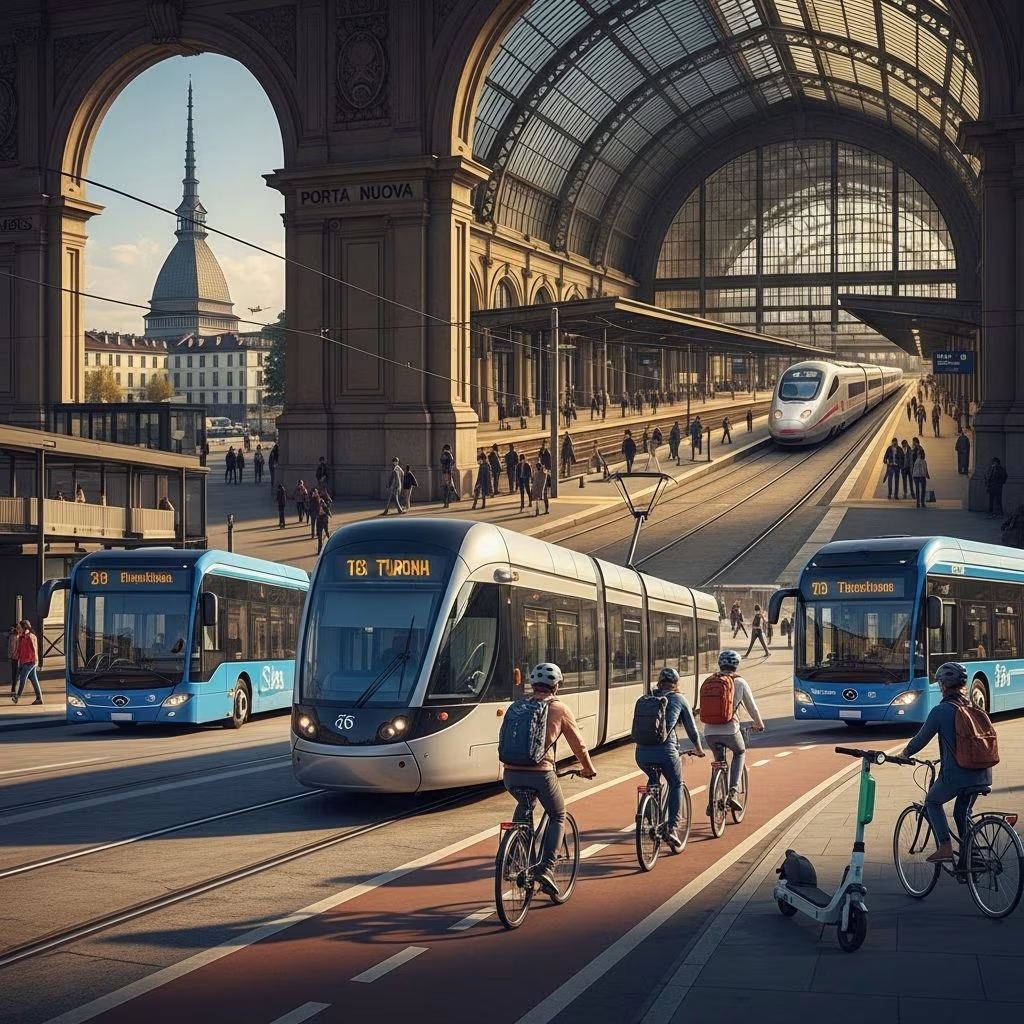
Turin, the elegant capital of Piedmont, offers a well-integrated public transportation system managed primarily by Gruppo Torinese Trasporti (GTT), making it easy to explore without relying on a personal vehicle. With a single efficient metro line, extensive bus and tram networks, and reliable airport connections, visitors and locals alike can move efficiently across this historic city.
Turin’s transport infrastructure centers on GTT’s operations, which include one metro line spanning 13.2 kilometers, nine tram lines, and over 80 bus routes connecting the city center to suburbs and key landmarks. Services generally operate from early morning until midnight, with extended night options on weekends, ensuring accessibility for most travel needs. The system’s design prioritizes connectivity to major hubs like Porta Nuova and Porta Susa train stations, facilitating seamless journeys for tourists heading to attractions or commuters traveling to universities and offices.
This network not only covers the urban core but also extends to peripheral areas, allowing residents in neighborhoods like Collegno or Lingotto to commute without heavy traffic delays. Walking remains ideal for the compact historic center, where pedestrian-friendly streets lead to sites like Piazza Castello and the Mole Antonelliana.
Turin’s metropolitana, Italy’s first fully driverless system, provides the quickest point-to-point travel along its north-south route from Collegno in the west to Lingotto Expo and Piazza Bengasi in the south. Using innovative VAL technology, trains reach speeds up to 80 km/h, cutting what might be an hour-long bus trip to just 20 minutes.
Key stops include major rail stations Porta Nuova and Porta Susa, commercial districts, and university areas, making it invaluable for quick transfers. Stations are marked by prominent red ‘M’ signs, and tickets are purchased from vending machines before validation at entry gates.
| Day | Operating Hours |
|---|---|
| Monday | 5:30 AM – 10:00 PM |
| Tuesday-Thursday | 5:30 AM – 12:30 AM |
| Friday | 5:30 AM – 1:30 AM |
| Saturday | 7:00 AM – 1:00 AM |
| Sunday | 7:00 AM – 10:00 PM |
Note: Schedules may vary slightly; check GTT apps for real-time updates.
Buses and trams form the backbone for reaching outlying neighborhoods and sites beyond the metro’s reach, crisscrossing Turin from 5:00 AM to midnight daily. With over 80 bus lines and nine trams, many passing through central stations, these options connect suburbs efficiently. Night Buster services extend operations until 5:00 AM on Fridays and Saturdays, serving nightlife hotspots hourly.
Main bus stations like Corso Vittorio Emanuele II accommodate intercity operators such as FlixBus and MarinoBus, with nearby cafes and ticket offices. These hubs link directly to local transit, easing onward travel.
GTT offers straightforward ticketing for all modes, purchasable via machines, apps, or authorized vendors like station cafes.
For multi-day stays, consider bundled passes that include airport transfers. Always validate upon boarding to comply with regulations.
Turin Airport (TRN) links to the city center via dedicated shuttles. The SADEM bus, operated by GTT, stops at Porta Nuova, Porta Susa, and other points, taking 45-50 minutes for €6.50 one-way (€5.00 with Torino+Piemonte Card).
Alternatives include Terravision coaches serving Lingotto Station and central spots like Corso Casale, plus GTT services from Dora Station (19 minutes, €3). All integrate with local transit for full-city access upon arrival.
Turin’s flat terrain and bike lanes make cycling a joy, especially near the Po River and historic quarters. GTT’s bike-sharing [implied integration] and city paths encourage this sustainable choice, ideal for short distances where public options overlap.
Pedestrians dominate the center, where car-free zones amplify the charm of baroque piazzas and royal palaces. Avoid driving due to scarce parking and ZTL (limited traffic zones) restrictions.
For door-to-door needs, official taxis wait at stations and airports; app-based rideshares like Uber operate selectively. Intercity buses from Corso Vittorio Emanuele II or Corso Bolzano connect to Milan, Genoa, and beyond, with FlixBus offering budget routes.
To reach Juventus’ Allianz Stadium, combine metro to Bernini with tram 9 on match days.
Download the GTT app for live tracking, route planning, and mobile tickets. Peak hours (7-9 AM, 5-7 PM) bring crowds, so plan accordingly. English signage aids tourists, but basic Italian phrases help.
Take the SADEM bus (€6.50, 45-50 min) to Porta Nuova or Porta Susa.
No, but Night Buster buses cover late nights on weekends.
Vending machines, apps, station kiosks, or tobacconists.
Yes, with dedicated lanes and sharing programs.
Walk or use trams/buses; metro for longer north-south trips.
Combine modes for efficiency: metro for speed, trams for sights, bikes for leisure. This approach unlocks Turin’s automotive heritage, chocolate museums, and Egyptian collections without hassle, embodying the city’s blend of innovation and tradition.
