

 Travel Essentials
 Travel Essentials

A comprehensive guide to experiencing the grandeur of the Gilded Age through Newport's iconic mansions, New York's historic districts, and immersive cultural experiences.
 Travel Essentials
The Gilded Age represents one of the most transformative periods in American history, a time when industrial fortunes reshaped the nation’s landscape and created a class of ultra-wealthy individuals determined to display their status through architectural marvels and lavish entertainments. From the grand avenues of New York City to the coastal cliffs of Rhode Island, this era left an indelible mark on the American built environment. Today, visitors can step back in time and experience the grandeur that defined this remarkable period through carefully preserved mansions, guided tours, and cultural institutions dedicated to preserving this fascinating history.
The Gilded Age, spanning the latter decades of the nineteenth century and the early years of the twentieth century, emerged as a period of extraordinary economic expansion and social transformation. The Newport Mansions organization notes that this era witnessed unprecedented change in America, with fortunes being spent on luxuries including elaborate summer estates. The rapid industrialization of the American economy created a new class of millionaires and industrialists who sought to establish their social prominence through conspicuous consumption and architectural grandeur.
The wealthy elite of this period drew inspiration from European aristocratic traditions, attempting to recreate the opulence and refinement associated with Old World nobility. They competed fiercely with one another to construct increasingly magnificent estates, sponsor elaborate social events, and acquire rare art collections and furnishings. This competitive spirit of display fundamentally transformed urban centers and coastal communities, most notably Newport, Rhode Island, which became the undisputed capital of Gilded Age leisure and social performance.
Newport’s transformation into a premier destination for wealthy Americans began in earnest during the mid-nineteenth century and accelerated dramatically as the century progressed. Originally settled by five Indigenous groups and founded in 1639 by English settlers, Newport became one of colonial America’s five most important seaports, with trade in rum, candles, fish, silver, furniture, and enslaved people establishing the city’s early prosperity. However, its transformation into a Gilded Age resort represented an entirely new chapter in the city’s history.
The spectacular estates constructed along Newport’s oceanfront and prominent avenues were marketed as “summer cottages,” a term that dramatically understated their grandeur and expense. These properties became venues for lavish pageantry, where new millionaires competed to outshine one another through balls, banquets, carriage parades, concerts, sporting events, and other elaborate entertainments. The architectural ambitions displayed in these structures reflected their owners’ obsession with social status and their determination to rival the aesthetic achievements of European aristocracy.
Several mansion properties stand out for their architectural significance, historical importance, and cultural prominence. These estates represent different architectural styles and showcase the varied approaches wealthy families employed to establish their identity and aesthetic vision.
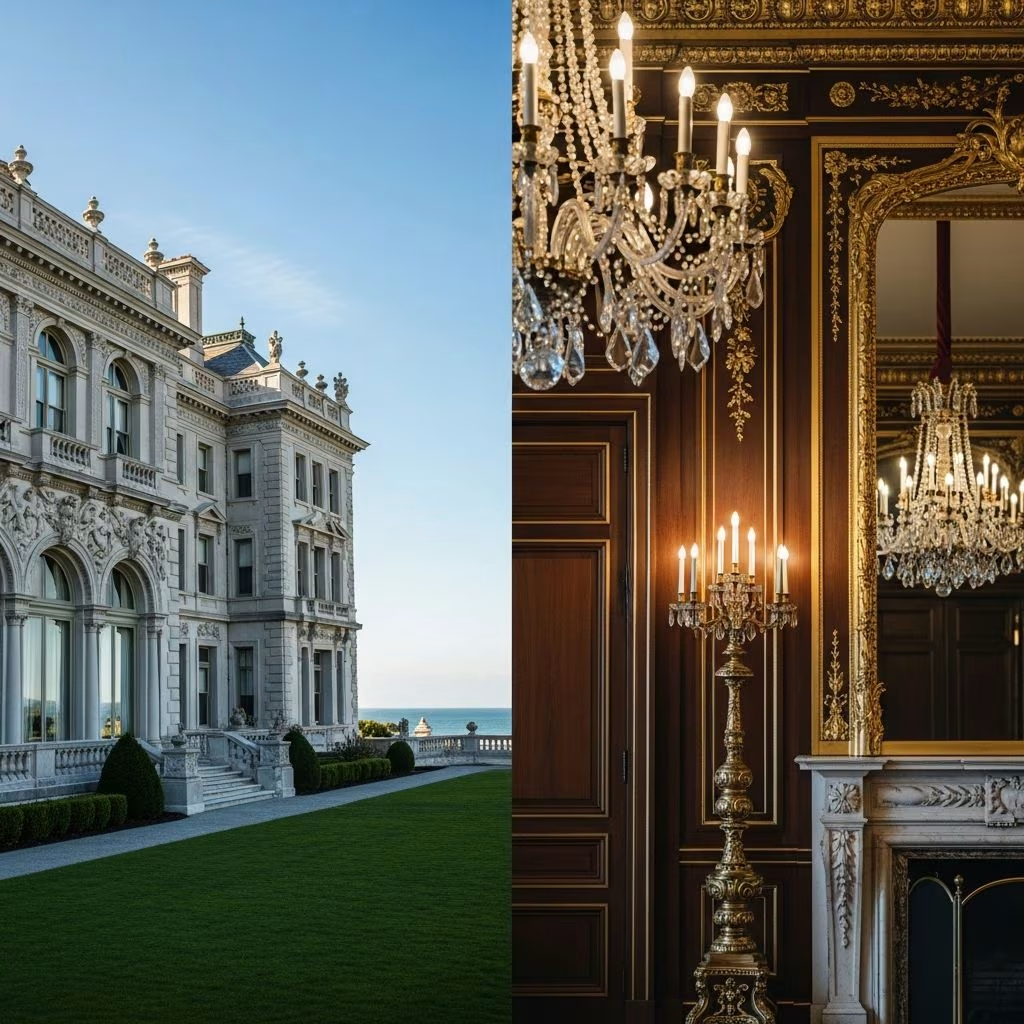
The Breakers, once inhabited by the Vanderbilt family, features ornate architecture and expansive grounds that transport visitors into another era. This palazzo-style mansion represents the pinnacle of Gilded Age architectural achievement and remains one of Newport’s most visited attractions. The residence showcases the wealth and cultural aspirations of its original owners through its elaborate decorative schemes and architectural details.
Built between 1888 and 1892 for Alva and William Vanderbilt by architect Richard Morris Hunt and inspired by the Versailles Petit Trianon, Marble House set the pace for Newport’s transformation into an opulent resort of stone palaces. This early example of the Beaux-Arts style cost $11 million to construct and was given to Alva as a gift from her husband on her 39th birthday. A distinctive highlight of the property is the Chinese Tea House, inspired by twelfth-century Sung dynasty temples, reflecting the eclectic aesthetic interests of the Gilded Age elite.
The Elms, modeled after an eighteenth-century French chateau, and Rough Point, notably owned by Doris Duke and featuring one of the most interesting histories of Newport’s mansions, represent diverse architectural approaches and ownership narratives. Rough Point was built by Peabody and Stern in 1892 in the English Manorial style for Frederick William Vanderbilt, constructed from red sandstone and granite, making it distinctly different from most Gilded Age mansions in Newport.
One of Newport’s most significant natural and historical features is the Cliff Walk, a dramatic coastal pathway that has become synonymous with the Gilded Age experience. This walk is an ode to a bygone era of opulence, with one side lined with dozens of magnificent private homes and historic mansions. One side of the walk offers breathtaking ocean views while the other showcases beautifully preserved estate grounds.
What makes the Cliff Walk unique is that it is the only National Recreation Trail out of 1,300 designated trails that is also situated in a National Historic District. A path along this section of coastline had been traversed for centuries by the Narragansett Native Americans and then by early European settlers. Designated as New England’s first National Recreation Trail in 1975, the Cliff Walk spans 3.5 miles. The best views and sunset photos in the city belong to the Cliff Walk, a natural path above the sea with multiple entrance points that nineteenth-century vacationers used for fresh-air rambles.
During the Gilded Age, Forty Steps became a popular attraction and social gathering place for the hired help of the grand estates. Stories of nineteenth-century workers, many of them Irish, dancing jigs to accordion music are a part of Newport’s local history. The Forty Steps, located at the end of Narragansett Avenue a half mile north of the Breakers, was a popular meeting spot for Gilded Age domestics, especially Irish servants, who gathered there to celebrate St. Patrick’s Day. The community’s descendants still honor the tradition today.
Modern visitors have multiple opportunities to engage with Gilded Age history through specialized tours and cultural institutions. These experiences range from guided mansion tours to walking expeditions that explore the historical and architectural significance of the era.
The Servant Life Tour highlights the stories of men and women who worked to service the social whirl of Newport during the Gilded Age, showing visitors how the other half lived during this era of privilege. These tours provide essential historical context by centering the experiences and labor of working-class individuals whose efforts sustained the elaborate social performances of the wealthy elite.
The Newport Historic Society offers a variety of walking tours, including those focused on Gilded Age and African American history. Walking tours immerse visitors in Newport’s remarkable history spanning the Revolutionary War through the Gilded Age of the nineteenth century, allowing them to see many landmarks, including the Colony House.
During the late-nineteenth-century period depicted in contemporary media about the Gilded Age, New York City and Newport alike were grand, blank canvases upon which the wealthy were able to erect massive and splendiferous testaments to their liquidity. While Newport served as the seasonal retreat for America’s elite, New York City functioned as the year-round hub of economic power and social importance.
The connection between New York and Newport remained integral to Gilded Age society. Wealthy families maintained substantial residences in Manhattan for conducting business and participating in the social season while reserving their Newport estates for summer entertainment and leisure. This dual residency pattern allowed the elite to maintain their influence in financial and political circles while simultaneously cultivating their image as patrons of leisure and culture.
Newport’s climate and cultural calendar should influence travel planning. Summer months offer the most comfortable weather for outdoor exploration and activities, while spring and fall provide moderate temperatures and potentially fewer crowds. Many cultural institutions and specialized tours operate year-round, though some seasonal variations in scheduling may occur.
Summer and early fall offer pleasant weather and full availability of tours and attractions. However, spring and late fall provide more moderate crowds and still-pleasant conditions for exploring.
A minimum of two to three days allows adequate time for mansion tours, the Cliff Walk, and other cultural experiences. Longer visits enable deeper exploration of historical archives and community heritage sites.
Many mansions offer accessibility accommodations, though the historic nature of the structures means some areas may present challenges. Contacting specific properties in advance is advisable.
Yes, most visitors can tour two to three major estates in a day, particularly if using guided tours that manage transportation and timing efficiently.
Most significant fortunes derived from industrial enterprises, particularly railroads, steel manufacturing, and finance. The Vanderbilt wealth, for example, originated in shipping and railroad enterprises.
