

 Travel Essentials
 Travel Essentials

Explore the Giza Pyramids' rich history, architectural marvels, and practical visitor advice. From pharaohs' tombs to modern tourism, uncover timeless secrets.
 Travel Essentials
The Giza Pyramids stand as timeless testaments to ancient Egyptian ingenuity, drawing millions of visitors annually to marvel at their scale and precision. Built during the 4th Dynasty of the Old Kingdom around 2600-2500 BC, these structures served as royal tombs symbolizing pharaohs’ divine power and beliefs in the afterlife.
The Giza complex emerged on the Giza Plateau west of the Nile, a strategic location tied to ancient cosmology where the sun set, aligning with resurrection myths. Construction spanned three generations: Khufu (Cheops), Khafre (Chephren), and Menkaure (Mycerinus), rulers whose legacies defined Egypt’s Old Kingdom prosperity.
Khufu’s Great Pyramid, the largest, was completed circa 2560 BC after about 20-26 years of labor, using roughly 2.3 million limestone and granite blocks totaling 6 million tonnes. These stones, averaging 2 tons each with some up to 80 tons, were quarried locally or transported from Tura and Aswan via the Nile. The pyramid originally reached 481 feet (146.6 meters), holding the title of tallest man-made structure for over 3,800 years.
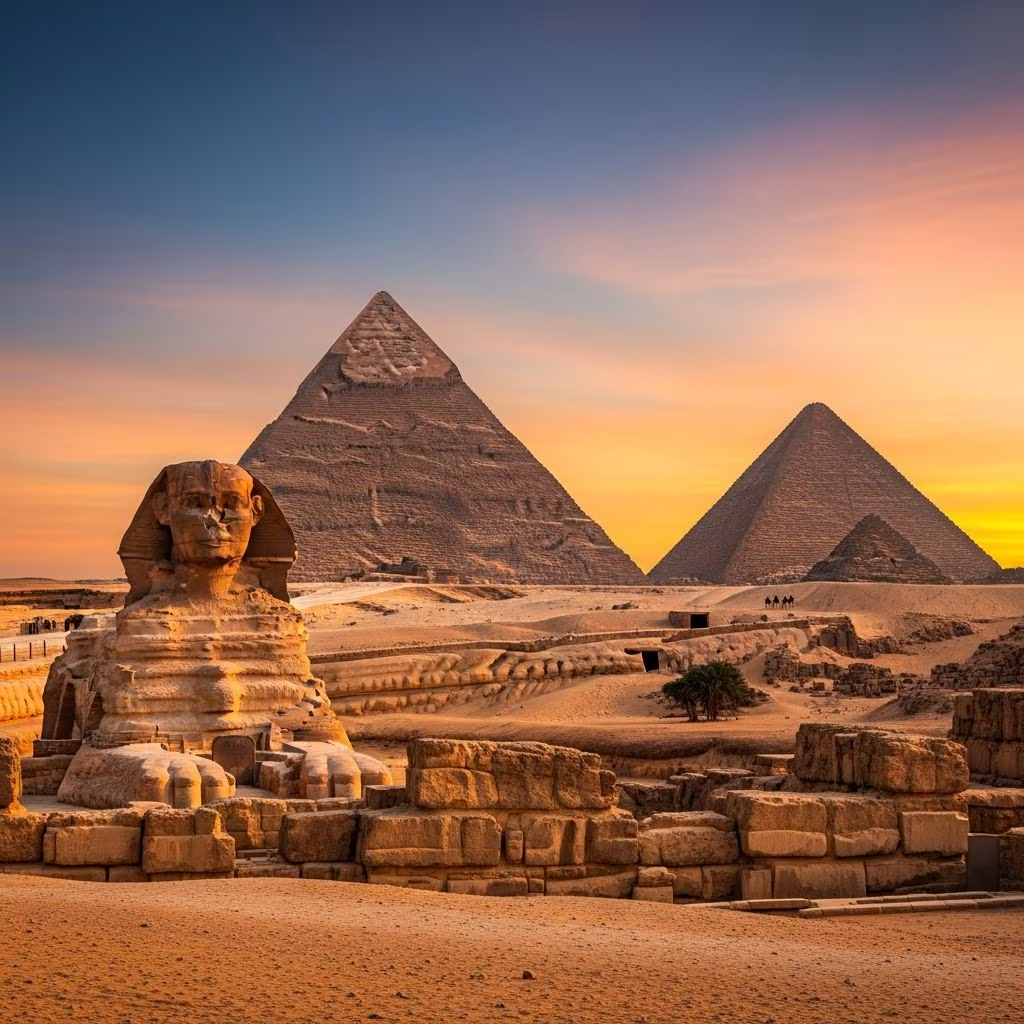
Khafre’s pyramid, slightly smaller at 471 feet, appears taller due to its elevated position and retains some original white limestone casing at the apex. Menkaure’s, the smallest at 215 feet, marks a shift toward different funerary styles while echoing predecessors’ grandeur. Together, they form the Giza Necropolis, part of a royal complex including temples, causeways up to 1 km long, and the Great Sphinx.
Ancient Egyptians’ pyramid-building prowess stemmed from organized labor—skilled workers, not slaves as Herodotus claimed (100,000 in shifts)—supported by a strong economy and Nile logistics. Workers’ villages near Giza housed thousands, with bakeries and breweries evidencing a well-fed workforce.
Techniques evolved from earlier mastabas and Djoser’s Step Pyramid (c. 2780 BC) by Imhotep at Saqqara, stacking layers to true pyramids with precise alignments to cardinal points (error under 0.05 degrees). Internal chambers like the King’s Chamber in Khufu’s pyramid used massive granite beams; passages lack typical inscriptions, featuring only quarry gang graffiti naming Khufu.
| Pyramid | Pharaoh | Height (Original) | Base Side Length | Est. Completion |
|---|---|---|---|---|
| Great Pyramid | Khufu | 481 ft (146.6 m) | 755 ft (230 m) | c. 2560 BC |
| Khafre | Khafre | 471 ft (143.5 m) | 707 ft (215.5 m) | c. 2570 BC |
| Menkaure | Menkaure | 215 ft (65.5 m) | 356 ft (108.5 m) | c. 2510 BC |
This table highlights scale differences, underscoring Khufu’s ambition. Theories on ramp systems—straight, spiraling, or internal—explain block placement up to 481 feet, with levers and wet sand reducing friction.
As the oldest and sole surviving Seven Wonders of the Ancient World, the Great Pyramid captivated early explorers. Herodotus (5th century BC) marveled at its causeway; Caliph al-Ma’mun (832 AD) tunneled inside, revealing passages. Arab conquest in 642 AD and later earthquakes stripped casing stones, now scattered or reused.
Rediscovered in modern times, Napoleon’s 1798 expedition measured it precisely, fueling Egyptology. Today, amid Cairo’s sprawl, it contrasts ancient isolation with urban proximity, protected as a UNESCO site since 1979.
Access Giza via Cairo (30-45 minutes from center) by taxi, Uber, or tours. Tickets (approx. EGP 400-600 for foreigners, 2023 rates) cover the plateau; extras for interiors (Khufu EGP 400, Khafre/Menkaure less). Open 8 AM-5 PM; early arrival beats crowds and heat (best Oct-Apr).
Entry to Khufu’s ascending passage is steep and confined; wear sturdy shoes, modest clothes. Drones prohibited; water/food available but pricey inside.
Beyond pyramids, the Sphinx—carved c. 2500 BC from bedrock, 240 ft long—guards the complex, possibly Khafre’s likeness. Viewpoints like Panorama Point offer epic photos; sunset sound-and-light shows narrate history nightly.
Explore workers’ tombs nearby for daily life insights; the Solar Boat Museum displays Khufu’s disassembled cedar vessel (43m), reassembled without nails. Combine with Saqqara for Step Pyramid context.
Peak season (Oct-Mar) sees crowds; shoulder (Apr/May, Sep) balances weather. Budget: EGP 1000-2000/day incl. entry/transport/food. Respect rules—no climbing, touching; haggle vendors politely.
| Season | Weather | Crowds | Pros |
|---|---|---|---|
| Oct-Apr | Mild 15-25°C | High | Comfortable, full events |
| May-Sep | Hot 30-45°C | Lower | Fewer people, cheaper |
Yes, Khufu, Khafre, and Menkaure offer interior access (limited numbers, extra fees); expect narrow passages and humidity.
3-5 hours for basics; full day with interiors/Sphinx/museum.
Yes, heavily policed; stick to groups, ignore hasslers.
Earthquakes (1303 AD) and stone quarrying for Cairo mosques.
No, evidence shows paid skilled workers.
Modern challenges include urbanization, pollution, and tourism strain. UNESCO efforts and Egypt’s restoration (e.g., casing repro) ensure survival. Visitors contribute by following paths, avoiding litter.
Visiting Giza transcends sightseeing—it’s connecting with humanity’s past, where stone whispers of eternity.
