

 Travel Essentials
 Travel Essentials

Explore Glacier Bay National Park's stunning glaciers, rich marine life including humpback whales, land mammals like moose and bears, and essential tips for an unforgettable Alaskan adventure.
 Travel Essentials
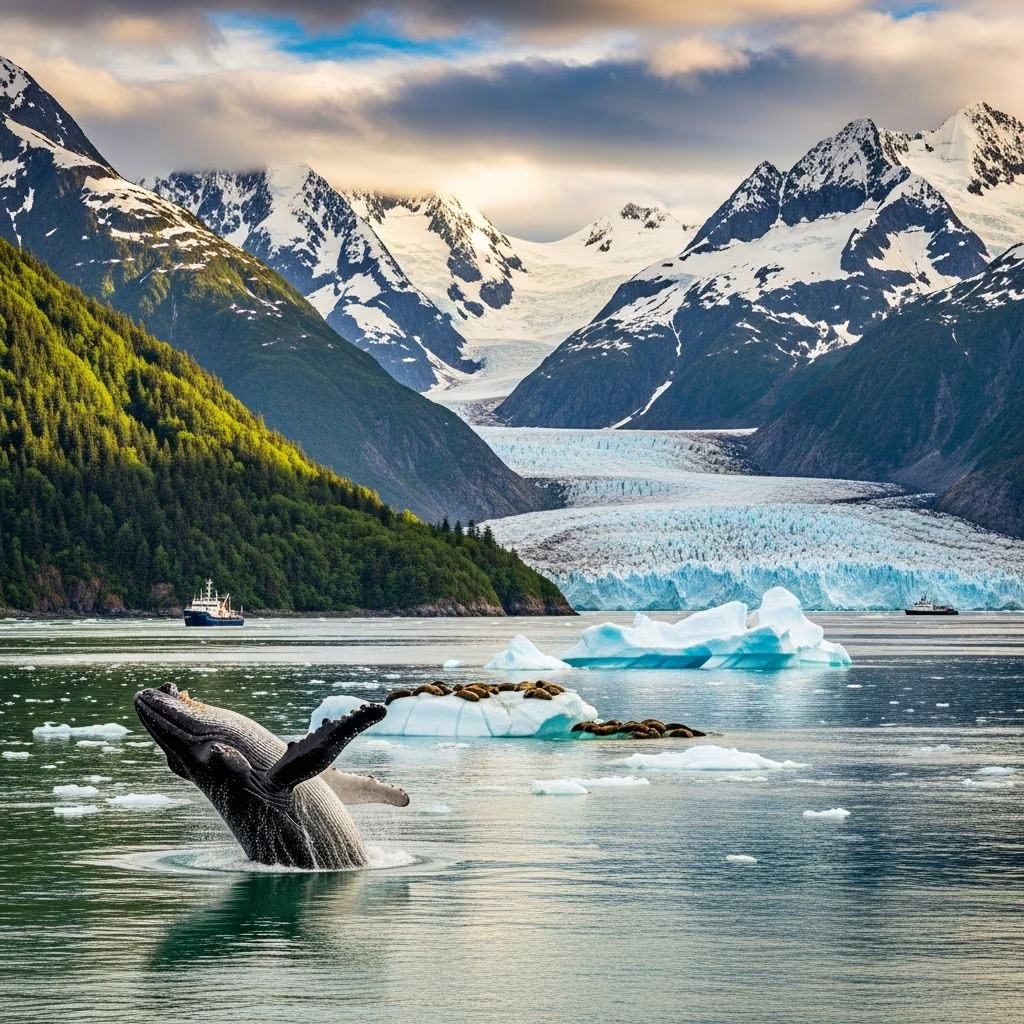
Glacier Bay National Park & Preserve stands as one of Alaska’s most captivating destinations, encompassing 3.3 million acres of untouched wilderness that blends towering glaciers, deep fjords, lush rainforests, and abundant wildlife. Designated as a UNESCO World Heritage Site, biosphere reserve, and national park, this area offers visitors unparalleled opportunities to witness nature’s raw power and diversity, from massive humpback whales breaching in icy waters to moose wandering coastal forests.
At the core of Glacier Bay lies its dramatic glacial landscape, where 16 major glaciers, including tidewater giants like Margerie Glacier, dramatically calve into the sea. These rivers of ice, some advancing and others retreating, create a dynamic environment that has been evolving for millennia. The park’s fjords, carved by glacial activity, provide sheltered bays rich in nutrients, drawing marine life from across the Pacific.
Visitors often describe the thunderous roar of calving icebergs as a symphony of nature, visible from cruise ships or kayaks during summer months. The interplay between land and sea here fosters ecosystems where phytoplankton blooms support massive food chains, sustaining everything from tiny krill to the park’s iconic megafauna.
Glacier Bay serves as a premier sanctuary for humpback whales (Megaptera novaeangliae), which migrate here annually to feast after fasting in warmer waters like Hawaii or Mexico. These gentle giants, now rebounding from historical declines, concentrate in the park’s cold, nutrient-laden bays to gorging on schooling fish such as herring and krill. The National Park Service reports growing whale populations, thanks to stringent protections prohibiting motorized vessels within key zones.
Beyond humpbacks, the waters teem with orcas, harbor porpoises, Steller sea lions, harbor seals, and sea otters. Seabirds like puffins, murrelets, oystercatchers, and bald eagles nest along cliffs, diving for fish amid the glacial runoff. Summer whale-watching tours boast high success rates, with operators like those in nearby Gustavus offering 75% sighting guarantees for humpbacks, minkes, and occasionally orcas breaching spectacularly.
| Marine Species | Best Viewing Season | Signature Behaviors |
|---|---|---|
| Humpback Whales | May-September | Breaching, bubble-net feeding |
| Steller Sea Lions | Year-round | Hauling out on rocky shores |
| Sea Otters | Summer | Floating on backs, tool use |
| Harbor Porpoises | Spring-Fall | Surfacing quietly in pods |
On shore, Glacier Bay’s emerald forests and alpine meadows support a robust array of terrestrial wildlife. Moose, recent arrivals to the area and the largest members of the deer family, weigh up to 1,600 pounds and roam wetlands and forest edges. Though less aggressive than portrayed, moose encounters claim more human injuries in Alaska than bears annually, emphasizing the need for distance.
Brown and black bears forage along beaches and streams, while wolves, mountain goats, and porcupines inhabit higher elevations. Porcupines, often heard cooing softly in cottonwood trees, add quirky charm to forest hikes. The park’s remoteness preserves these animals’ natural behaviors, viewable from shorelines or ranger-led tours.
Reaching Glacier Bay requires thoughtful planning due to its remote location near Alaska’s Inside Passage. No roads lead directly to the park; access is primarily by air to Gustavus Airport or by ferry and cruise ships from Juneau, 65 miles south. Day cruises from Bartlett Cove provide narrated tours to glaciers and wildlife hotspots, while multiday expeditions allow deeper immersion.
Best visited from May to September, when daylight stretches to 18 hours and wildlife activity peaks. Independent adventurers can kayak from Gustavus, camp at designated sites, or hike trails like the Forest Loop. All visitors must obtain free permits for backcountry use, and vessel quotas limit daily entries to protect sensitive habitats.
Cruise Ship Excursions: Large vessels offer stable platforms for glacier and whale viewing, with onboard naturalists providing insights. Smaller day boats from Gustavus get closer to calving faces and sea lion haul-outs.
Kayaking Adventures: Paddle quiet inlets for intimate encounters with seals and otters; guided tours ensure safety amid tidal currents.
Ranger Programs: Free talks and hikes at Bartlett Cove Visitor Center educate on ecology and viewing etiquette.
Flightseeing: Aerial tours reveal the park’s vast scale, spotting bears from above remote valleys.
Glacier Bay’s protections, including whale sanctuary status and vessel quiet zones, have spurred humpback recoveries. Visitors play a vital role by maintaining distances—100 yards from whales, 50 from other marine mammals—and avoiding single-use plastics. Climate change threatens glaciers’ retreat, underscoring sustainable tourism’s importance.
The park’s dual status as wilderness and living laboratory supports research on glacial rebound and species resilience, benefiting global conservation.
Peak season runs May through September, when whales feed voraciously in the nutrient-rich waters.
Yes, both brown and black bears inhabit coastal areas; follow safety protocols like group hiking and food storage.
No roads access the park; arrive by plane, ferry, or cruise ship from Juneau or Gustavus.
Absolutely—cruises and ranger programs offer accessible wildlife viewing for all ages.
Operators like Taz Whale Watching run daily trips from Gustavus May-September; book in advance for high season.
