

 Travel Essentials
 Travel Essentials

The story of Gli, Hagia Sophia’s beloved cross-eyed cat, and how she became a symbol of Istanbul’s cat-friendly culture and living history.
 Travel Essentials
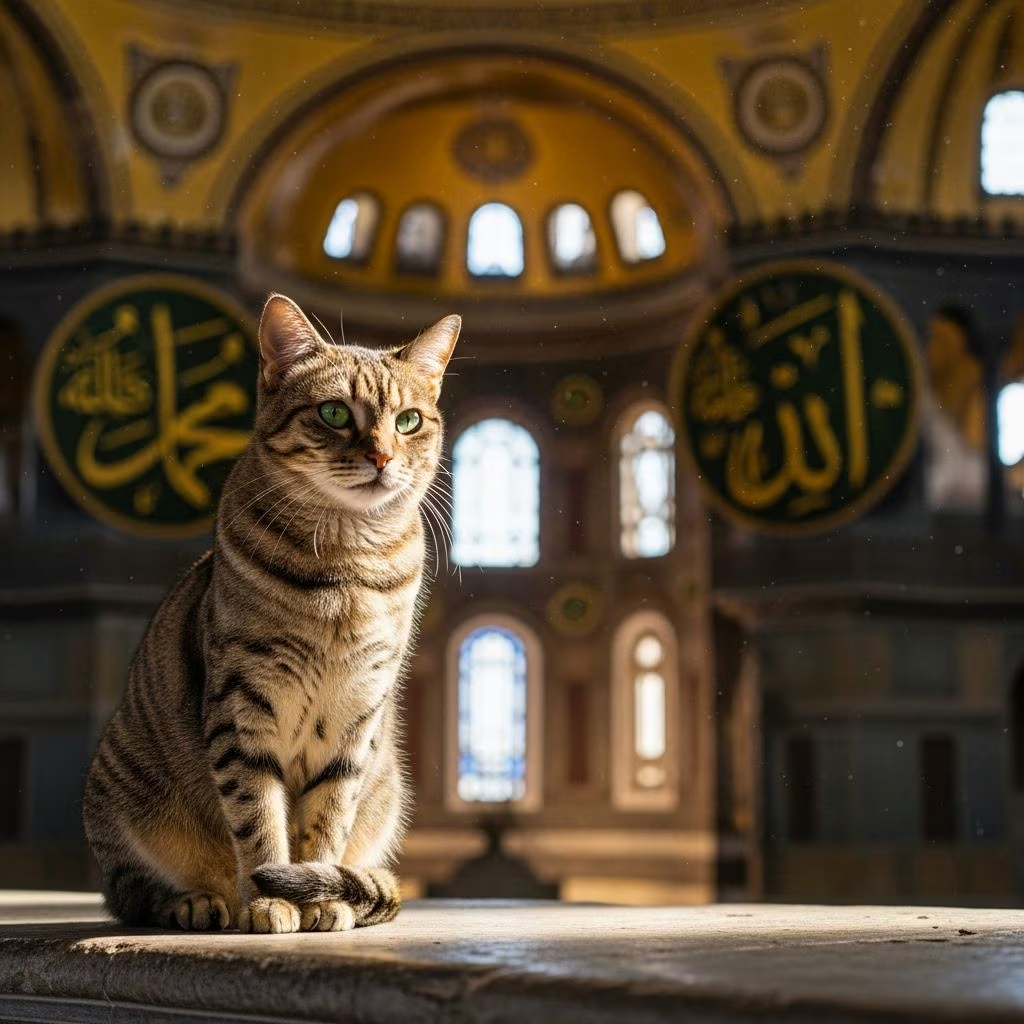
Gli, the charming cross-eyed stray cat, became an inseparable part of Istanbul’s Hagia Sophia, charming visitors and locals alike with her unique presence in one of the world’s most revered landmarks. Her story transcends a simple tale of a feline resident, weaving into the rich tapestry of Turkish culture, history, and the symbiotic relationship between humans and stray cats in urban settings.
Istanbul has long been celebrated for its abundant stray cat population, which roams freely through its bustling streets, ancient mosques, and cozy neighborhoods. These cats are more than mere animals; they embody the city’s welcoming spirit and are often cared for by communities as shared guardians. Estimates suggest over 100,000 strays live in the metropolis, fed by residents who leave out food and water daily. This tradition stems from Ottoman times, where cats were revered for keeping pests at bay in homes and holy sites.
In such an environment, Gli found her perfect domain inside the Hagia Sophia, or Ayasofya in Turkish. This UNESCO World Heritage site, with its domed architecture spanning Byzantine, Ottoman, and modern eras, provided Gli with sunlit corners and endless admirers. Her cross-eyed gaze and nonchalant demeanor made her instantly photogenic, turning casual visits into social media sensations.
Gli’s fame ignited around 2010 when photographers and tourists began capturing her lounging amid the mosque’s intricate mosaics and marble floors. Social media amplified her allure, with Instagram accounts and viral videos showcasing her quirky expressions. By 2017, she had amassed hundreds of thousands of followers, outshining many influencers. Tourists flocked specifically to spot her, often dubbing her the “official mascot” of the site.
Gli’s appeal lay in her unpretentious charm. She would nap on prayer rugs, perch on railings, or playfully interact with visitors, oblivious to the historical weight of her surroundings. This contrast between her playful innocence and the site’s profound legacy captivated global audiences.
Hagia Sophia’s history is as layered as Gli’s fame. Originally built in 537 AD as a cathedral by Emperor Justinian, it served as the world’s largest church for nearly a millennium. Conquered by Ottomans in 1453, it became a mosque, then a museum in 1935 under Atatürk’s secular reforms. In July 2020, President Erdogan reconverted it into a mosque, sparking international debate.
Gli resided through these transitions, seemingly unfazed. Officials confirmed her right to stay, with the mosque’s director stating cats had always been part of Ayasofya’s fabric. Her presence offered a lighthearted counterpoint to political tensions, symbolizing continuity amid change.
| Era | Status of Hagia Sophia | Gli’s Presence |
|---|---|---|
| Byzantine (537-1453) | Cathedral | Not yet born |
| Ottoman (1453-1935) | Mosque | Not yet born |
| Republican (1935-2020) | Museum | Arrives ~2010, rises to fame |
| 2020 onward | Mosque again | Lives until passing in 2020 |
In late September 2020, Gli fell ill, prompting her transfer to a veterinary clinic in Istanbul’s Levent district. At approximately 16 years old—a venerable age for a stray—she received dedicated care. On November 7, 2020, Istanbul Governor Ali Yerlikaya announced her passing due to old age via Twitter, noting: “Hagia Sophia’s cat Gli, who was being treated at a private veterinary clinic in Levent since September 24, unfortunately passed away.”
The announcement triggered an outpouring of grief. Social media flooded with tributes, from heartfelt messages to artwork honoring her. Locals mourned her as a city treasure, while international fans remembered her as a symbol of joy.
Gli’s departure did not dim her influence. She inspired discussions on animal welfare in Turkey, where strays often face hardships despite public affection. Initiatives to spay/neuter and provide shelters gained momentum post her passing. Merchandise sales funded cat charities, perpetuating her goodwill.
In Hagia Sophia, successors have emerged, with other cats claiming her spots. These “Gli successors” keep the tradition alive, reminding visitors of the site’s feline heritage. Her story highlights how animals can humanize historic spaces, fostering emotional connections across cultures.
Turkish proverbs like “Kedi ciğerine daglari deler” (A cat will tunnel through mountains for liver) reflect deep feline fondness. Islam’s positive view of cats, exemplified by Prophet Muhammad’s affection for them, aligns with Istanbul’s cat-friendly ethos. Mosques routinely host felines, seen as clean and beneficial.
Gli embodied this synergy, bridging tourists, worshippers, and history buffs. Her fame drew younger demographics to cultural sites, blending heritage with modern virality.
For travelers inspired by Gli, Istanbul offers prime cat-spotting opportunities:
Respect animals by observing quietly and supporting feeders with donations. Apps like “Istanbul Cats” map popular spots.
Gli’s narrative underscores broader themes: how pets or wildlife enhance monumental sites. Comparable icons include Tokyo’s station cats or Rome’s pyramid guardians. In Istanbul, cats serve as informal ambassadors, easing cultural exchanges.
Post-Gli, Ayasofya’s administration formalized cat policies, ensuring veterinary checkups and feeding stations. This model could inspire global heritage sites to integrate animal residents thoughtfully.
Q: How did Gli get her name?
A: Derived from Turkish for both her eye condition (glikom, glaucoma-related) and sweetness (gli, vanilla), fitting her endearing look.
Q: Can you still see cats in Hagia Sophia?
A: Yes, multiple cats continue the legacy, welcomed by staff.
Q: What happened after Gli’s death?
A: Tributes poured in; her memory lives through fan art and charity efforts.
Q: Is Hagia Sophia open to tourists now?
A: Yes, non-Muslims can visit outside prayer times with entry fees supporting preservation.
Q: Why are cats so revered in Istanbul?
A: Cultural, religious, and practical reasons foster a protective community attitude.
Gli’s journey from stray to superstar illustrates serendipity’s magic in travel. She reminded us that amid grand histories, simple joys—like a cat’s quirky gaze—create profound memories. Whether napping under domes or stealing the spotlight, Gli forever etched herself into Hagia Sophia’s lore, inviting us to cherish the unexpected companions on our paths.
