

 Travel Essentials
 Travel Essentials

GoldenEye Resort in Jamaica partners with locals to protect Oracabessa Bay, boosting fish biomass and creating sustainable tourism models that benefit communities and oceans.
 Travel Essentials
Luxury resorts are increasingly embracing sustainability, but few match the impact of GoldenEye Resort in Jamaica’s Oracabessa Bay. This iconic property has pioneered a community-driven approach to marine conservation, significantly increasing fish biomass and revitalizing local fisheries. By collaborating with fishers, biologists, and stakeholders, GoldenEye demonstrates how tourism can fuel environmental restoration.
Jamaica’s marine ecosystems have faced severe pressure from overfishing, climate change, and coastal development. Fish populations in many bays, including Oracabessa, plummeted, threatening food security and livelihoods for coastal communities. According to United Nations Sustainable Development Goals, targets like SDG 14.2 and 14.5 emphasize protecting marine areas and conserving 10% of coastal zones to ensure resilient oceans. In response, initiatives across Jamaica are expanding protected areas through participatory models involving fishers.
Overfishing reduced biomass by decades of unchecked harvesting, leading to smaller catches and ecosystem imbalance. Coral reefs, vital for fish habitats, suffered bleaching and damage, exacerbating the decline. Local fishers reported dwindling stocks, prompting a shift toward collaborative conservation.
At the heart of these efforts is the GoldenEye Foundation, established to foster sustainable development in Oracabessa Bay. Partnering with the Oracabessa Fishers Association, the foundation implements a community-based marine conservation model. Their Planet Program focuses on preserving biodiversity, designating the bay as a Marine Protected Area (MPA) for marine life, fishers, and the community.
Key strategies include registering fisher groups for MPA management, facilitating boundary development with stakeholders, and building public-private partnerships. This approach has scaled successfully over 10 years, enhancing management capacity and long-term viability. The foundation’s work unites fishers, marine biologists, and hotel owners to restore corals, fish stocks, and sea turtles.
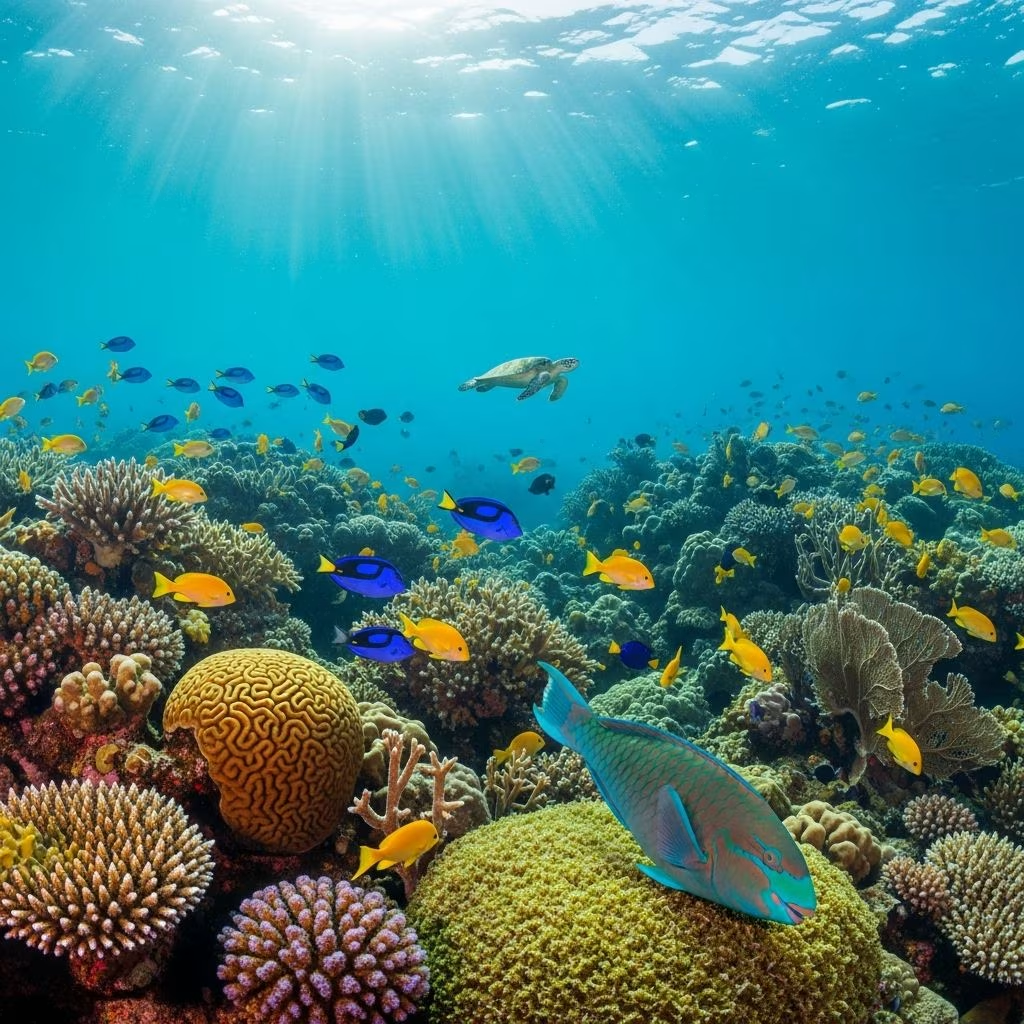
Oracabessa Bay’s transformation began with designating no-take zones, where fishing is prohibited to allow stock recovery. Monitoring data shows dramatic increases in fish biomass—some species doubled within years. Divers and researchers note thriving reefs teeming with snapper, parrotfish, and groupers, absent for generations.
The resort supports enforcement through education and incentives, providing alternative income via ecotourism. Fishers now guide snorkel tours, monitor reefs, and participate in coral propagation, turning protectors from poachers. Infrastructure like dedicated beachfront for boats ensures safe, managed access without disrupting guest experiences.
Sustainable conservation requires buy-in from those most affected. GoldenEye invests in training fishers for roles in tourism, aquaculture, and monitoring. Programs mirror national efforts like the World Bank-funded Community-Based Climate Resilience in the Fisheries Sector Project, which strengthens policies, promotes alternatives, and builds awareness.
In St. Elizabeth and beyond, ecotourism sustains fish sanctuaries with investments like US$113,000. Similar initiatives at GoldenEye include sea moss and oyster farming pilots, alongside ornamental fish ventures benefiting farmers with over US$105,000. Fishers receive stipends for patrols and data collection, fostering ownership.
| Initiative | Investment | Impact |
|---|---|---|
| Ecotourism in Sanctuaries | US$113,000 | Sustains no-take zones, generates jobs |
| Oyster Farming | US$325,000 | Diversifies income, reduces reef pressure |
| Sea Moss Production | US$165,000 | Alternative crop for coastal communities |
| Ornamental Fish | US$105,000 | Supports 10 farmers, boosts exports |
Beyond fish, efforts target coral restoration and turtle protection. Volunteers, including staff and guests, propagate corals in depleted waters. The foundation aids the island’s ‘turtle whisperer’ in safeguarding hawksbill nests, with hundreds of volunteer hours annually.
Reefs act as nurseries; healthy corals mean abundant fish. Techniques include fragmenting and replanting resilient species, monitored for growth. Sea turtle nesting success has risen, with protected beaches reducing predation.
GoldenEye exemplifies green luxury: gray water irrigates gardens provisioning the kitchen, UV-treated seawater fills pools, and sewage processes meet NEPA standards. An on-site herb garden enhances farm-to-table dining, minimizing imports.
Guests engage via snorkeling in the MPA, turtle watches, and beach cleanups. Vocational programs train at-risk youth for tourism jobs, while the foundation supports schools and community outreach. This holistic model proves profitability and preservation coexist.
GoldenEye’s success aligns with Jamaica’s strategies. The National Fisheries Authority’s project develops hatcheries like Twickenham Park (J$574 million) and revitalizes tilapia farms at Ebony Park. Climate resilience addresses threats like hurricanes, empowering sectors through policy and infrastructure.
Public-private partnerships, as in Oracabessa, are scaling nationwide, aiming for SDG-compliant MPAs. GoldenEye’s lagoon lease prevents motorized boats, enhancing safety and sanctuary status.
Biomass surveys confirm gains: fish densities in protected zones surpass fished areas by 200-300%. Spillover effects replenish adjacent waters, increasing catches for compliant fishers. Economic benefits include stable incomes and tourism revenue.
Challenges persist—illegal fishing, climate impacts—but adaptive management prevails. Future plans expand MPAs, advance aquaculture, and replicate models elsewhere in Jamaica.
GoldenEye’s blueprint—community partnerships, diversified livelihoods, rigorous monitoring—offers lessons worldwide. It balances conservation with human needs, proving luxury destinations can lead environmental stewardship.
To preserve Oracabessa Bay’s biodiversity as an MPA, benefiting fishers, marine life, and tourism.
Significant increases, with some species doubling due to no-take zones and restoration.
Yes, through snorkeling, cleanups, turtle patrols, and coral planting activities.
Ecotourism guiding, aquaculture like oysters and sea moss, and monitoring roles.
Core zones are no-take; boundaries involve community input for sustainability.
