

 Travel Essentials
 Travel Essentials

Comprehensive guide covering best times to visit, rim selection, hiking trails, accommodations, and activities for Grand Canyon National Park visitors.
 Travel Essentials
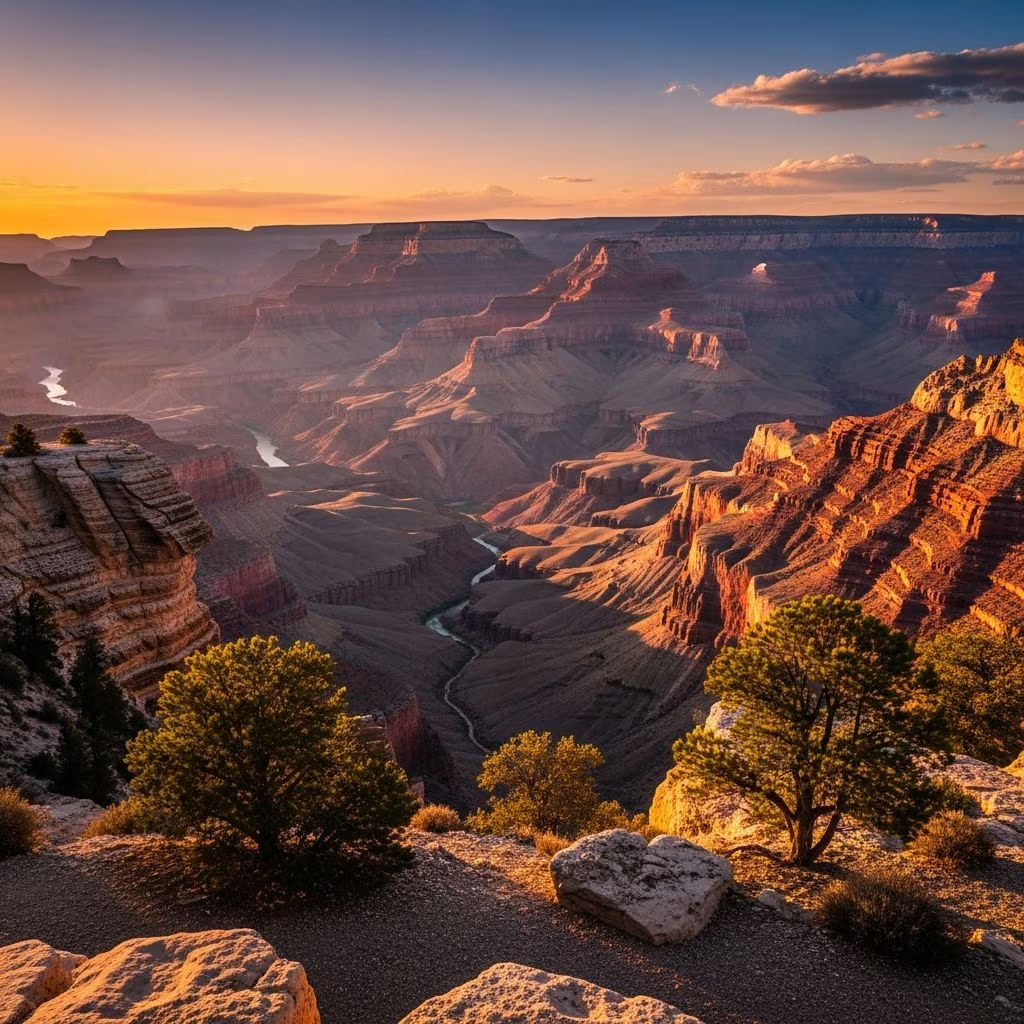
The Grand Canyon stands as one of America’s most extraordinary geological formations, attracting millions of visitors annually who seek to witness its awe-inspiring landscapes and natural beauty. Carved by the Colorado River over millions of years, this vast expanse reveals intricate layers of rock formations spanning 277 miles in length and plunging over a mile deep into the earth. Whether you’re planning your first visit or returning for another adventure, understanding how to navigate this massive park will enhance your experience significantly.
The Grand Canyon operates as a unique landscape divided into distinct regions, each offering different characteristics and visitor experiences. The primary challenge visitors face is recognizing that the canyon cannot be crossed by vehicle—travel between different rim areas requires driving extensive distances around the perimeter. Understanding this geography before arrival helps you plan your itinerary more effectively and set realistic expectations about travel times and accessibility.
The park encompasses four main rim areas: the South Rim (most visited), the North Rim (more remote), the West Rim (offering different experiences), and the East Rim (featuring cultural and historical sites). Each section provides distinct advantages depending on your interests, physical capabilities, and available time.
The South Rim represents the most accessible and popular visitor area, operating year-round with comprehensive facilities and services. This region hosts the largest concentration of viewpoints, accommodations, restaurants, and educational resources. For first-time visitors and families, the South Rim provides an optimal balance between accessibility and spectacular scenery. The presence of shuttle bus systems, museums, visitor centers, and ranger-led programs makes this area particularly suitable for travelers seeking structured experiences and substantial interpretive information.
Visitors to the South Rim benefit from proximity to major cities and highway access via Highway 64 from both southern and eastern approaches. The $35 vehicle entrance fee provides week-long access to multiple park areas, offering excellent value for extended exploration. The South Rim features over a dozen named viewpoints, with Mather Point, Yavapai Point, and Desert View among the most photographically rewarding locations.
Positioned over 1,000 feet higher than its southern counterpart, the North Rim experiences dramatically different weather patterns and seasonal availability. Heavy snowfall forces closure from October through May, making this destination exclusively a summer and early fall option. The North Rim requires approximately 212 miles and four-and-a-half hours of driving from the South Rim, involving circuitous routes through Arizona and Utah.
Visitors who undertake the journey discover a more solitary experience with pristine landscapes and fewer crowds. Popular North Rim viewpoints include Bright Angel Point (the most visited location), Cape Royal, and Point Imperial, each accessible via short drives from the main visitor area. The North Rim proves ideal for backpackers and experienced hikers seeking authentic wilderness encounters.
The Grand Canyon’s vastness creates variable weather conditions across different seasons and elevations. Planning your visit around seasonal patterns significantly impacts comfort, crowd levels, and activity availability. Spring and fall typically offer the most favorable conditions, with moderate temperatures and reduced visitor congestion compared to peak summer months.
Temperature and Weather Patterns by Season:
The optimal visiting window occurs during April through June and September through October, when temperatures remain comfortable for outdoor exploration and crowds have not reached their summer peaks. Visitors planning winter visits should exercise caution regarding road conditions and come prepared with appropriate cold-weather gear.
The Rim Trail stands as the most accessible hiking option, offering a mostly flat path that follows the canyon’s edge with minimal elevation change. This 7-mile trail connecting Grand Canyon Village to Hermits Rest can be hiked in its entirety or subdivided into shorter segments, making it adaptable for varying fitness levels. Families with children and visitors seeking modest physical exertion find this trail ideal for experiencing canyon views without technical difficulty.
The Bright Angel Trail provides a more substantial hiking experience, descending steeply into the canyon with switchback sections that test cardiovascular fitness. While the full trail extends to the Colorado River at the canyon floor, visitors can moderate the difficulty by turning back at designated rest areas after 1-2 miles of descent. This flexible approach allows hikers to choose their commitment level while still experiencing the sensation of descending into the geological layers.
Experienced hikers undertake rim-to-rim traversals or rim-to-rim-to-rim routes that require overnight camping arrangements and exceptional physical conditioning. These challenging adventures span multiple days, demanding careful planning, proper equipment, and experience with backcountry navigation. Such expeditions reward dedicated hikers with profound solitude and intimate canyon experiences rarely accessed by day visitors.
While hiking dominates many visitors’ Grand Canyon experiences, numerous alternative activities provide different perspectives and engagement levels. Each activity offers distinctive advantages depending on your preferences and physical capabilities.
Popular Activity Categories:
Selecting appropriate lodging significantly influences trip enjoyment and convenience. Options range from in-park accommodations offering prime accessibility to nearby gateway communities providing budget-conscious alternatives.
In-Park Accommodations: Historic lodges and newer facilities provide unmatched convenience and allow visitors to experience sunrise and sunset from the rim multiple times during their stay. Booking well in advance proves essential as premium properties fill quickly during peak seasons.
Gateway Community Options: Towns including Williams, Arizona and Kanab, Utah offer more affordable accommodations with varying distances from the South Rim. While requiring additional driving time, these communities provide cost-effective alternatives and reduce overall trip expenses.
Camping Alternatives: Developed campgrounds within the park and surrounding areas provide budget-friendly options for travelers seeking authentic outdoor experiences. Availability varies seasonally, with advance reservations strongly recommended.
The Grand Canyon Visitor Center serves as the primary information hub, featuring introductory films, relief maps, and ranger-led lectures. The National Park Service maintains a dedicated website and mobile application enabling offline map downloads—particularly valuable given limited cellular connectivity in remote park areas.
For current information regarding road conditions, weather impacts, and temporary closures, the park maintains a recorded information line at 928-638-7496. Calling before arrival prevents disappointment from unexpected access limitations or seasonal restrictions.
The $35 vehicle entrance fee provides week-long access to Grand Canyon National Park, covering both South Rim and North Rim areas. Individual visitors arriving by bicycle or on foot pay a reduced fee. Annual passes offering unlimited access prove economical for repeat visitors. The entrance fee represents reasonable compensation for maintaining trails, visitor facilities, and ranger programs supporting the visitor experience.
Transportation Considerations:
Essential Preparation Items:
Begin with an early morning arrival at a primary viewpoint to capture sunrise illumination of the canyon. Visit the Grand Canyon Visitor Center for orientation, then follow the Rim Trail to multiple viewpoints before completing an afternoon hike on the Bright Angel Trail to designated rest areas. Conclude with sunset viewing from a western-facing overlook. This itinerary balances major attractions while remaining achievable within a single day.
In-park lodges require reservations several months in advance during peak seasons (spring and fall). Gateway community accommodations typically require 4-8 weeks advance booking. Winter visitors experience greater flexibility with last-minute availability. Backpackers seeking canyon camping must obtain permits weeks or months before intended visits.
Absolutely. The South Rim provides numerous family-friendly options including the relatively flat Rim Trail, accessible viewpoints, junior ranger programs, and ranger-led talks designed for young audiences. Many families find that limiting hiking to modest distances and emphasizing multiple viewpoint visits creates more enjoyable experiences than attempting ambitious trails.
The South Rim sits at approximately 7,000 feet elevation, with canyon floor areas near 2,000 feet. This elevation variation affects oxygen availability and physical exertion differently for each person. Acclimatization time, gradual activity progression, and substantial hydration prove essential for safe canyon experiences.
The Grand Canyon rewards visitors who invest time in thoughtful planning and preparation. Selecting appropriate timing, understanding geographic layout, choosing compatible activities, and arranging suitable accommodations create conditions for memorable experiences. Whether seeking solitude in wilderness or family-friendly adventures, the Grand Canyon offers extraordinary natural beauty and profound connection to geological history spanning millions of years. Your visit contributes to personal enrichment through exposure to one of Earth’s most magnificent landscapes.
