

 Travel Essentials
 Travel Essentials

Explore quieter alternatives to Grand Canyon's busiest areas, including North Rim secrets, hidden trails, and strategic timing tips for peaceful canyon experiences.
 Travel Essentials
The Grand Canyon attracts millions of visitors annually, yet many never venture beyond the most accessible overlooks and shuttle stops. While the iconic vistas draw crowds, the canyon’s true magic emerges when you step away from the main thoroughfares and embrace the quieter spaces that define this geological wonder. Understanding where to go and when to visit transforms your experience from a rushed checklist into a meaningful exploration of one of Earth’s most magnificent landscapes.
The Grand Canyon’s three primary rims—South, North, and West—offer distinctly different experiences based on accessibility and visitor volume. The South Rim, open year-round and accessible via major highways, welcomes the overwhelming majority of tourists. In contrast, the North Rim operates seasonally from mid-May through mid-October, which immediately limits its visitation numbers. This geographic and temporal reality means that planning your visit with this knowledge creates immediate advantages for those seeking solitude.
The North Rim particularly stands out as the ultimate quiet alternative, receiving only 10% of the park’s total visitors. This stark disparity occurs partly because the drive from the South Rim to the North Rim requires over four hours of travel time across rough terrain. For those willing to make this journey, the reward is an entirely different canyon experience characterized by authentic remoteness and genuine peace.
Choosing the North Rim fundamentally changes your Grand Canyon experience. The North Rim combines striking visual beauty with profound tranquility, offering classic canyon vistas without the overwhelming presence of day-trippers and tour groups. The remote location filters out casual visitors, leaving behind a community of more committed canyon explorers who genuinely appreciate the landscape rather than simply photograph iconic angles.
The seasonal closure from mid-October through mid-May affects accessibility but preserves the North Rim’s character. During operating months, the area maintains its quieter atmosphere compared to the South Rim’s constant flow. The North Rim’s elevation and climate create distinct seasonal beauty, with spring and early autumn offering particularly pleasant conditions for exploration and photography.
Visiting the North Rim requires advance planning, as services are more limited and facilities fewer than at the South Rim. The journey itself—whether driving through Arizona’s high desert or flying into nearby airports—becomes part of your adventure. Accommodations near the North Rim should be reserved well in advance, and visitors should prepare for cooler temperatures and variable weather conditions even during summer months.
Beyond choosing the right location, timing your visit dramatically impacts your experience. Most casual tourists follow predictable patterns, arriving mid-morning after traveling from distant hotels and departing by late afternoon to continue their itineraries. This concentrated window creates peak crowding during specific hours.
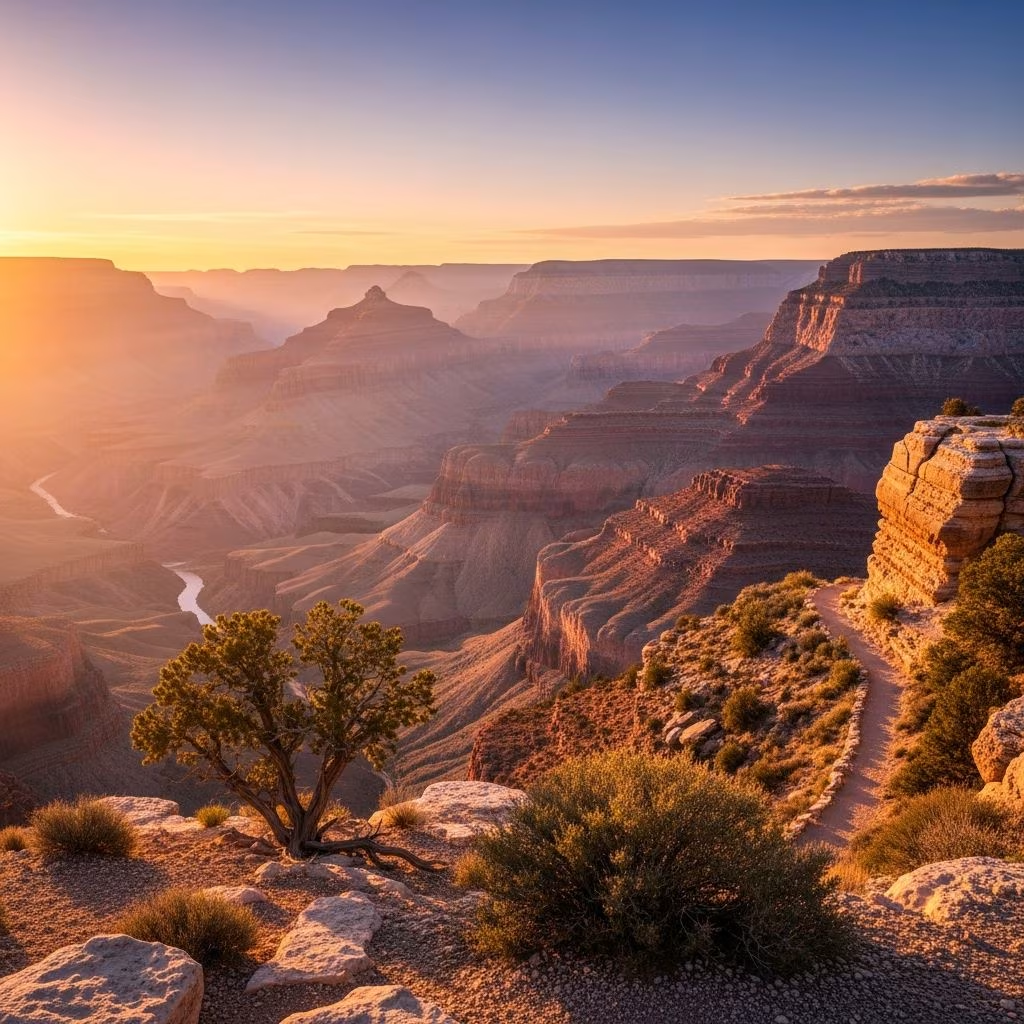
Early morning visitors discover a transformed canyon. Sunrise not only delivers optimal lighting conditions for photography but also provides trails and viewpoints that feel nearly private. The soft golden light transforms the canyon’s colors while solitude surrounds you, creating a meditative experience impossible during busy daylight hours. Similarly, sunset empties most popular locations as day-trippers rush back to parking areas, leaving behind those willing to linger through twilight’s transition into darkness.
Weekday visits, particularly Tuesday through Thursday, substantially reduce crowds compared to weekends. This pattern reflects tourism’s general rhythm—weekend travelers cluster together while weekday visitors disperse throughout the park. Combining weekday timing with early morning or sunset hours multiplies your chances of experiencing the canyon in relative solitude.
Even at the heavily visited South Rim, strategic location choices reveal quieter alternatives. Desert View Drive, extending beyond Grand Canyon Village, offers a succession of viewpoints that receive fraction of the traffic concentrated at main stops. Lipan Point, accessible along this scenic drive, delivers stunning vistas with substantially fewer visitors, particularly when you arrive during non-peak hours.
The West Rim presents another underutilized option, as the famous Skywalk attracts significant attention while nearby areas remain remarkably peaceful. Guano Point exemplifies this dynamic—located near the Skywalk, it nonetheless offers panoramic views along a narrow ridge with minimal crowding, especially for those willing to walk slightly farther from parking areas.
Shoshone Point represents perhaps the ultimate South Rim secret, accessed by a short hike through ponderosa pine forest and rarely crowded even during peak seasons. This location rewards minimal effort with maximum solitude, proving that dramatic viewpoint experiences don’t require strenuous hiking.
The principle underlying these discoveries is simple: most tourists restrict themselves to easily accessible main viewpoints and parking-adjacent trails. Moving even slightly beyond these default routes opens up canyon experiences characterized by silence and personal reflection rather than commerce and crowd management.
Perhaps the most dramatic way to escape crowds involves descending into the canyon itself. Only 5% of visitors venture below the rim, immediately making below-rim experiences substantially different from surface-level viewpoint visits. This dramatic statistic reveals that while millions visit the canyon, only a fraction experience its interior landscape.
The Bright Angel Trail represents a popular but accommodating below-rim option. Hiking to Indian Gardens provides a accessible day hike with compelling canyon immersion, though you’ll encounter more hikers on this established route. For intermediate hikers, combining the descent via Bright Angel with an ascent via the less-crowded South Kaibab Trail creates variety while minimizing repeated trail sections.
The Grandview Trail offers a genuinely challenging alternative that filters out casual day-trippers. This 9.6-kilometer trail begins at 2,255 meters elevation, losing 760 meters over its initial 4.8 kilometers before reaching the scenic Coconino Saddle. The trail’s demanding nature and remote trailhead location mean substantially fewer hikers compared to famous routes. For the truly adventurous, Horseshoe Mesa represents one of the canyon’s least-known campsites, accessible via the Grandview Trail and offering genuine solitude for overnight canyon experiences.
The North Kaibab Trail extends from the North Rim down approximately 23 kilometers while dropping 1,800 meters to the canyon floor. This remote route creates an entirely different experience than South Rim trails, with the combination of North Rim remoteness and the trail’s rugged character ensuring minimal crowding.
Experienced hikers might consider rim-to-rim traverses, typically executed from North Rim to South Rim but equally possible in reverse. These multi-day adventures require advance permit applications and campsite reservations, as overnight stays utilize established campgrounds like Indian Garden, Cottonwood near the North Rim, or the lottery-selected Bright Angel Campground. The Phantom Ranch Lodge offers an alternative for those selected through its competitive application process.
Rim-to-rim adventures fundamentally transform canyon experience from tourist activity to genuine expedition. The extended time below the rim, combined with minimal services and reliance on personal capabilities, creates an authentically remote experience even though established infrastructure exists. These journeys reveal canyon geology across multiple time periods as you descend through millions of years of Earth’s history with each downward step.
Beyond location and timing choices, several tactical decisions enhance your quiet canyon experience. Bringing packed meals eliminates time spent in crowded restaurant facilities while enabling scenic picnics at remote viewpoints. This approach simultaneously reduces your environmental impact and increases your flexibility for exploring locations far from central facilities.
Overnight stays near the park—whether at accommodations within park boundaries or nearby gateway communities—grant access to the canyon during hours when most day-trippers remain distant. This advantage means you can experience sunrise solitude and sunset transitions without competing for parking spaces or trail access during peak hours.
The Grand Canyon stretches 446 kilometers with maximum width of 29 kilometers across. This vast scale means that thorough exploration of even small sections requires time and commitment. Most visitors sample surface-level viewpoints without appreciating the canyon’s geographic complexity and hidden pockets of landscape.
Strategic route planning exploits this reality. Choosing less-visited trails automatically places you in quieter areas simply because fewer people execute these decisions. The South Kaibab Trail, particularly less-crowded than Bright Angel for the ascent journey, rewards those willing to reverse conventional traffic patterns. Similarly, detours off main shuttle routes, even modest diversions, create noticeable solitude improvements.
Weekday mornings, particularly Tuesday through Thursday at sunrise, offer optimal solitude, especially during shoulder seasons (April-May and September-October) when weather remains pleasant but crowds diminish from summer peaks.
While limited accommodations may accept walk-ins, advance reservations are strongly recommended. The North Rim’s remote location and seasonal closure mean that availability cannot be assumed, particularly during peak operating months.
Day hikes to Indian Gardens require moderate fitness but no technical climbing. North Kaibab Trail and Grandview Trail demand significantly higher fitness levels and hiking experience. Rim-to-rim traverses require substantial preparation and backcountry experience.
Remote areas lack services and emergency response. Hikers must carry sufficient water, inform others of their plans, respect weather warnings, and never hike alone for multi-day adventures. Marked trails should be followed precisely.
Ultimately, seeking solitude at the Grand Canyon transcends simply avoiding crowds. It represents a philosophical choice to experience the canyon on its own terms rather than according to tourism schedules and commercial interests. The canyon’s majesty emerges not from photographing famous angles but from extended time observing geological formations, geological timescales, and the personal reflection that genuine wilderness enables.
The quiet moments between main attractions—watching light patterns shift across distant ridges, observing the Colorado River’s distant presence, experiencing the physical reality of the canyon’s scale—constitute the profound experiences that justify the effort of visiting. These moments remain available to anyone willing to move beyond default tourism patterns through thoughtful planning, realistic timing expectations, and genuine respect for the landscape.
The Grand Canyon’s least-visited areas exist not through accident but through the natural consequence of accessibility and effort thresholds that filter visitors toward convenience. By understanding these dynamics and embracing slightly greater effort, you access an entirely different canyon experience—one defined by personal discovery rather than shared spectacle, by authentic wonder rather than checked-box tourism.
