

 Travel Essentials
 Travel Essentials

Complete guide to planning and executing the Grand Circle road trip, covering route options, park highlights, practical tips, and accommodation strategies for every traveler.
 Travel Essentials
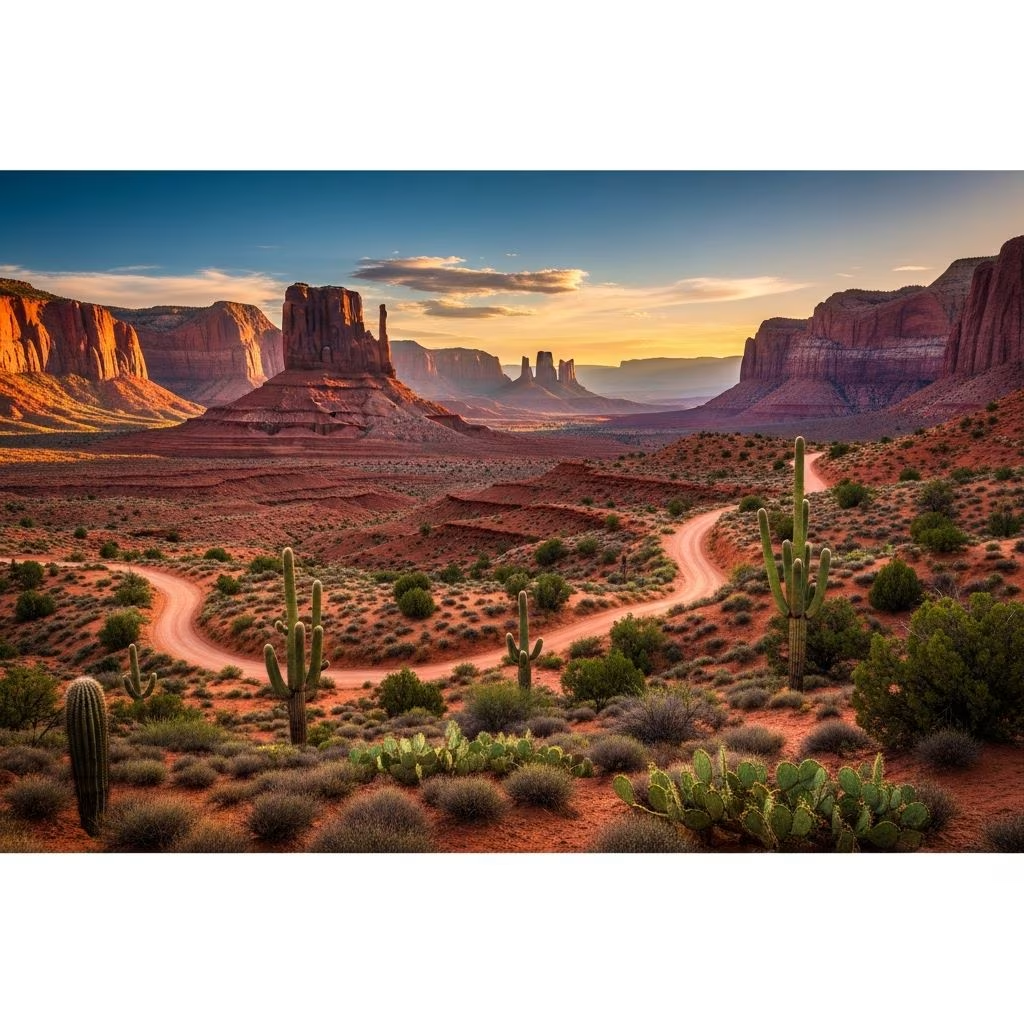
The American Southwest’s most celebrated driving route stretches across approximately 1,200 miles of stunning desert terrain, connecting world-class national parks and remote natural wonders into a single transformative journey. This geographical loop through Utah and Northern Arizona has earned legendary status among road trip enthusiasts for its ability to showcase some of Earth’s most dramatic landscapes within a concentrated travel corridor. What distinguishes this particular route from other scenic drives is not merely the collection of parks themselves, but rather the extraordinary diversity of environments travelers encounter as they progress through each destination.
The Grand Circle represents a carefully calculated pathway that minimizes unnecessary backtracking while maximizing scenic transitions. The route primarily follows a clockwise direction, creating a logical progression that allows visitors to experience distinct geological formations and ecosystems without wasting time on repetitive segments. Most variations of this itinerary include Utah’s five major national parks—Arches, Canyonlands, Bryce Canyon, Capitol Reef, and Zion—alongside Arizona’s Grand Canyon and remarkable locations like Monument Valley Navajo Tribal Park and Antelope Canyon.
The journey typically originates and concludes in Las Vegas, though alternative starting points like Salt Lake City or Phoenix can work equally well with minor route adjustments. Travelers who begin in Salt Lake City might enter the loop via Capitol Reef, experiencing quieter parks first before reaching high-traffic areas. Those starting from Phoenix often enter through Monument Valley or the Page area, adding mileage but maintaining directional efficiency.
One of the most appealing aspects of this road trip is its adaptability to various time constraints. Visitors with limited vacation days can experience the route’s essential highlights in seven days, though this accelerated pace requires careful planning and strategic prioritization. More typical visitors allocate eight to ten days, which provides reasonable time for meaningful exploration without constant rushing. For those seeking a truly immersive experience, a twelve to fourteen day itinerary allows for deeper engagement with each destination, including multi-day park stays and detours to lesser-known attractions.
Even extended trips of up to three weeks remain feasible, transforming the journey into an extended sabbatical that explores peripheral attractions and smaller communities throughout the region.
Travelers operating under strict time constraints should consider this condensed itinerary, which captures the region’s most iconic vistas while maintaining a sustainable driving schedule:
Visitors with fourteen days available can develop a more nuanced experience, building in multiple-day park stays and meaningful exploration of intermediate destinations. This extended format begins in Las Vegas and incorporates additional stops like Goblin Valley State Park, Grand Staircase-Escalante Monument, and the charming mountain towns that pepper the region. The two-week schedule allows for sunset explorations, sunrise hikes, and evening walks through visitor centers without the constant pressure of maximum daily mileage.
Understanding approximate drive times between major destinations enables realistic daily planning:
| Route Segment | Distance | Approximate Drive Time |
|---|---|---|
| Zion to Bryce Canyon | 73 miles | 1.5 hours |
| Bryce Canyon to Capitol Reef | 111 miles | 2 hours |
| Capitol Reef to Arches | 133 miles | 2 hours |
| Arches to Canyonlands | 27 miles | 30 minutes |
| Canyonlands to Grand Canyon | 320 miles | 5.5 hours |
These calculations represent direct routing and do not account for park exploration time, lunch stops, or scenic overlooks. Experienced road trip planners typically add buffer time to accommodate unexpected delays and spontaneous discoveries.
The Southwest’s climate presents distinct advantages and challenges depending on the season. Spring and fall typically offer the most favorable conditions, with moderate temperatures and reduced crowds compared to summer months. Winter travel is possible but may involve snow in higher elevation parks and occasional closures. Summer visitors should prepare for intense heat, particularly in lower elevation areas like the Grand Canyon, and significant congestion at popular trailheads and viewpoints.
Advance planning regarding park access requirements prevents frustration and wasted time. The America the Beautiful Annual Pass provides entrance to all national parks and quickly pays for itself across this itinerary, typically costing less than individual park entrance fees. Certain parks implement timed-entry reservation systems during peak seasons, particularly Zion and the popular Narrows trail. Checking the National Park Service website before departure ensures travelers understand current requirements and can secure necessary reservations in advance.
Some parks utilize mandatory shuttle systems during peak periods to manage traffic congestion and protect sensitive ecosystems. Zion Canyon operates mandatory shuttles during high-traffic seasons, with specific map routes and operating times available through NPS resources.
Lodging options range from traditional hotel accommodations in nearby towns to upscale glamping facilities that combine outdoor immersion with modern comforts. Strategic accommodation placement can significantly reduce daily driving distances. Rather than returning to a central hub each evening, staying near each destination allows for more thorough exploration and earlier morning starts before crowds arrive.
Communities like Moab offer extensive lodging choices and serve as excellent home bases for exploring multiple parks. Towns such as Springdale (near Zion), Tropic (near Bryce Canyon), and Torrey (near Capitol Reef) provide convenient access to specific park areas. Page, Arizona serves travelers exploring Lake Powell, Monument Valley, and Antelope Canyon.
Experienced visitors develop priorities based on personal preferences and available time. Arches National Park benefits from early morning or late evening visits to avoid daytime heat and midday congestion. Canyonlands emphasizes expansive viewpoint photography rather than extensive hiking trails. Distances within both parks often exceed initial appearances, making realistic time allocation crucial.
Zion’s iconic Narrows hike requires specific preparation including proper footwear and water-resistant clothing, as hikers wade through the Virgin River. The Bryce Amphitheater showcases the park’s famous hoodoo formations from accessible viewpoints and relatively short walking distances. Capitol Reef’s Scenic Drive and Gifford Homestead historic site (famous for fresh pies) provide convenient exploration options.
Standard passenger vehicles handle the primary roads throughout this route, though some scenic byways and minor park roads may require high-clearance vehicles. Recreational vehicles and RVs can traverse the main loop but require awareness of parking limitations at certain park entrance areas and narrow canyon sections.
Fuel availability should factor into daily planning, as some remote sections feature limited gas stations. Mountain passes like the Million Dollar Highway require careful driving during winter months and demand full vehicle maintenance before departure.
Beyond the major national parks, the Grand Circle encompasses remarkable secondary attractions. Vermilion Cliffs National Monument, Goblin Valley State Park, and the Grand Staircase-Escalante Monument offer exceptional scenery with fewer crowds than major parks. Scenic Highway 12 has earned All-American Road designation, with the stretch between Bryce Canyon and Capitol Reef representing one of the nation’s most photographed drives.
Monument Valley Navajo Tribal Park and Antelope Canyon provide authentic indigenous cultural experiences. The Durango & Silverton Narrow Gauge Railroad offers a unique transportation experience through historic mining country, accessible as a day excursion from Moab.
Expenses vary based on accommodation choices, meal preferences, and park activities. Budget travelers spending on hostels and modest dining might spend $1,000–$1,500 for a week-long trip, while mid-range travelers utilizing hotels and restaurants should budget $2,000–$3,500. Luxury travelers with upscale accommodations and guided experiences may invest $4,000–$7,000 or more.
Spring (April–May) and fall (September–October) offer ideal conditions with moderate temperatures and manageable crowds. Summer brings intense heat and peak congestion, while winter may cause park closures at higher elevations.
Yes, a condensed seven-day itinerary captures major highlights, though it requires strategic prioritization and substantial daily driving. More relaxed travelers benefit from eight to ten days or longer.
Most day hikes require no permits, though backcountry camping does. Check individual park websites for specific requirements.
Yes, with modifications. Many parks offer short, family-friendly trails and accessible viewpoints. Building extra time into the itinerary accommodates slower paces and frequent rest breaks.
The Grand Circle represents far more than a collection of scenic stops—it embodies a transformative journey through some of Earth’s most extraordinary landscapes. Whether completing the route in seven days or extending it across three weeks, travelers encounter geological formations spanning billions of years, cultural heritage of indigenous peoples, and natural wonders that inspire contemplation and wonder. Thoughtful planning regarding duration, accommodations, permits, and strategic park selection ensures that this legendary road trip lives up to its celebrated reputation as the ultimate Southwest adventure.
