

 Travel Essentials
 Travel Essentials

Discover the world’s largest museum devoted to a single civilization, with 100,000 artifacts, Tutankhamun’s treasures, and immersive exhibits.
 Travel Essentials
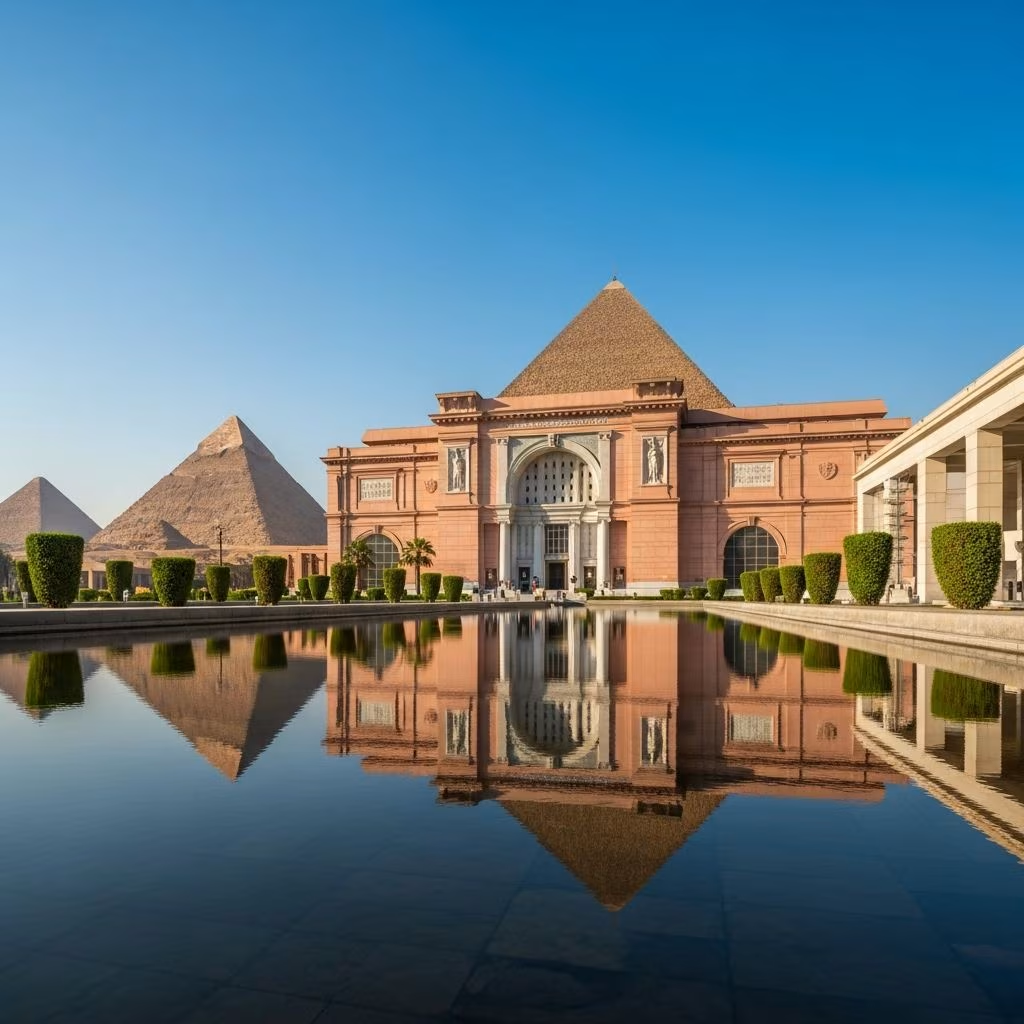
The Grand Egyptian Museum (GEM) stands as a monumental achievement in cultural preservation and architectural innovation, representing Egypt’s commitment to showcasing its extraordinary archaeological heritage. Located in Giza on a sprawling 120-acre site, this institution has fundamentally transformed how visitors engage with ancient Egyptian civilization, offering an immersive experience that transcends traditional museum exhibitions.
The Grand Egyptian Museum encompasses an impressive 490,000 square meters of space, making it the largest archaeological museum devoted to a single civilization in the world. Within its expansive galleries and exhibition spaces, the museum houses approximately 100,000 ancient artifacts that chronicle 7,000 years of Egyptian history. This extraordinary collection represents one of humanity’s most comprehensive records of a single ancient culture, spanning from the predynastic period through the Greco-Roman era, approximately 3100 BCE to 400 CE.
The scale of this undertaking becomes apparent when considering that the museum consolidates collections from numerous cultural institutions throughout Egypt, most notably the historic Egyptian Museum located on Cairo’s Tahrir Square, which has served as the primary repository of Egyptian archaeological treasures for over a century. This consolidation created an opportunity to reimagine how these priceless artifacts could be presented to modern audiences.
Rather than organizing the museum’s vast collection thematically, curators designed the main galleries to follow a chronological progression through Egyptian history. The exhibition space is systematically divided into four distinct historical periods, each occupying dedicated gallery space:
This organizational approach allows visitors to trace the evolution of Egyptian culture, artistic expression, religious beliefs, and technological advancement across millennia. The chronological structure facilitates a deeper understanding of how Egyptian civilization developed, adapted, and transformed across different historical periods.
Perhaps the most captivating element of the Grand Egyptian Museum’s collection is the cache of artifacts discovered in King Tutankhamun’s tomb. These treasures, which represent some of the most famous archaeological discoveries of the twentieth century, hold pride of place within the new institution. The prominence given to Tutankhamun’s burial goods reflects both their historical significance and their powerful ability to captivate public imagination.
The decision to relocate these iconic pieces from the Egyptian Museum to the Grand Egyptian Museum’s purpose-built facilities demonstrates a commitment to providing optimal preservation conditions and enhanced viewing experiences for these irreplaceable cultural artifacts. The museum’s advanced climate control and conservation laboratories ensure these delicate items are protected for future generations.
The Grand Egyptian Museum was meticulously designed by the renowned architectural firm Heneghan Peng Architects, representing a sophisticated blend of modern design principles and cultural sensitivity. The construction process spanned nearly two decades, reflecting the complexity of creating a facility worthy of Egypt’s unparalleled archaeological legacy.
The construction cost exceeded $1 billion, representing a substantial investment in cultural infrastructure. Notably, Japanese loans covered 75% of the total construction expenses, demonstrating significant international collaboration in realizing this ambitious project. The financial commitment reflects the global recognition of the museum’s importance as a cultural institution of world significance.
The Grand Egyptian Museum transcends the conventional definition of a museum by incorporating a diverse array of facilities designed to serve visitors’ multifaceted needs. The nearly $1 billion complex extends far beyond exhibition galleries, offering a complete cultural and entertainment destination.
Dining and Refreshment Options: The facility features eight full-service restaurants alongside a food court, accommodating various culinary preferences and budgets. These establishments enable visitors to spend extended periods at the museum while enjoying quality dining experiences.
Educational and Interactive Spaces: A dedicated children’s museum operates within the complex, providing younger visitors with age-appropriate interactive activities and educational workshops. This specialized facility introduces children to ancient Egyptian civilization through engaging, hands-on experiences rather than passive observation.
Cultural and Conference Infrastructure: The museum incorporates a conference center and a 3D movie theatre, expanding its role beyond artifact display to include contemporary cultural programming and educational presentations. These facilities position the museum as a dynamic cultural hub rather than a static repository.
Supporting Services and Amenities: Comprehensive facilities include restoration and conservation laboratories, outdoor gardens, retail shops, a library, and commercial spaces that contribute to a fully integrated visitor experience.
The inclusion of state-of-the-art restoration and conservation laboratories within the museum complex reflects modern curatorial best practices. These specialized facilities enable ongoing preservation work on artifacts, ensuring the collection’s long-term integrity. The integration of conservation infrastructure within the museum itself facilitates coordination between exhibition specialists, conservators, and archaeologists, promoting comprehensive understanding of the artifacts on display.
The Grand Egyptian Museum is anticipated to become one of the world’s most visited cultural institutions. Official projections estimate the facility will attract between five to seven million visitors annually. This projection reflects both the museum’s unprecedented collection and its enhanced accessibility compared to previous exhibition venues.
The soft opening in October preceded the official launch, allowing the institution to refine operations and address any logistical challenges before welcoming the full volume of international and domestic visitors. Within just three months of its soft opening, the Grand Egyptian Museum had already established itself as an essential destination for anyone interested in ancient Egyptian civilization.
The Grand Egyptian Museum represents more than merely a larger venue for displaying Egyptian artifacts. It embodies a contemporary approach to cultural preservation that emphasizes public engagement, educational accessibility, and state-of-the-art conservation practices. By consolidating Egypt’s most significant archaeological treasures in a single, purpose-built facility, the nation has created an institution capable of serving both scholarly research and public appreciation of ancient Egyptian civilization.
The museum’s establishment on the Giza plateau, proximate to the Great Pyramids and other monumental archaeological sites, creates a comprehensive cultural district dedicated to experiencing and understanding ancient Egypt. This geographic positioning enhances the contextual understanding visitors gain from their museum experience.
While the Egyptian Museum housed Egypt’s archaeological collections for over a century, the Grand Egyptian Museum represents a modern reimagining of how these treasures should be displayed and preserved. The new facility incorporates contemporary conservation technology, enhanced exhibition design, and comprehensive visitor amenities not available in the historic museum.
The Grand Egyptian Museum houses approximately 100,000 ancient artifacts spanning 7,000 years of Egyptian history.
Absolutely. With 490,000 square meters of exhibition space and comprehensive on-site amenities including restaurants, theaters, and gardens, the museum can accommodate extended visits.
Yes. The dedicated children’s museum provides interactive activities and educational workshops specifically designed for younger visitors, making it an excellent destination for families.
Prospective visitors should plan their museum visit strategically given the facility’s enormous scale. The chronological organization of galleries allows visitors to customize their experience, focusing on specific historical periods of particular interest. The availability of comprehensive amenities means visitors can structure their visit flexibly, combining exhibition exploration with dining, shopping, and entertainment throughout their day.
The museum’s location near Cairo provides convenient access for international travelers visiting Egypt, while the extensive facilities ensure that visitors’ time can be maximized regardless of their schedule constraints.
